
Painless Facial Extraction in Singapore: Comfort and Aftercare
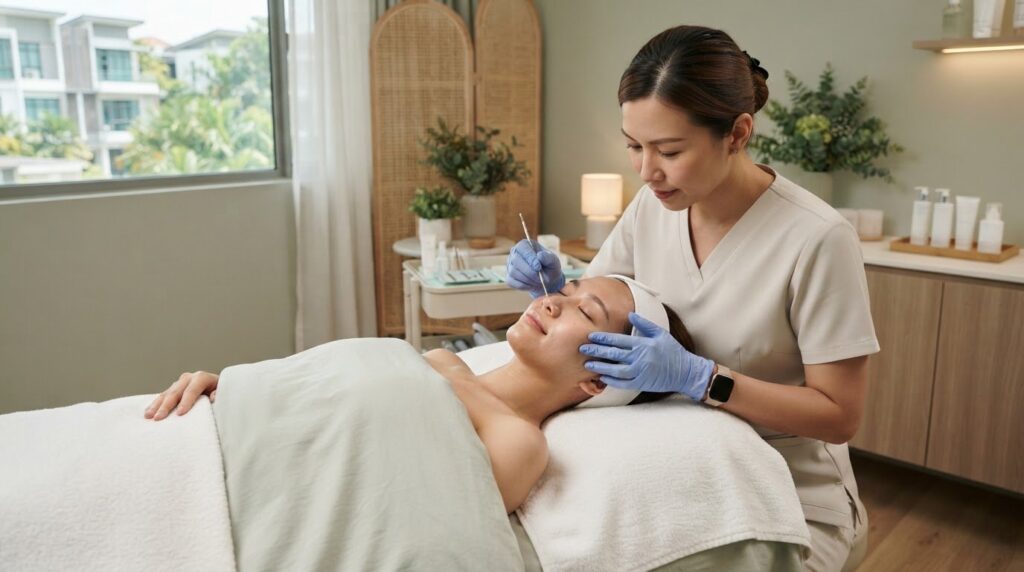
Extraction can feel like brief pressure or stinging, and the sensation varies with skin sensitivity and the congestion being cleared. A painless facial extraction in Singapore is best understood as a comfort-focused treatment, not a promise that you will feel nothing. The aim is to work gently and keep you comfortable throughout.
If you are hesitant because you expect sharp discomfort or lingering redness, that concern is understandable. Knowing what happens during a facial can make the experience feel more considered and less uncertain.
This guide explains how extraction is performed, what it may feel like, how long a session takes, and who may benefit. You will also find practical aftercare guidance, including how to support your skin as it settles and when another approach may be more suitable.
Key Takeaways
- Gentle preparation, including steam to soften congestion, can help make pore clearing more comfortable.
- Extraction is only one part of a facial; the process and focus should suit your skin’s needs.
- Plan aftercare around calm, hydrated skin: avoid makeup for 24 hours and skip harsh exfoliants while your skin settles.
- Daily sunscreen supports your post-facial routine, while hydration helps keep skin comfortable.
- Severe acne or a specific skin condition calls for a dermatologist’s guidance; during pregnancy, speak with your healthcare provider first.
Aftercare and skincare products
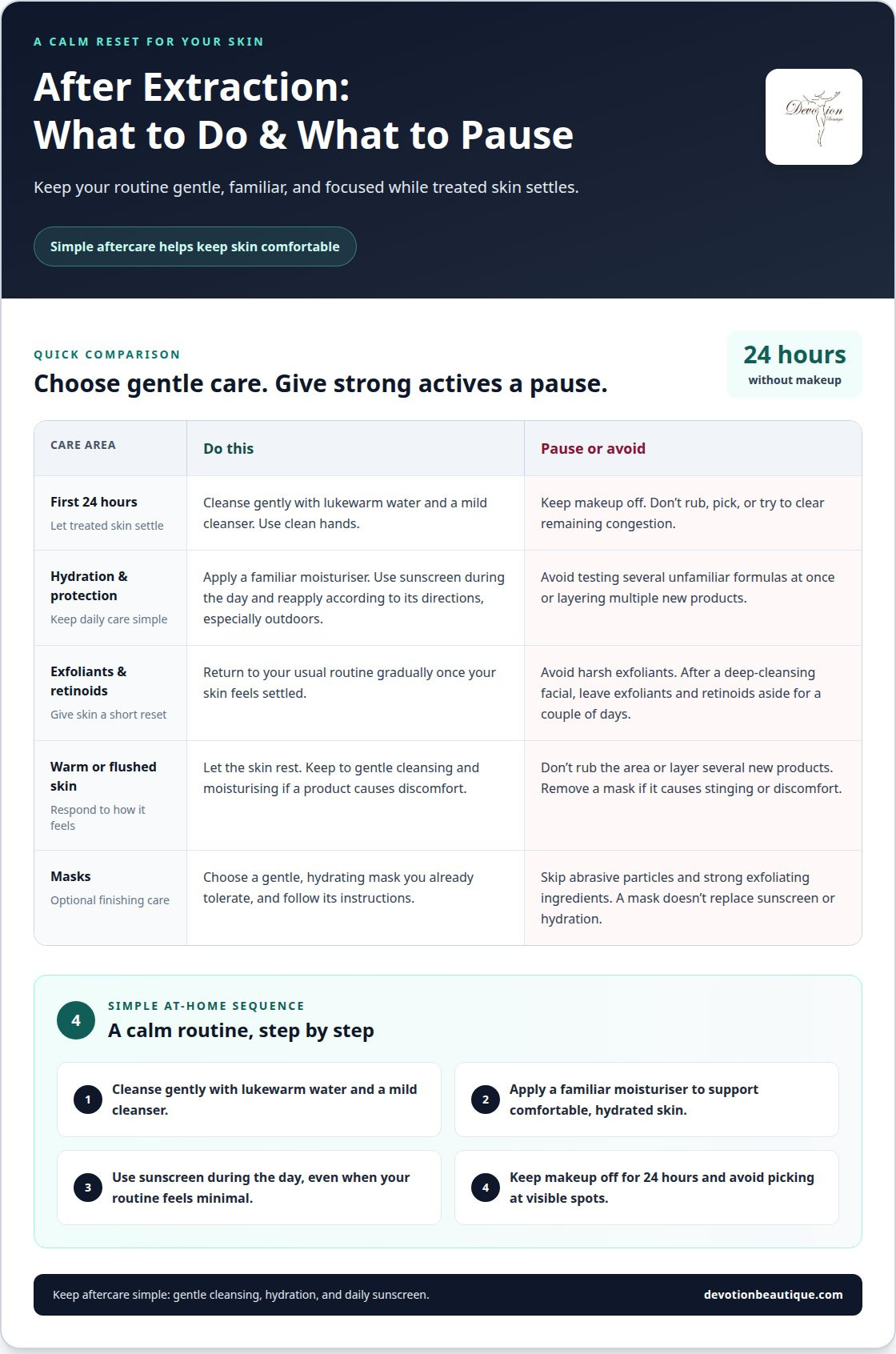
After extraction, keep your routine simple while your skin settles. For the first 24 hours, avoid makeup, which can add another layer of products to freshly treated skin. Cleanse gently and use clean hands; rubbing, picking, or trying to clear remaining congestion can irritate the area. If your skin feels warm or looks flushed, let it rest rather than layering several new products.
Choose familiar, gentle skincare rather than introducing a new active formula immediately. A mild cleanser can remove surface residue without an abrasive scrub. Follow with a moisturiser suited to your skin, then apply sunscreen during the day. Hydration supports skin comfort, while daily sunscreen is a practical part of aftercare. Keep each step simple, and avoid combining unfamiliar products before you know how your skin responds.
Pause stronger exfoliating products after extraction. Avoid harsh exfoliants, and leave exfoliants and retinoids aside for a couple of days after a deep-cleansing facial. Skip gritty scrubs and active resurfacing formulas during this interval. Once your skin feels settled, return to your usual routine gradually rather than applying several active ingredients at once.
A soothing mask can feel like a calming finish, but the formula matters. Choose a gentle, hydrating mask you already tolerate, and follow its instructions rather than leaving it on longer. Avoid abrasive particles or strong exfoliating ingredients in a post-facial mask. If a product causes stinging or discomfort, remove it and return to simple cleansing and moisturising. A mask is optional, not a substitute for sunscreen or hydration.
Aftercare begins with the final treatment steps. Once extraction is complete, leave treated areas alone and follow the facialist’s guidance on cleansing and products. At home, use this sequence:
- Cleanse gently with lukewarm water and a mild cleanser.
- Apply a familiar moisturiser to support comfortable, hydrated skin.
- Use sunscreen during the day, including when your routine feels minimal.
- Keep makeup off for 24 hours and avoid picking at visible spots.
In Singapore’s bright daytime conditions, sunscreen belongs in your morning routine after a facial. Reapply according to the product directions, especially when spending time outdoors. Keep the rest of your routine consistent: a gentle cleanser, moisturiser, and sunscreen are better choices than testing several new formulas at once. After the initial recovery period, reintroduce exfoliants or retinoids gradually and watch how your skin responds.
Think of aftercare as a short reset, not a reason to over-treat. Avoid harsh exfoliation, protect your skin with daily sunscreen, and maintain hydration. These simple steps help keep your post-facial routine calm and manageable.
Gentle pore extraction technique and skin preparation
Gentle or comfort-focused extractions are available through facial clinics in Singapore that include pore clearing in customised treatments. A careful approach considers preparation, pressure, and the areas being treated, rather than trying to clear every visible pore in one session.
Begin with a personal skin assessment. The facialist can look at visible congestion, dryness, sensitivity, and texture, then identify areas for focused attention. For example, congestion around the nose may need a different approach from a blemish on the cheek. Sharing what your skin reacts to, including any recent product changes, helps shape the treatment plan.
Preparation makes extraction more considered. The skin is cleansed to remove surface oil, sunscreen, and makeup. Steam can help open pores, making impurities and debris easier to extract. Preparation should still suit your comfort and skin condition. Warmth that feels soothing to one person may feel excessive to another, so speak up if you feel uncomfortable during the session.
Extraction should focus on suitable congestion, not every bump or uneven area. Blackheads and whiteheads are common concerns addressed during pore clearing. A facialist can assess each area and use controlled pressure around the pore rather than squeezing broadly across the skin. If a spot resists, forcing it can cause unnecessary irritation. A gentle technique is selective, paced, and responsive to the skin.
Texture can look more even when surface debris is cleared from congested pores. However, extraction does not address every cause of uneven texture, such as dryness or the appearance of old blemish marks. Skin assessment helps distinguish visible congestion from other concerns, so treatment can prioritise the right areas. More pressure is not a shortcut to smoother-looking skin.
A customised facial should feel collaborative. Tell the facialist if an area feels tender, and ask for a pause if you need one. The ReProgram Facial, Remedial Facial, and Relaxation Facial support different skin goals, from targeted correction to calming care. A consultation can help match the facial approach to your concerns and comfort.
- Arrive with a clear description of your current skin concerns.
- Point out areas that feel sensitive or react to products.
- Speak up if warmth or pressure becomes uncomfortable.
- Let the facialist assess which congestion is suitable for extraction.
If you are pregnant, consult your healthcare provider before facial extraction because pregnancy-related hormonal changes can affect skin sensitivity. Discussing this beforehand helps the facialist account for possible sensitivity when considering the treatment approach.
Keep your skin hydrated after facial extraction. Maintaining hydration after your appointment can support skin comfort as part of your aftercare.
Session duration and recommended frequency
A facial extraction session’s length depends on its steps, the areas treated, and the amount of congestion. Cleansing, skin preparation, extraction, and finishing care each take time. A focused treatment for the nose differs from a facial addressing congestion across several areas. Ask how the appointment is structured so you can plan your day without relying on a fixed session estimate.
When assessing a clinic and its therapists, review the therapist’s relevant training and experience, and ask for a clear explanation of the extraction method. The clinic should be able to describe its hygiene practices, how it adjusts pressure, and how it responds if you feel discomfort.
For frequency, Apple Queen Beauty advises facial extraction every six to eight weeks. Treat that interval as a planning guide, not a reason to book automatically. Skin sensitivity, the amount of recurring congestion, and how your skin responds after treatment all influence when another session makes sense.
Consider what you see between appointments. If congestion is limited to a few areas, a full extraction facial may not be necessary at every visit. If blackheads return across the nose and chin, a regular facial plan may help address those areas. Let your skin’s condition guide the decision, not a calendar reminder alone.
Keep a simple record after each facial. Note the date, areas treated, products used, and how your skin felt afterward. For example, if your cheeks remain sensitive longer than your nose, share that observation before your next session. These details give the therapist useful context for adjusting the next treatment’s focus and pressure.
A shorter appointment may focus on targeted pore clearing, while a broader facial can include additional preparation and finishing steps. Ask which steps are included and how much time is reserved for extraction itself. This helps you understand the appointment’s pace and avoid assuming every session follows the same sequence.
- Plan around the six-to-eight-week interval, then consider your skin’s response.
- Record the areas treated and any sensitivity after each appointment.
- Discuss relevant training, extraction technique, and hygiene practices with the therapist.
- Choose the treatment focus based on current congestion, not habit.
Consistency means responding thoughtfully, not extracting as often as possible. A measured schedule gives your skin time between sessions and lets each appointment address what is actually present. For a comfortable facial extraction in Singapore, align the interval with your skin’s sensitivity, recurring congestion, and response to the previous treatment.
Suitability, skin sensitivity and precautions
In Singapore, compare clinics by preparation, extraction method, pressure control, and how they adapt treatment for sensitive skin. Extraction may cause irritation; scarring and infection are concerns to avoid through careful handling and clean technique.
Sensitive Skin Suitability
Sensitive skin is not automatically unsuitable, but redness, stinging, or a history of product reactions should shape the approach. A skin assessment can help distinguish congestion from irritation before extraction begins. For example, a tender, inflamed area calls for a different decision from a stable blackhead. Share recent reactions and current skin concerns so treatment can focus on appropriate areas.
Severe acne or a specific skin condition needs extra care. If you have either, consult a dermatologist before extraction, since treatment may worsen the condition or cause further irritation. During pregnancy, speak with your healthcare provider first because hormonal changes can affect skin sensitivity.
Extraction Precautions
For sensitive skin, preparation and restraint matter more than clearing every pore. Cleansing should remove surface residue without abrasive scrubbing, and pressure should remain focused on suitable congestion. Tell the therapist which areas sting easily, such as your cheeks or the sides of your nose. If pressure feels sharp or discomfort builds, ask for a pause rather than enduring it.
A careful session also avoids repeatedly working the same spot. Inflamed blemishes, broken skin, or areas that feel unusually tender call for a conservative approach. Do not try to compensate at home by squeezing after the appointment. Follow the aftercare instructions and keep your hands away from treated areas while your skin settles.
Possible Side Effects
Temporary redness, tenderness, or irritation can follow extraction, especially when an area is sensitive. Scarring and infection are more serious concerns associated with skin injury or poor handling. Avoid picking or squeezing blemishes yourself, and do not press a tool into skin that resists. Clean handling and selective extraction help avoid unnecessary trauma.
Pay attention to how treated skin changes afterward. Increasing discomfort, spreading redness, or signs of infection warrant medical attention rather than further extraction. Share any history of scarring or easily irritated skin before treatment. The safest choice may be to leave a lesion untouched if it is not suitable for clearing.
Extraction Techniques and Comfort
Clinics may use fingers or a comedone extractor, alongside preparation such as cleansing and steam. Neither method makes extraction entirely painless. Sensation depends on the area, congestion, pressure, and personal sensitivity. Ask the therapist to explain the technique and agree on a pause signal before starting, especially if previous extractions felt uncomfortable.
For sensitive skin, compare how a clinic adapts its technique, not simply whether it calls the treatment gentle. A measured pace, selective pore clearing, and willingness to stop if you feel discomfort are useful signs of a tailored approach. Comfort comes from responsive technique and communication, not a promise that every extraction will feel sensation-free.
Extraction facial steps and treatment features
An extraction facial typically moves from cleansing and preparation to selective pore clearing, then finishing care. In Singapore, clinics may describe manual, Hydrafacial, or ultrasonic approaches, but the method and treatment steps can differ.
Extraction Facial Steps
A typical sequence begins with cleansing to remove makeup, sunscreen, and surface oil. The therapist then assesses congestion and prepares the skin, sometimes using steam to soften debris. During extraction, suitable pores are cleared selectively, with pressure adjusted to the area. The facial usually ends with calming care, such as a mask or moisturiser, chosen for your skin’s condition.
Look for a clear explanation before treatment starts. The therapist should identify the areas they plan to address, describe the extraction method, and explain what follows. For example, congestion around the nose may be treated selectively rather than by squeezing every visible pore. A considered sequence leaves room to pause if the pressure feels uncomfortable.
Available Extraction Methods
Manual extraction uses controlled hand pressure or a comedone tool to clear selected pores. Hydrafacial-style treatments use a device-based approach, while ultrasonic methods use a handheld device over the skin. These labels describe different techniques, not a guarantee of comfort or suitability. Ask what the method involves and how the therapist adapts it to your skin.
Compare the steps, not just the method name. Ask whether the treatment includes cleansing, preparation, targeted clearing, and finishing care. A manual approach may allow close attention to individual pores; device-based approaches follow their own treatment sequence. For sensitive skin, the key consideration is how the technique and pressure are adjusted, not whether a method sounds advanced.
Facial extraction treatment costs in Singapore depend on the treatment scope, method, areas addressed, and included steps; the price depends on the case and is given after a quote request. A focused pore-clearing session and a broader facial with preparation and finishing care have different scopes.
Before choosing, ask for the sequence in plain language: what happens before extraction, how pores are cleared, and what finishing care follows. If a clinic describes a Hydrafacial or ultrasonic option, clarify the device-based steps and how they address your concerns. With any method, selective treatment and communication help keep the session aligned with your comfort.
For a facial approach shaped around your skin goals, explore personalised facial care and consider which treatment focus best fits your needs.
Devotion Beautique: Advanced Aesthetic Series Skin Boosting RETREAT
Advanced Aesthetic Series Skin Boosting RETREAT offers a broader focus on skin wellbeing beyond pore clearing. If your priority is targeted skin correction or ongoing improvement, the ReProgram Facial or Remedial Facial may better match your goals. For a more restorative experience, consider the Relaxation Facial.
Think about what you want from your next appointment: a skin-boosting focus, targeted care, or relaxation. Sharing your concerns and preferences can help guide a personalised treatment choice. These facials address different goals, so choose according to your skin priorities rather than expecting every treatment to include extraction.
For a considered discussion of your skin goals and suitable facial care, visit devotionbeautique.com.
Make Your Next Skin Decision With Confidence
If you are exploring painless facial extraction in Singapore, treat comfort as a priority to discuss, not an assumed outcome. Your next step is to identify what matters most to you: targeted congestion care, a broader skin-focused facial, or a restorative experience. That clarity helps shape a conversation around your preferences and skin goals.
Consider how you want your routine to feel after the appointment, too. A treatment should fit into your wider approach to caring for your skin, rather than becoming a reason to add unnecessary steps or pursue more intensive care than you need. Personalisation starts with knowing what you want to address and communicating it openly.
Devotion Beautique offers facial options including the ReProgram Facial and Advanced Aesthetic Series Skin Boosting RETREAT. If you’re ready to explore a treatment aligned with your priorities, contact Devotion Beautique to enquire. A thoughtful conversation can help you take your next step with greater ease and confidence.
Frequently Asked Questions
Will extraction hurt during a facial treatment?
A painless facial extraction in Singapore focuses on comfort, but extraction may still feel like pressure or a brief sting. Sensation can vary by area, congestion, and your skin’s sensitivity that day. Before treatment, agree on a pause signal with your therapist. If a spot feels sharp, speak up so they can stop and reassess rather than continuing through discomfort.
What does facial extraction involve, and can it be painless?
Facial extraction clears selected clogged pores after the skin has been cleansed and assessed. A therapist may use manual pressure or a tool, depending on the approach. Painless facial extraction in Singapore describes a comfort-focused intention, not a promise of zero sensation. Ask which areas will be treated and how the therapist will respond if you feel discomfort before extraction begins.
What steps are involved in a facial extraction appointment, from consultation to aftercare?
An appointment generally starts with discussing your concerns and the products you use, followed by cleansing and a skin assessment. The therapist identifies suitable areas, prepares the skin, performs selective extraction, then finishes with care suited to the treatment. Before leaving, ask which products to use that evening and which to pause. A brief note on your skin’s response can guide future appointments.
Who should avoid facial extraction or seek advice from a dermatologist first?
People with severe acne or a specific skin condition should consult a dermatologist before facial extraction, since it may worsen their condition or cause further irritation. During pregnancy, speak with your healthcare provider first because hormonal changes can affect skin sensitivity. Also tell the therapist about inflamed or unusually tender areas before treatment. This helps distinguish ordinary congestion from concerns that need a more cautious plan.
How should I prepare for a facial extraction and care for my skin afterward?
Before your appointment, arrive with clean skin if practical and be ready to describe recent irritation, sensitivities, or changes to your routine. After extraction, avoid makeup for 24 hours, keep skin hydrated, and apply sunscreen daily. Avoid harsh exfoliants; after a deep cleansing facial, leave exfoliants and retinoids aside for a couple of days. Reintroduce regular products gradually as your skin settles.
Which clinics in Singapore offer gentle or painless facial extractions?
Apple Queen Beauty is named in connection with facial extraction guidance.
