
Questions to Ask Your Aesthetician About Your Skin Treatments
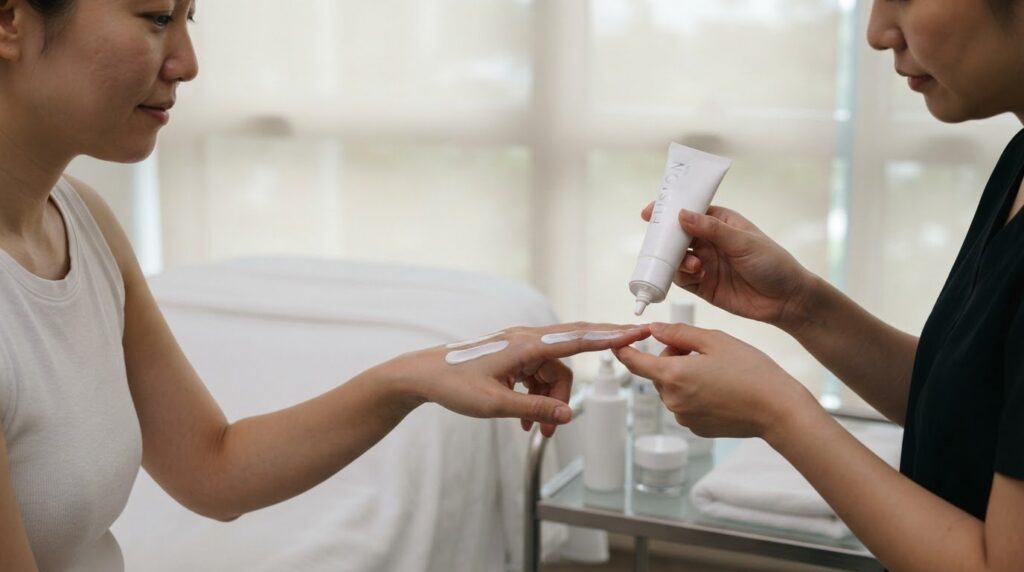
The best treatment isn’t automatically the most intensive. Useful questions to ask your aesthetician cover which treatments are available, why an option suits your skin and goals, what risks or alternatives to consider, and what aftercare to follow. Clear answers help you make an informed choice, including whether to proceed gradually or choose no treatment for now.
It’s natural to want visible results while protecting your skin’s comfort and long-term health. A thoughtful conversation can help you understand how a treatment works, what changes it aims to support, and what outcomes are realistic for your concern. This guide covers treatment options, skin suitability, preparation, aftercare, and timelines, so you can approach your consultation with greater confidence and a plan shaped around your needs.
Key Takeaways
- Describe your skin concerns, sensitivities, medications and goals so your aesthetician can recommend suitable treatment and skincare options.
- Ask what preparation and recovery involve, including how to protect your skin from the sun and which products to pause.
- Request clear aftercare instructions and keep them handy so you can follow them consistently after your appointment.
- Discuss how your skin tends to react to exfoliation, including redness and recovery, before choosing a treatment.
- Agree on realistic goals, expected changes and treatment limits before deciding on a plan.
1. What skincare treatments do you offer?
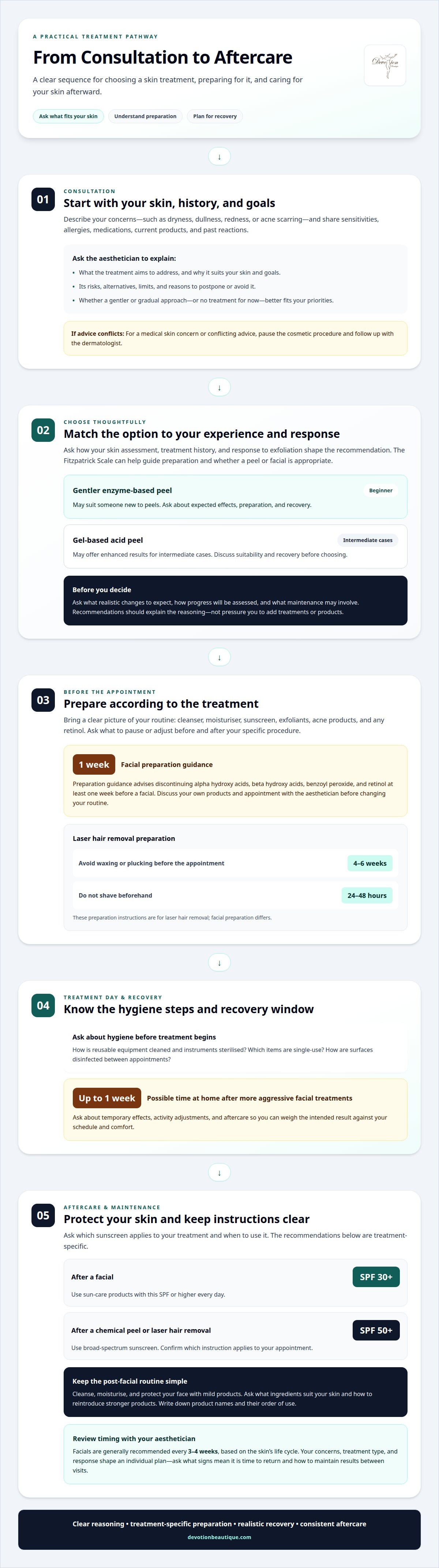
Begin your consultation by asking which treatments address your specific concerns, such as dryness, dullness, redness, or acne scarring. Ask how each option works, what changes it aims to support, and why it suits your skin and goals. A useful recommendation should explain its purpose, alternatives, risks, and reasons to postpone or avoid the procedure. Ask whether a gentler or more gradual approach could suit you better. Choosing no treatment is also reasonable when the benefits, recovery, or timing don’t fit your priorities.
Skin analysis should connect what the aesthetician observes with your treatment and home-care recommendations. Share your current routine, past reactions, allergies, medications, and any products that cause irritation. Then ask which observations inform the proposed plan and how recommended skincare products address your concerns. For example, if dryness is your main concern, ask whether suggested products support hydration and how they fit with what you already use. Specific reasoning helps you understand the plan without feeling pressured to add treatments or products.
Ask what a realistic appointment schedule looks like and what affects maintenance. Estheticians generally recommend facials every three to four weeks, based on the skin’s life cycle, but your concerns, treatment type, and response shape an individual plan. Ask what signs indicate it’s time to return, whether appointments should be spaced differently, and how results are maintained between visits. A skincare routine may also need adjustment as your skin’s needs change. Request a clear explanation of the recommended sequence before committing to a series.
To compare an aesthetician’s recommendation with a dermatologist’s advice in Singapore, ask each professional to clarify the goal, suitability, risks, and alternatives behind their advice. Treat recommendations as complementary only when their reasoning aligns; for a medical skin concern or conflicting advice, pause the cosmetic procedure and follow up with the dermatologist.
Ask how the appointment room and reusable equipment are cleaned, how instruments are sterilised, and which items are single-use. You can also ask how treatment surfaces are disinfected between appointments and what infection-control steps take place before your procedure. These practical questions help you understand the hygiene process before treatment begins.
Finally, ask what your skin may look or feel like afterward and how recovery could affect your plans. More aggressive facial treatments may require staying home for up to a week. Ask about temporary effects, activity adjustments, and aftercare before selecting an appointment date. A clear explanation lets you weigh the intended result against your schedule and comfort.
2. Sun protection and skincare after treatment
Make sun protection part of the aftercare conversation, not an afterthought. Ask which sunscreen suits the procedure and when to apply it. After a facial, use sun-care products with SPF 30 or higher every day. After a chemical peel or laser hair removal, use broad-spectrum sunscreen with SPF 50 or higher. These recommendations differ by treatment, so ask which instruction applies to your appointment. Also clarify how to protect treated areas outdoors and what to do if your skin feels uncomfortable.
Bring a clear picture of your current routine to the consultation. Name your cleanser, moisturiser, sunscreen, exfoliants, acne products, and any retinol you use. Ask whether to pause or adjust any product before and after treatment. Preparation guidance advises discontinuing alpha hydroxy acids, beta hydroxy acids, benzoyl peroxide, and retinol at least one week before a facial. This is a reason to discuss your own products and appointment with the aesthetician, rather than changing a routine without guidance. Ask whether you moisturise twice a day and whether your daytime and nighttime routines should differ.
After a facial, keep the basic routine simple: cleanse, moisturise, and protect your face with mild products. Ask what ingredients suit your skin and how to reintroduce stronger products. Hyaluronic acid can help bind water to the skin and support its moisture barrier. Your aesthetician can explain whether it fits your routine, alongside your existing products. Write down the product names and order of use, so your morning and evening steps remain clear.
Skin needs can shift with the seasons. In winter, skin may become drier and need extra moisture, so ask whether your treatment plan or moisturiser should change. Singapore’s weather and your time outdoors also shape how practical your routine feels. Discuss what you can maintain consistently, including sun protection during everyday activities. For example, someone using exfoliants may need different advice from someone focused on hydration. A seasonal adjustment should respond to your skin, not simply add more products.
Ask which treatment options match your concern and experience with exfoliation. A gentler enzyme-based peel may suit a beginner, while a gel-based acid peel may offer enhanced results for intermediate cases. Ask about expected effects, preparation, recovery, and the reason for choosing one approach. Facial preparation differs from laser hair removal: guidance for laser hair removal usually includes avoiding waxing or plucking for 4–6 weeks before an appointment and not shaving for 24–48 hours beforehand. For a targeted body concern, you can discuss the Underarm Bleaching Advanced Treatment and its relevant skincare instructions.
3. How do you determine what facial treatments are best for my skin?
A suitable facial starts with your skin concerns, history, and desired outcome. Ask how the aesthetician’s assessment shapes the treatment plan. A customised plan can address dull complexion, redness, sun damage, brown spots, or acne scarring. Ask which concern the facial targets first, what benefit it aims to provide, and how progress will be assessed. The Fitzpatrick Scale can help guide preparation and whether a peel or facial is appropriate. Ask how your skin’s response and treatment history influence that decision.
Before leaving your appointment, ask for aftercare instructions in clear steps. Medical information forgotten immediately is estimated at between 40% and 80%, and close to half of the information people retain is retained incorrectly. Keep the directions in writing, and ask the aesthetician to clarify any step that feels unfamiliar. For example, confirm which products to use, which to avoid, and when your usual routine can resume. Clear instructions make it easier to care for your skin consistently after treatment.
- Ask what to do on the day of your facial.
- Write down product names and the order of use.
- Clarify how long to avoid exfoliating treatments.
- Ask who can answer follow-up questions about your aftercare.
After a facial, allow your skin to breathe and refrain from makeup. Avoid exfoliating treatments while your skin recovers. If your appointment includes a chemical peel, follow the specific aftercare instructions provided. Ask what temporary changes to expect and which signs call for follow-up. The right steps depend on the treatment performed, so don’t apply a general routine to every facial. Following post-appointment instructions can help support treatment results.
Make follow-up support part of the conversation before you leave. Ask how to reach someone who can clarify aftercare and what information to share if your skin reacts differently than expected. Note the treatment date, procedure performed, and any products used afterward. At a later appointment, those details help you compare your skin’s response and discuss adjustments. If instructions conflict with advice from a clinician managing a skin condition, pause new products and ask that clinician for guidance.
Before booking another facial, review the plan and its reasoning. Ask which changes to look for, when progress will be reviewed, and how the next treatment builds on this one. A simple written record of your concern, treatment, and aftercare keeps the discussion specific. It also helps you distinguish routine recovery from a reason to seek follow-up, rather than relying on memory alone.
4. Redness after exfoliation and skin vascularity
Redness after exfoliation can provide useful context about your skin’s response, but it isn’t a diagnosis by itself. Ask how long redness may last after the specific procedure and what signs warrant follow-up. Describe your experience, such as flushing after a scrub or redness that remains visible throughout the day. Also mention marks or scarring left by past breakouts. This history makes the conversation specific to your skin rather than a generic exfoliation routine.
Ask how skin vascularity may affect the chosen exfoliation approach. Hypervascular skin tends to flush easily, stay flushed throughout the day, and heal faster than normal skin. Hypovascular skin is less reactive to exfoliation and heals more slowly than normal skin. Share what you notice after heat, exercise, or skincare products, then ask how those patterns inform the procedure. This is useful education: it connects your experience of redness and recovery with treatment planning.
If you develop dark marks after irritation or breakouts, explain when they appear and how long they remain. Ask whether exfoliation is appropriate for your concern and how the plan accounts for marks, redness, or existing acne scarring. Ask what the treatment is intended to change and what it cannot address. For example, distinguish a goal of improving uneven-looking tone from a goal of changing a depressed scar. Precise goals help you understand the proposed approach.
Tell the aesthetician about allergies and every medication you take, including birth control, steroids, thyroid medication, anti-seizure medication, immunosuppressants, and some depression medications. Some medications can trigger acne breakouts and other skin issues. Ask which products and ingredients will be used, and whether any could cause an allergic reaction given your history. Name known allergies before application, and ask how the treatment can be adapted around them. This information matters even if the medicine was prescribed for an unrelated concern.
Before extractions, ask which method the aesthetician will use and why it suits your skin’s sensitivity. Describe whether your skin is oily, dry, or normal, and mention discomfort or marks after previous extractions. Ask whether the approach changes for a tender breakout or skin already irritated by exfoliants. Clear answers help you understand the method before it begins. Don’t treat stronger pressure as a measure of a better result.
Finally, ask what to pause before the appointment. Some treatments may require avoiding exfoliants or benzoyl peroxide for a few days before treatment to help minimise irritation. Tell the aesthetician which products you use, including active ingredients, and ask for a simple preparation sequence. If redness, dryness, or sensitivity changes before the appointment, update the practitioner before proceeding. A small detail, such as recently adding a new exfoliant, can make the treatment discussion more accurate.
5. Understanding a client’s skin goals and setting realistic expectations
Start by naming the change you want, then describe what it means to you. “Brighter skin” might mean a more even-looking tone, while “smoother” might mean softer texture or less visible acne scarring. Ask what the treatment is intended to change, which concerns it can address, and what its limits are. A clear goal gives you and the aesthetician a shared reference point for discussing options and progress.
Set the timeline around your skin concern and the treatment’s purpose. After facial rejuvenation therapies, the body’s natural healing process may take several months to boost collagen levels and improve the skin. Ask what changes may appear first, when progress is assessed, and whether the plan involves stages or maintenance. For example, a wedding six weeks away may not leave enough time to address major acne scarring. Bring important dates into the discussion before choosing a procedure.
Ask how the aesthetician will adapt skincare products to your skin type and goals. A recommendation should connect the product’s purpose with your concern, such as hydration, dullness, or sensitivity. Share what you already use and what feels comfortable to maintain. Then ask which products support the treatment plan, how to prepare your skin, and how daytime and nighttime care may differ. A focused routine is easier to follow than a collection of products without clear roles.
In Singapore, ask who is authorised to perform the specific procedure, such as an injectable or laser treatment, and what professional oversight applies. The word “aesthetician” alone does not explain a practitioner’s scope for every procedure. Ask who will perform it, what relevant training and experience they have with that procedure, and how they manage its risks. These questions help you understand the practitioner’s role without confusing general skincare services with medical procedures.
Make the consultation practical by writing down three things: your main concern, your desired change, and your deadline. Ask the aesthetician to explain the recommended option, its limits, and how progress will be reviewed. If the proposed plan doesn’t match your priority, say so before proceeding. A realistic plan can also involve a gentler approach, staged goals, or no treatment at that time.
Finally, ask how recommended products and appointments work together over time. Skin needs and responses can change, so ask what would prompt an adjustment to the plan. Leave with a simple way to track progress, such as noting changes in texture, tone, or comfort between appointments. That record gives your next discussion a concrete starting point and helps keep expectations aligned with the treatment’s intended benefit.
Devotion Beautique: Advanced Aesthetic Series Skin Boosting RETREAT
Devotion Beautique’s Advanced Aesthetic Series Skin Boosting RETREAT is a next step for readers seeking a tailored approach to skin concerns. Its personalised treatment programmes support goals such as hydration, brightening, firming, calming, repair, or age-support. Share the changes you hope to see, your skin history, and any sensitivities during your discussion, then ask how the treatment approach relates to those priorities.
If your needs are more focused, the ReProgram Facial and Remedial Facial support targeted skin goals, while the Relaxation Facial centres on relaxation. The Underarm Bleaching Advanced Treatment addresses a different, specific concern. Choosing between options starts with matching a treatment to your needs and understanding its intended role in your care.
For a considered next step, contact Devotion Beautique or visit devotionbeautique.com.
Make your next skin-care decision with confidence
Before your next consultation, decide what you most want to feel comfortable changing. Put that priority into your own words, then use your questions to ask your aesthetician whether the proposed approach aligns with it. Take time to consider your options rather than deciding simply because a treatment has been discussed. Your preferences belong at the centre of the conversation.
It can also help to define what would make the experience worthwhile for you, beyond a visible result. Perhaps you value a routine you can sustain, a gradual approach, or feeling better informed before choosing. Share that preference openly. A considered next step should reflect both your skin priorities and the kind of care that feels right for you.
If you’re ready to continue the conversation, contact Devotion Beautique. Take your time, ask what matters to you, and move forward when you feel prepared.
Frequently Asked Questions
What skincare treatments do you offer?
Devotion Beautique offers facial programmes, skin treatments, and body refinement services. Facial options include the Relaxation Facial for general skin well-being, the Remedial Facial for skin maintenance and specific concerns, and the ReProgram Facial for targeted correction. The Advanced Aesthetic Series Skin Boosting RETREAT and Underarm Bleaching Advanced Treatment are also offered. Match your concern to an option during your consultation, and ask what the treatment is designed to address.
What take-home products do you recommend?
Recommended products should fit your skin type, concerns, and existing routine. Devotion Beautique offers curated skincare products through its online e-shop. For example, the Physiodermie Recovery Night Mask is described as an all-skin-type cream-mask with stabilized Vitamin C, micro-encapsulated peptide, and high and low molecular weight Hyaluronic Acids. Review the packaging ingredients before use, since product formulas may evolve, and ask how a product fits into your routine.
Can I decide not to have treatment after a consultation?
Yes. A consultation can help you understand your options without obliging you to proceed with a treatment. Take time to consider the proposed approach, compare it with your priorities, or decide that no treatment is right for you at present. If you’re unsure, ask about the recommendation’s purpose and alternatives, then decide when you feel ready.
How do you determine what facial treatments are best for my skin?
A suitable facial depends on your skin concerns, history, and goals. Devotion Beautique’s Relaxation Facial supports general well-being, while the Remedial Facial focuses on maintenance and specific concerns. The ReProgram Facial is designed for targeted correction and longer-term improvement. During a consultation, describe what you want to address, then ask why a particular programme suits that priority and what it is intended to support.
How often should I get a facial?
Estheticians generally recommend a facial every three to four weeks, based on the skin’s life cycle. Your concerns, the facial selected, and your skin’s response can influence the schedule. Ask whether the suggested interval supports your treatment goals, and how appointments should fit around other procedures or changes in your routine. A planned cadence is more useful than booking repeatedly without reviewing your skin’s needs.
What should I ask an aesthetician during my first consultation?
Bring a concise record of your main concern, current products, known allergies, and past reactions. Ask which treatment options suit your goals, who will perform the procedure, and what relevant experience they have. You can also ask about risks, alternatives, preparation, and aftercare. These questions to ask your aesthetician help focus the conversation on practical choices, rather than leaving with recommendations that are difficult to compare or remember.
What questions should I ask about a facial or skincare treatment’s steps and duration?
Ask the aesthetician to describe the treatment sequence, explain which steps address your concern, and clarify whether consultation time is included. The Advanced Aesthetic Series is listed at 75 minutes, as are the Relaxation Facial and ReProgram Facial. Ask what to expect during each stage, whether the procedure involves exfoliation or extractions, and what changes to your schedule or routine may follow.
What questions should I ask about treatment prices, packages, and hidden fees in Singapore?
Ask for the full fees for your proposed treatment plan, including any planned stages, and clarify whether recommended take-home products are separate. If a package is suggested, ask what it includes and how appointments are arranged. Devotion Beautique’s FAQ states, “there is no existence for Hidden Cost.” Request a clear breakdown before deciding, so you can consider the complete plan against your priorities.