
Vitamin C Infusion Facial Benefits for Brighter-Looking Skin
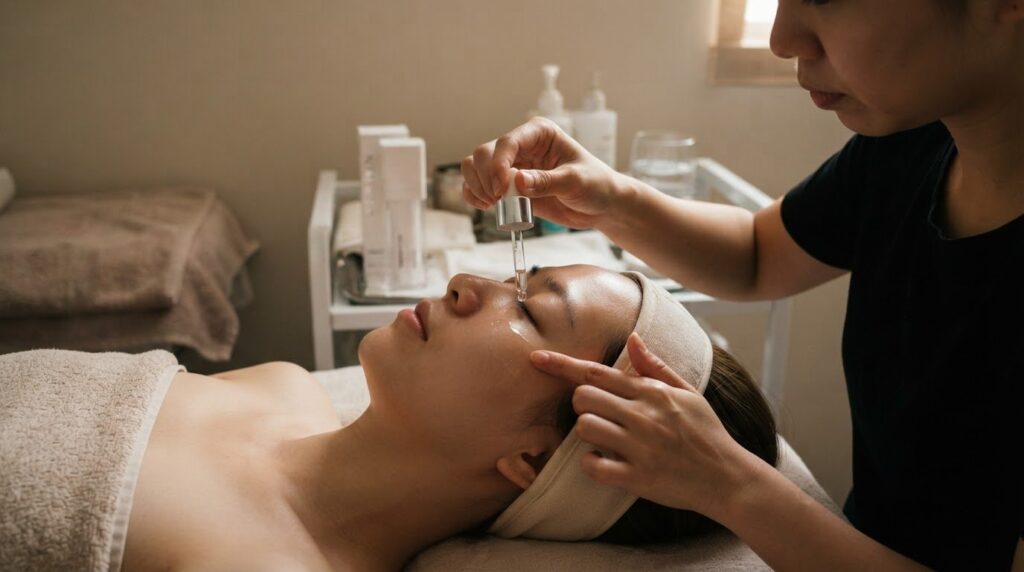
Brighter-looking skin doesn’t have to mean a dramatic change. Vitamin C is an antioxidant, and a facial that incorporates it may help skin appear more radiant; the vitamin C infusion facial benefits you notice can depend on the treatment approach and your skin’s needs. One session may leave the complexion looking brighter for a few days, while concerns such as dark spots can take longer to improve.
If you’re considering this treatment, it helps to understand what “infusion” means in a facial, how vitamin C may support skin, and what the experience can realistically offer. This guide covers the potential vitamin C infusion facial benefits, what happens during treatment, and what to expect afterwards, including results and downtime. It also compares a facial with at-home vitamin C and other approaches to help you make an informed choice for your skin.
Key Takeaways
- Understand how vitamin C’s antioxidant role may help skin cope with oxidative stress and support a brighter-looking complexion.
- Learn why vitamin C is involved in collagen formation, and what that may mean for skin firmness and elasticity.
- Know what an infusion facial can involve and how it differs from applying vitamin C at home or choosing other facial treatments.
- Set realistic expectations: brightness may be temporary after one session, while dark spots can take longer to fade with consistent care.
- Explore how Devotion Beautique’s ReProgram Facial and Advanced Aesthetic Series Skin Boosting RETREAT may fit into a personalised approach to skin goals.
Antioxidants and oxidative stress
Free radicals are unstable molecules that can contribute to oxidative stress and skin damage. Environmental exposures, including sunlight and pollution, can also affect facial skin. Over time, oxidative stress may contribute to visible changes associated with premature ageing, such as a duller-looking complexion. Antioxidants help counter this process by interacting with reactive molecules. Vitamin C is one antioxidant used in skincare. It supports the skin’s defences, rather than erasing every effect of environmental exposure.
Vitamin C can also help regenerate other antioxidants after they have neutralised reactive molecules. This recycling activity is one reason it is discussed as part of a broader antioxidant network. Its effects depend on factors such as skin condition and the form of vitamin C used. A facial featuring vitamin C is one part of a skincare approach, not a substitute for daily measures that limit environmental stress.
Inflammation is another part of the picture. Vitamin C can help reduce inflammation, and oxidative stress and inflammation may interact in the skin. This connection matters when a complexion looks tired or uneven, but it does not mean an antioxidant facial addresses every cause of redness or discolouration. Persistent irritation, for example, can have causes beyond environmental exposure. A considered skincare plan distinguishes temporary dullness from ongoing sensitivity, then selects products and treatments suited to the concern.
Absorption also affects how vitamin C works. In a topical product, the formula and its application influence how much vitamin C reaches the skin. A facial’s infusion method describes how ingredients are delivered during treatment. It does not mean vitamin C enters the bloodstream as it would through an intravenous infusion. These are distinct approaches: a facial focuses on the skin’s surface and appearance, while intravenous delivery is a separate medical procedure.
Dose language needs the same distinction. Some descriptions classify vitamin C amounts below 10-12 grams as antioxidant doses, and describe higher doses as potentially acting differently. That figure concerns dose discussions, not a topical facial application or an at-home skincare instruction. It should not be used to calculate how much serum to apply. For facial care, follow the product directions and introduce new ingredients cautiously, especially if the skin is sensitive. This keeps antioxidant skincare grounded in topical use and its intended purpose.
Vitamin C and collagen synthesis
Collagen gives skin structural support, and vitamin C participates in the body’s collagen-building process. It acts as a cofactor for prolyl and lysyl hydroxylase, two enzymes involved in stabilising and cross-linking collagen molecules. These steps help form a stronger collagen structure. They explain why vitamin C is relevant to concerns such as a less firm-looking complexion, but they do not mean a facial instantly creates visible new collagen.
In a topical facial, vitamin C is applied to the skin as part of treatment. It supports the skin’s collagen-related processes, while the facial focuses on the skin and its appearance. An infusion facial is not the same as intravenous vitamin C: the routes of delivery differ, and findings about IV treatment cannot automatically be applied to a topical facial. Keeping this distinction in mind helps set realistic expectations.
Collagen support is different from an immediate surface effect. Skin may look refreshed after a facial, but changes associated with collagen synthesis result from biological processes, not an instant effect. A firmer-looking appearance is a potential benefit discussed in relation to vitamin C support, not a measured outcome that everyone will experience. Existing skin concerns, the treatment method, and ongoing care all shape what you notice.
At an appointment, describe your main concern clearly, such as uneven-looking tone or reduced firmness. This helps the practitioner understand your goal and consider whether a vitamin C facial fits the treatment approach. Mention any history of sensitivity and the products you currently use. Those details can inform how ingredients are applied and help avoid combining treatments in a way that leaves skin uncomfortable.
For at-home use, introduce a new vitamin C product cautiously rather than applying it across your face immediately. Patch test a small area, then wait at least 24 hours before checking for a reaction. Topical vitamin C is generally well tolerated by most skin types, but that doesn’t rule out individual side effects. If the test area becomes uncomfortable or irritated, stop using the product and seek appropriate guidance before continuing.
Consistency matters more than treating one facial as a complete collagen plan. Daily skincare can complement an in-clinic treatment, while sun protection helps limit a major source of environmental skin stress. Keep your routine comfortable and suited to your skin. Adding several active ingredients at once makes it harder to identify what caused a reaction. A thoughtful approach connects the facial’s immediate finish with the longer process of collagen support.
What a vitamin infusion facial involves
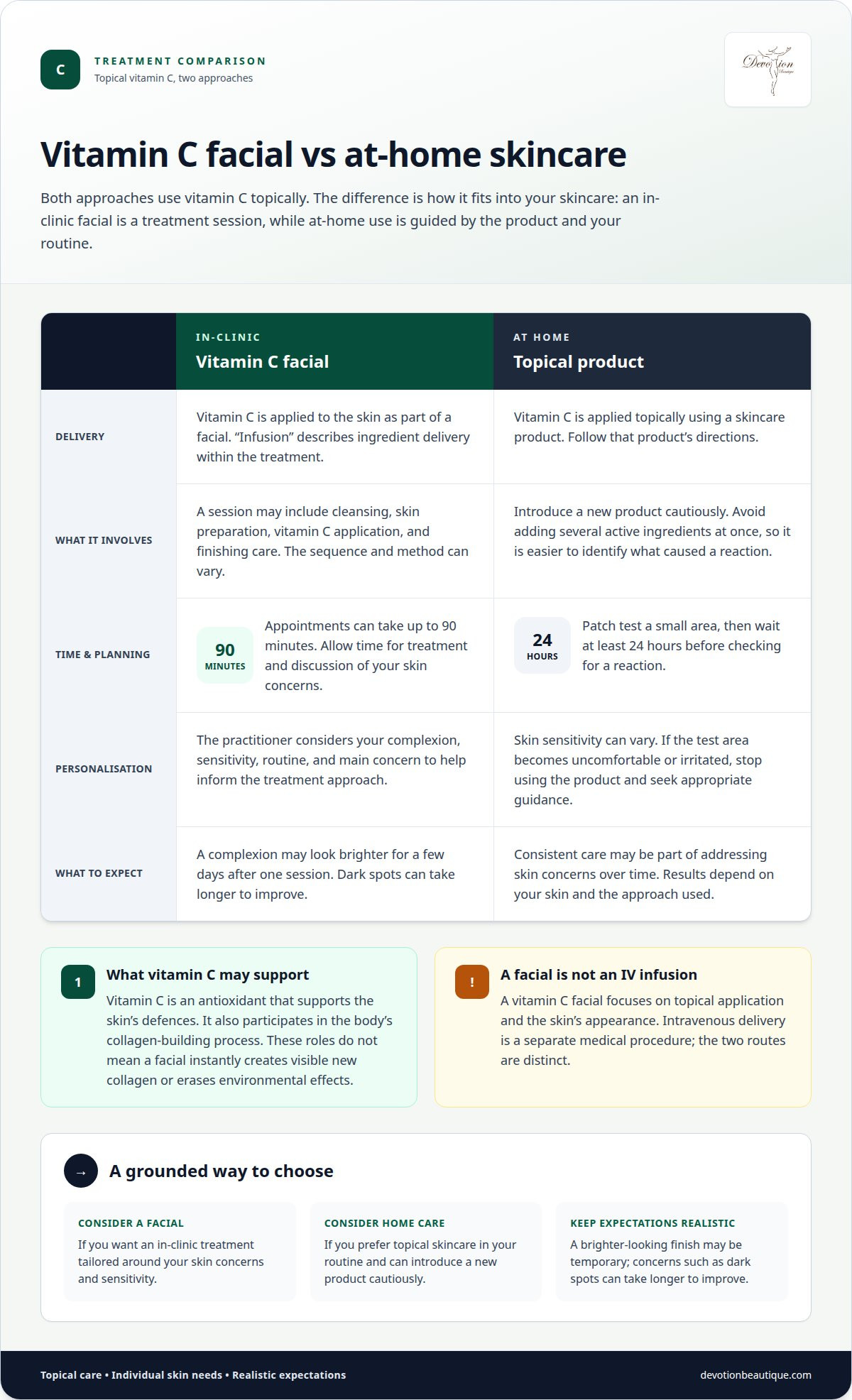
A vitamin C infusion facial is a topical skin treatment, not an intravenous infusion. The word “infusion” describes how ingredients are incorporated into a facial, but methods can differ. A session may include cleansing, preparation of the skin, application of a vitamin C product, and finishing care. The exact sequence depends on the treatment. Facial appointments can take up to 90 minutes, so allow time for both the treatment and a discussion of your skin concerns.
During preparation, the practitioner considers your complexion, sensitivity, and current skincare routine. Skin that feels easily irritated, for example, may call for a gentler approach than skin without sensitivity concerns. Vitamin C is applied topically, and the method used to support its delivery depends on the facial. “Infusion” does not mean ingredients are injected or delivered directly into the bloodstream.
People sometimes confuse a vitamin C facial with IV vitamin therapy. They are different: a topical facial works on the skin, while an IV infusion delivers nutrients into the bloodstream. A high-dose IV treatment may take from 30 minutes to several hours, depending on the dose and the person’s needs. That timing does not describe a facial appointment, and the two procedures should not be treated as interchangeable.
In Singapore, a treatment’s label alone does not determine whether it is regulated or must be performed by a licensed practitioner. The actual procedure matters, particularly whether it involves a medical intervention rather than topical application. Ask for a clear explanation of what will be applied and how. If injections or IV delivery are involved, it is no longer simply a topical facial.
To assess whether a clinic’s claims are evidence-based, compare each claim with the method and outcome described in the supporting evidence. Evidence about IV vitamin C, for example, cannot by itself prove that a topical facial produces the same effects. Look for clarity about the ingredient, delivery route, and specific skin outcome being discussed. A broad promise of “glow” is less informative than an explanation of whether the aim is temporary radiance, hydration, or another visible concern.
Before the appointment, describe products that have caused irritation and any active ingredients in your routine. This helps the practitioner consider how the facial should be adapted. After treatment, follow the care guidance provided, including using gentle products if your skin feels sensitive. If a new topical vitamin C product is part of your routine, patch test it first and wait at least 24 hours before checking the test area for a reaction.
Expected results and downtime
Before your facial, share your skin concerns, current routine, and any previous reactions to skincare products. Afterwards, use a gentle cleanser for a few days to help avoid irritating your skin. These steps give the practitioner useful context and keep post-treatment care focused on comfort. If you introduce a new product at the same time, mention it so any reaction is easier to trace.
After one vitamin infusion facial, skin may look brighter for a few days. That short-term radiance differs from fading dark spots, which may take weeks of daily care and sunscreen. A facial can refresh the complexion, but it is not an instant solution for every concern. The vitamin C infusion facial benefits you seek depend partly on whether your priority is temporary brightness or a longer-term concern.
Downtime depends on the exact treatment. One Vitamin C Infusion Peel is described as having virtually no downtime, with results lasting 6-8 weeks. Those details apply to that peel protocol, not automatically to every facial that includes vitamin C. The treatment method and the skin’s response shape what you experience afterwards. If you have an important event, consider the possibility of individual skin reactions when planning any new treatment.
Some protocols recommend a course of 6 treatments, spaced 2 weeks apart, for longer-term benefits. This is a specific schedule, not a universal requirement for every vitamin C facial. A practitioner considers your skin’s condition and goals when discussing whether a course fits. The number of sessions alone cannot explain the outcome; consistency and appropriate aftercare also matter. Ask how the proposed plan relates to your concern and what changes it aims to address.
Collagen production is gradual, so it is different from an immediate appearance of brightness. Vitamin C supports collagen synthesis, but a single facial does not establish how much collagen production will change. Oral supplements and topical treatments also use different routes. A change in supplement levels does not translate directly into a predictable facial result. Keep these distinctions in mind when weighing vitamin C infusion facial benefits against the time and care involved.
Reactions can vary depending on the formula and your skin’s sensitivity. Topical vitamin C is generally well tolerated by most skin types, but irritation can still occur. Follow the aftercare guidance provided, keep your routine gentle for a few days, and avoid adding unfamiliar active products during that time. If discomfort develops or persists, seek appropriate professional advice.
Set expectations around the concern you want to address: a temporary glow, uneven tone, and longer-term skin support each have a different timeline. Brighter-looking skin may last a few days after one session, while dark spots can take weeks of consistent care and sunscreen. Treat the facial as one part of a routine, not a substitute for daily sunscreen or ongoing skincare.
How does a vitamin C infusion facial compare with topical vitamin C, chemical peels, and microneedling?
These approaches fit into a skincare routine in different ways. A vitamin C infusion facial is an in-clinic treatment that incorporates topical vitamin C. A serum is applied at home, often as part of daily skincare. Chemical peels and microneedling use different methods, so they are not interchangeable with a vitamin C facial. The right comparison starts with your concern, desired level of intervention, and willingness to maintain ongoing care.
Topical vitamin C offers a consistent at-home option. A serum used every morning may do more for skin over a year than a monthly facial. This comparison highlights the value of routine, rather than proving one approach is best for everyone. A facial is a treatment appointment; a serum makes repeated application part of everyday care. Some people may consider both, with product choice and frequency guided by skin tolerance.
A chemical peel is a separate treatment category. Its approach differs from a facial that applies vitamin C, even if both are chosen to address visible skin concerns. The name alone does not explain the ingredients, strength, or experience involved. Discuss the specific method and expected aftercare, especially if your skin is sensitive or your routine already includes active products. This helps clarify whether a peel or a gentler topical facial better suits your priorities.
Microneedling also uses a different method from topical vitamin C application. It is not an equivalent way to deliver a vitamin C facial, and evidence for one procedure does not establish the effects of another. The key distinction is the treatment approach and the concern being targeted. If your priority is introducing vitamin C into a facial, an infusion treatment is the more direct match. If you are considering microneedling, its procedure and aftercare need separate consideration.
Use these distinctions to guide a treatment discussion. Decide whether you prefer a recurring home routine, a topical facial appointment, or a different procedure. Then explain your main concern, such as dullness or uneven-looking tone, and describe any products that have caused reactions. For dark spots, remember that daily care and sunscreen may take weeks to show a change. A single session and a sustained routine serve different roles.
No approach automatically replaces the others. A vitamin C serum can support regular care, while a facial provides a focused appointment; a peel or microneedling follows its own treatment method. If you’re weighing options for your complexion, explore facial treatment options and consider how each approach aligns with your skin goals and preferred routine.
Devotion Beautique
Devotion Beautique can help connect your skin goals with a personalised facial programme. If you are weighing vitamin C against other approaches, consider what you want to address, such as dullness, uneven-looking tone, or a need for ongoing skin support. The ReProgram Facial and Remedial Facial are options within its facial offerings, with programmes tailored to different skin concerns and long-term improvement.
A conversation about your current routine, sensitivities, and desired outcome can help shape an approach that feels considered rather than generic. It also provides an opportunity to discuss realistic expectations and how professional facial care may fit alongside daily skincare.
For guidance on a facial approach suited to your skin goals, contact Devotion Beautique.
Choose a skin plan that fits your goals
Decide what you want to prioritise: a more luminous appearance, a routine you can sustain, or support for a specific skin concern. Knowing which vitamin C infusion facial benefits matter most to you can make a treatment discussion more focused. Consider how your skin usually responds to active ingredients and what aftercare feels realistic in your daily routine.
Bring those preferences into a conversation about personalised facial care. The aim is not to pursue every treatment option, but to find an approach that feels considered and fits your longer-term skin goals. Thoughtful guidance can help turn a general wish for brighter-looking skin into a practical plan.
Contact Devotion Beautique to discuss an approach tailored to your skin goals. A calm, informed next step can make caring for your complexion feel more intentional.
Frequently Asked Questions
What can vitamin C do for your face?
Vitamin C can act as an antioxidant and support collagen synthesis, which contributes to skin structure. In facial skincare, it may help the complexion look brighter and support a firmer appearance. These are different effects, and visible changes depend on the concern and treatment approach. A refreshed look after a facial, for example, is not the same as a lasting change in skin texture.
Is vitamin C safe for me to try?
Topical vitamin C is generally safe and well tolerated by most skin types, though individual reactions can occur. If you’re trying a new product, apply a small amount to a patch-test spot and wait at least 24 hours before checking for a reaction. If the area becomes irritated, stop using the product. People with persistent sensitivity can discuss their skincare routine during a facial consultation.
Vitamin C for the skin: consumables or topicals?
Topical products and oral supplements use different routes, so do not assume they produce the same skin effects. Digestive absorption can limit how much of an oral nutrient reaches the bloodstream, while topical vitamin C is applied directly to the skin. Choose a route based on your purpose and routine. An oral supplement is not a substitute for applying sunscreen or caring for facial skin.
What are the claimed benefits of a vitamin C infusion facial?
Claims commonly focus on a brighter-looking complexion, antioxidant support, and collagen-related skin support. One treatment may leave skin looking brighter for a few days, while darker spots can take weeks of daily care and sunscreen to fade. Treat these as distinct goals, not guaranteed results. Ask what visible outcome a treatment aims to address and how it will be assessed.
How does a vitamin C infusion facial work, and what ingredients or devices are used?
The treatment applies vitamin C topically during a facial; it is not the same as an intravenous infusion. The sequence and delivery method can vary between facial protocols. A facial may include skin preparation, application of the topical product, and finishing care. The treatment name alone does not establish which device or formula is used, so understand the method before proceeding.
What skin concerns can a vitamin C infusion facial help with, such as pigmentation or dullness?
A vitamin C facial may suit someone seeking a brighter-looking complexion or support for uneven-looking tone. Temporary glow and persistent pigmentation are different concerns: one session may brighten skin for a few days, while dark spots may take weeks of consistent care and sunscreen to fade. The treatment method and your existing routine matter when setting a realistic focus.
How long do results last, and how many sessions are usually recommended?
Results and treatment schedules depend on the specific facial protocol. One described Vitamin C Infusion Peel reports results lasting 6-8 weeks and recommends 6 treatments spaced 2 weeks apart for longer-term benefits. Those details apply to that particular peel protocol, not every vitamin C facial. A single treatment may brighten skin for a few days, so distinguish a short-term effect from a course plan.
What are the side effects and risks of a vitamin C infusion facial?
Topical vitamin C is generally well tolerated, but irritation or another individual reaction can occur. Patch test a new product and wait at least 24 hours before checking the area. Risks associated with high-dose intravenous vitamin C, including vein irritation or allergic reactions, relate to IV treatment, not a topical facial. Confirm which route and procedure are being discussed before comparing risks.
