
Compare aesthetician recommended vitamin C serums by price and benefits
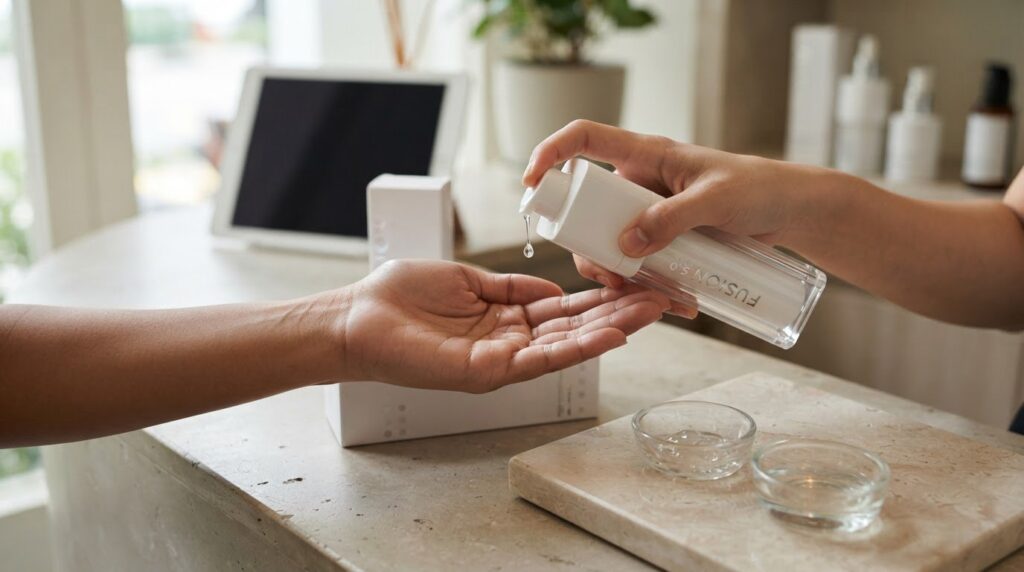
The strongest vitamin C serum isn’t automatically the best choice for your skin. An aesthetician-recommended vitamin C serum should balance its form, concentration and supporting ingredients with your skin’s tolerance and goals. For example, a 10% vitamin C formula with hyaluronic acid can be a more considered option than a higher concentration used on its own.
Vitamin C can help brighten the complexion and support collagen production, but it works gradually. Visible improvements in clarity may take four to eight weeks. The formula matters, too: L-ascorbic acid and vitamin C derivatives differ, while ingredients such as hyaluronic acid affect how a serum fits into your routine.
This guide explains what vitamin C can do, when to expect results and how to compare serums available in Singapore by ingredients and price. It also covers what to consider if your skin is sensitive, without assuming that the most concentrated or expensive option is automatically the right fit.
Key Takeaways
- Compare L-ascorbic acid with vitamin C derivatives, and match the formula’s strength to your skin’s tolerance.
- Look beyond brightening: vitamin C’s antioxidant role and relationship to collagen are also part of its appeal.
- Assess vitamin E and ferulic acid as supporting ingredients when comparing serum formulations.
- Build a consistent routine and allow four to eight weeks to assess gradual changes in skin clarity.
- Compare serums by ingredient form, supporting formula and Singapore-dollar price, rather than choosing by concentration alone.
What does vitamin C do for the skin?
Vitamin C is an antioxidant used in skincare to help address dullness and uneven-looking tone. L-ascorbic acid, also called ascorbic acid, is the direct, active form commonly used in serums. Vitamin C derivatives are alternative forms used in topical formulas; labels may list ingredients such as sodium ascorbyl phosphate or ascorbyl glucoside. Because formulations differ, a serum’s percentage alone doesn’t show how well it will suit your skin.
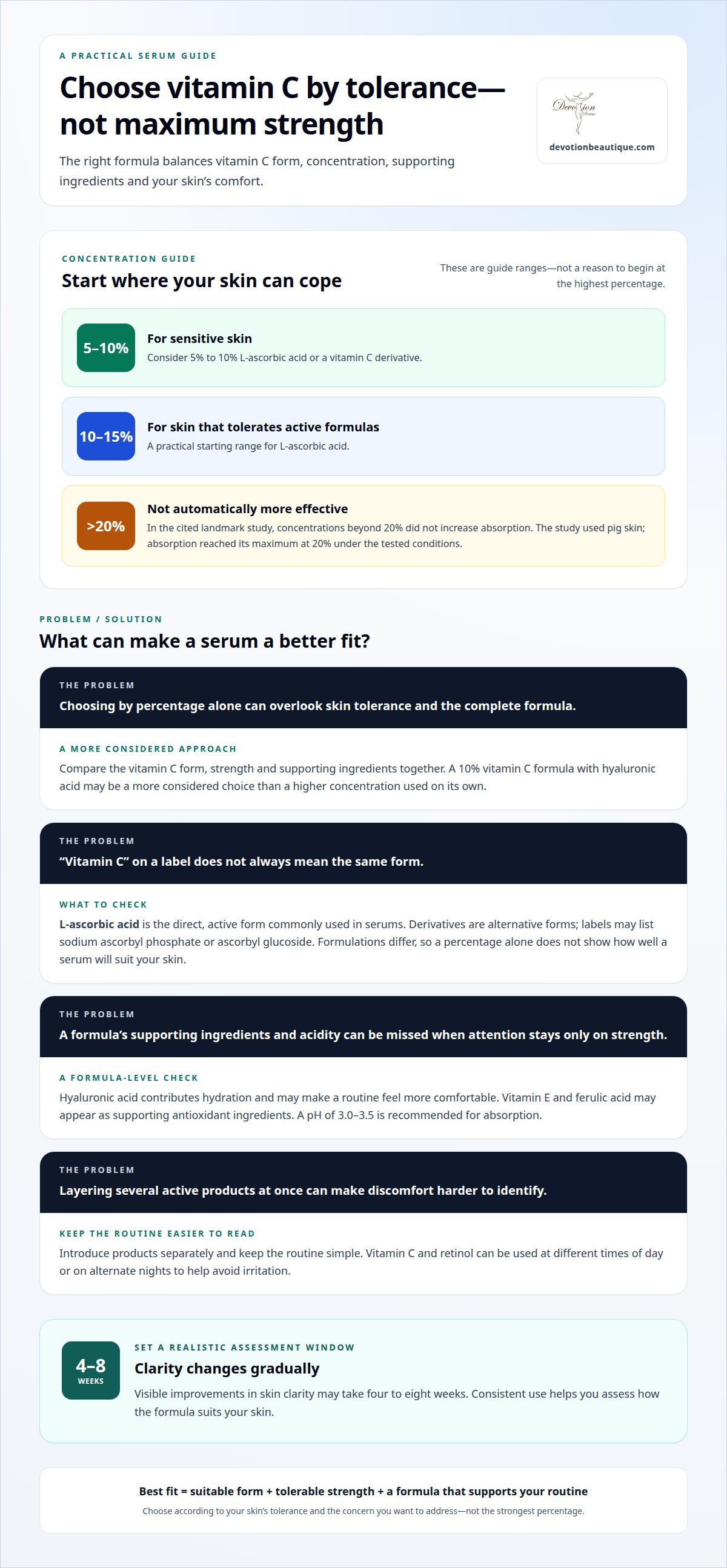
For skin that tolerates it, a serum with 10% to 15% L-ascorbic acid is a practical starting range. Sensitive skin may be better suited to 5% to 10% L-ascorbic acid or a vitamin C derivative. A review used 5% to 20% as one of its criteria for an ideal formula, while another recommendation identifies 10%-20% as an effective concentration range. These ranges are guides, not a reason to begin at the highest percentage.
More isn’t always better. In an experimental study using pig skin, L-ascorbic acid absorption reached its maximum at 20% under the tested conditions; the cited landmark study found that concentrations beyond 20% did not increase absorption. Formulation matters as well: a pH of 3.0-3.5 is recommended for absorption. A 10% vitamin C serum with hyaluronic acid may outperform a higher concentration of vitamin C alone, illustrating why supporting ingredients and the complete formula deserve attention.
What concentration and form of vitamin C are most effective for different skin types? For skin that tolerates active formulas, consider 10% to 15% L-ascorbic acid; for sensitive skin, start with 5% to 10% L-ascorbic acid or a derivative. Choose according to tolerance and the concern you want to address, rather than pursuing the strongest percentage.
| Option | Concentration | Consideration |
|---|---|---|
| L-ascorbic acid | 10% to 15% | Starting range for skin that tolerates it |
| L-ascorbic acid or a derivative | 5% to 10% L-ascorbic acid | Possible starting point for sensitive skin |
| L-ascorbic acid | Above 20% | Did not increase absorption in the cited landmark study |
Choose a form and concentration your skin can tolerate, then compare the supporting ingredients and the serum’s pH.
Can vitamin C serum be used with retinol, niacinamide, or exfoliating acids? Vitamin C and retinol can be used at different times of day or on alternate nights to help avoid irritation. With niacinamide or exfoliating acids, introduce products separately and keep your routine simple enough to identify which formula suits your skin.
Antioxidant and collagen-related benefits
Vitamin C has two notable roles in skincare: antioxidant support and involvement in collagen production. These relate to different skin concerns, so the ingredient’s value isn’t limited to a brighter-looking complexion.
Clinical Evidence for Vitamin C Benefits
A 2023 systematic review of topical vitamin C for melasma and photoaging included 7 publications and 139 participants. That evidence focuses on two concerns, uneven pigmentation and visible changes associated with sun exposure, rather than every possible skincare goal.
The review offers useful context, but its publication and participant counts don’t establish that every serum produces the same results. Formula, consistent use and the concern being addressed all matter when interpreting evidence. Vitamin C is an antioxidant that can help counter oxidative stress from environmental exposure. Its role is supportive, not a substitute for sun protection.
Collagen is a structural protein that helps maintain skin firmness. Topical vitamin C is associated with collagen synthesis, making it relevant to routines focused on texture and age-related changes. This differs from its antioxidant role: one concerns cellular defence, while the other relates to the skin’s structural framework. Neither means a serum can erase established lines.
Vitamin C and Hyaluronic Acid Benefits
Vitamin C and hyaluronic acid support complementary routine goals. Vitamin C provides antioxidant support and can help improve the look of uneven tone. Hyaluronic acid is used to hydrate by attracting and holding water in the skin’s surface layers. Together, they pair brightening support with a more hydrated feel.
This pairing differs from a vitamin C formula focused solely on antioxidant ingredients. Hydration can make skin feel more comfortable, particularly when dryness makes a routine harder to tolerate. It doesn’t turn vitamin C into a collagen treatment or guarantee greater absorption. Consider the complete formula and how it feels on your skin, rather than judging it by ingredient count alone.
For a practical routine, apply vitamin C consistently, then follow with moisturiser and broad-spectrum sunscreen in the morning. Sunscreen remains essential because antioxidant skincare doesn’t replace protection against ultraviolet radiation. If your skin is sensitive, introduce the serum gradually and avoid layering several potentially irritating active ingredients at once. A simple routine makes it easier to notice whether a formula causes discomfort.
Think of the benefits as complementary, not interchangeable: antioxidant support addresses environmental stress, collagen-related activity supports skin structure, and hyaluronic acid contributes hydration. For example, someone focused on dullness and surface dryness may value a formula pairing vitamin C with hyaluronic acid, while a routine targeting photoaging may prioritise consistent antioxidant use alongside sunscreen. The 2023 review offers context, but choosing a serum still means matching its purpose to your skin concern.
Do vitamin E and ferulic acid improve vitamin C absorption or effectiveness?
Vitamin E and ferulic acid may appear alongside vitamin C in antioxidant serums. Their presence can complement a brightening routine, but an ingredient list alone doesn’t show how well the complete formula performs.
Vitamin E and Ferulic Acid in Formulas
Some vitamin C serums include vitamin E and ferulic acid as supporting antioxidant ingredients. They differ from hyaluronic acid, commonly used for hydration, because they contribute to the formula’s antioxidant focus. A serum containing all three therefore combines distinct ingredient roles. However, their inclusion alone doesn’t demonstrate increased vitamin C absorption or prove greater effectiveness for every skin concern.
Read the full ingredient list rather than treating a familiar combination as a guarantee. One formula might pair ascorbic acid with vitamin E and ferulic acid, while another relies on vitamin C alone. Compare the complete formulation, including the vitamin C form, supporting ingredients and how comfortably it fits your routine.
Serum Formulations
Vitamin C serums vary in form, texture and supporting ingredients. A water-based formula may feel different from an oil-based one, while a serum containing hyaluronic acid adds a hydration-focused ingredient. These differences affect the product experience and fit within your routine; they don’t establish that one formulation is universally more effective.
For brightening, compare the vitamin C ingredient with its supporting formula. A product with several antioxidant ingredients may suit someone seeking a broader antioxidant-focused routine, while a simpler formula can make it easier to identify how your skin responds. If your skin is sensitive, introduce one new serum at a time.
Stability matters because vitamin C can be affected by air and light, particularly in formulations containing L-ascorbic acid. Packaging can help limit exposure: an opaque, tightly sealed container is generally preferable to a clear bottle opened frequently. Still, packaging cannot guarantee stability, and an ingredient list doesn’t reveal how carefully a formula was produced or stored.
Check the serum’s appearance and packaging each time you use it. A noticeable colour change can signal that the formula has altered, although appearance alone cannot confirm its condition. Keep the container closed between applications and follow its storage directions. These steps help reduce unnecessary exposure and keep your routine consistent.
Choose by purpose, not by the longest ingredient list. If hydration is a priority, consider whether hyaluronic acid is included; if antioxidant support matters, look at vitamin E or ferulic acid as supporting ingredients. Then assess the vitamin C form, packaging and comfort on your skin. A personalised facial approach can also help place home skincare within a broader routine.
Expected time to see results
Vitamin C serum is a consistent skincare step, not an overnight brightening treatment. Gradual improvements in skin clarity and brightness may appear over four to eight weeks. This gives you a more useful timeframe for assessing a routine than judging the serum after one morning application.
Consistency matters: occasional use makes it harder to tell whether the ingredients suit your skin. Apply the serum once daily in the morning, then follow with moisturiser and broad-spectrum sunscreen. Keep the rest of your routine steady during this period. Adding several new products at once can make it difficult to identify which ingredient is responsible for a change or irritation.
Sun exposure also affects how you interpret progress. Vitamin C skincare doesn’t replace sunscreen protection against ultraviolet radiation, so apply broad-spectrum sunscreen after your morning routine. Reducing unprotected exposure helps keep the routine focused on your skincare goals. A serum alone cannot provide the same protective role as sunscreen.
Track one concern at a time. If uneven-looking tone is your priority, note the appearance of dark areas and overall clarity. If dullness is the focus, observe whether your complexion looks more even. Compare your skin in similar lighting and conditions. For example, a photograph taken beside the same window can be more informative than comparing a bright bathroom mirror with a dim room in the evening.
Pay attention to comfort as well as appearance. A serum that causes persistent stinging, redness or dryness may not be a practical fit, even if its ingredients look appealing. If discomfort develops, pause use rather than applying it more often. A stable routine makes it easier to connect a reaction with a specific formula instead of several new ingredients introduced together.
Ingredient choice can shape your experience. L-ascorbic acid is a direct form of vitamin C, while derivatives offer alternative formulations; your skin’s tolerance helps determine which suits your routine. A lower concentration or a derivative may be a considered starting point for sensitive skin. Keep your application pattern consistent so changes in clarity aren’t confused with changes in frequency or formula.
Use the four-to-eight-week timeframe as a review point, not a promise of identical results for everyone. Consider whether brightness or clarity has changed and whether the serum remains comfortable. With morning vitamin C, moisturiser and sunscreen, you can assess the product in context rather than attributing every visible change to one ingredient.
Vitamin C serum product comparisons and prices
A useful comparison considers formula, skin tolerance and value together. In Singapore, compare products in S$ and look beyond the shelf price: container size, vitamin C form and supporting ingredients all affect what you’re buying.
Which vitamin C serums do licensed aestheticians recommend, and why? There isn’t one formula for every skin type. A considered recommendation matches the vitamin C form and concentration to a person’s tolerance, concerns and existing routine, rather than relying on the highest percentage or price.
Which vitamin C serums are available from reputable Singapore retailers or clinics? Compare product labels and local listings, focusing on the stated vitamin C form, concentration, supporting ingredients and packaging. Availability can change, so formula details offer a more useful basis for comparison than a retailer or clinic name alone.
The comparison below uses formula categories rather than brand names. It distinguishes options by intended fit without treating price as proof of performance.
| Serum type | Formula focus | What to compare | Possible fit |
|---|---|---|---|
| L-ascorbic acid serum | Direct vitamin C form | Concentration, packaging and supporting ingredients | Skin that tolerates this form |
| Vitamin C derivative serum | Alternative vitamin C form | Named derivative and full formulation | Those considering a different formula type |
| Vitamin C with hyaluronic acid | Vitamin C plus hydration support | Ingredient balance and feel on skin | Routines seeking both brightening and hydration |
To compare value, divide the S$ price by the stated volume to calculate the cost per millilitre. This makes differently sized bottles easier to compare. It doesn’t measure formula quality, so consider it alongside the ingredient list, packaging and fit with your routine. A larger bottle may have a lower cost per millilitre, but it offers value only if you’ll use it comfortably and consistently.
Price comparisons should also account for formula stability. L-ascorbic acid can be vulnerable to air and light, so a tightly sealed, opaque container is a practical packaging feature to consider. Review the product’s storage guidance and observe changes in appearance. Tingling isn’t a reliable measure of effectiveness; comfort and consistent use matter more.
One product review tested 34 vitamin C products over three months, underscoring how varied the category can be. Use a simple shortlist: identify the vitamin C form, compare the stated concentration, assess supporting ingredients, then compare S$ per millilitre. Keep sunscreen in your morning routine, since serum doesn’t replace ultraviolet protection.
If you’d like skin-focused support beyond choosing a home serum, explore the Advanced Aesthetic Series Skin Boosting RETREAT at Devotion Beautique as a treatment option for a personalised skincare journey.
Options include L-ascorbic acid for skin that tolerates it, a vitamin C derivative for those considering another formula type, and vitamin C with hyaluronic acid for routines seeking brightening and hydration. Choose according to your tolerance, concerns and existing routine.
Devotion Beautique: Advanced Aesthetic Series Skin Boosting RETREAT
Devotion Beautique’s Advanced Aesthetic Series Skin Boosting RETREAT! offers a next step if choosing a vitamin C serum feels like only one part of your skincare journey. Its personalised approach can address goals such as hydration, brightening, calming, repair or age-support, placing individual skin needs within a broader treatment programme.
Consider this option if you want support beyond selecting ingredients for your home routine, or if you have several skin goals. A tailored treatment programme can help shape a considered approach to ongoing care, while a serum remains one part of daily skincare. Contact Devotion Beautique to discuss the Advanced Aesthetic Series Skin Boosting RETREAT!
Make your next skincare choice personal
Your routine should feel sustainable, not like a constant search for a stronger formula. Treat serum selection as one part of a considered approach: think about the concern you want to address, the products you already use and what feels comfortable enough to maintain. An aesthetician-recommended vitamin C serum is most useful when it fits your individual priorities.
If you’d like support beyond choosing a product, Devotion Beautique’s ReProgram Facial is designed for targeted correction and long-term skin improvement. It may suit you when your goals call for a personalised treatment alongside home care. The aim is not to make every routine more complicated, but to help make it intentional and suited to you.
For a conversation about your skincare goals and possible next steps, contact Devotion Beautique. A considered choice can be the beginning of a more confident, consistent approach to caring for your skin.
Frequently Asked Questions
How can I tell whether vitamin C has oxidised?
Look for a noticeable change in the serum’s colour, especially if it has darkened from its original appearance. Air and light can affect vitamin C formulations, so note the product’s original colour and follow its storage instructions. A change in smell or texture is also a reason to stop using the product and review its packaging guidance. Colour alone can’t confirm the formula’s condition, so follow the manufacturer’s directions.
How long does vitamin C take to work?
Visible changes in skin clarity and brightness may develop gradually over four to eight weeks of consistent use. For a practical assessment, focus on one concern, such as uneven-looking tone, and compare your skin under similar lighting. Avoid changing several products at once, since that makes it harder to identify what’s affecting your complexion. Keep sunscreen in your routine while using vitamin C.
How should a vitamin C serum be used?
Apply vitamin C serum once daily in the morning, before moisturiser and broad-spectrum sunscreen. Use two to four drops over the face and neck, unless the product’s directions say otherwise. Keep the bottle closed between uses and follow its storage instructions. Sunscreen remains necessary: vitamin C skincare doesn’t replace protection against ultraviolet radiation.
What is the best vitamin C percentage?
There isn’t one best percentage for every skin type. For skin that tolerates L-ascorbic acid, 10% to 15% is a practical starting range; sensitive skin may start with 5% to 10% L-ascorbic acid or a vitamin C derivative. Higher strength isn’t automatically a better match. Consider the ingredient form, supporting formula and comfort alongside the percentage on the label.
Which vitamin C serums are suitable for sensitive, acne-prone, oily, or dry skin?
For sensitive skin, consider a lower-strength L-ascorbic acid formula or a vitamin C derivative, then introduce it cautiously. For oily or acne-prone skin, compare the full ingredient list and texture rather than assuming vitamin C treats acne. Dry skin may prefer a formula with hydrating ingredients such as hyaluronic acid. The most suitable choice depends on the complete formulation and how it feels on your skin.
How do popular aesthetician-recommended vitamin C serums compare by ingredients and clinical evidence?
Compare the named vitamin C form, concentration, supporting ingredients and packaging, rather than relying on popularity alone. L-ascorbic acid, vitamin C derivatives and formulas with ingredients such as vitamin E, ferulic acid or hyaluronic acid differ in composition and routine fit. A 2023 systematic review on topical vitamin C for melasma and photoaging included 7 publications and 139 participants; it wasn’t a product-by-product ranking.
How should vitamin C serum be applied, layered, and introduced into a skincare routine?
Introduce one new serum at a time, following its label directions, so you can notice how your skin responds. In the morning, apply vitamin C before moisturiser and sunscreen. If using hyaluronic acid, apply it after vitamin C while skin is slightly damp. Use retinol at a different time of day or on alternate nights to help avoid irritation, and keep your routine steady while assessing comfort.
What side effects, irritation risks, or contraindications should users know about?
Vitamin C may not feel comfortable for every skin type, especially in a routine that also includes retinol or exfoliating acids. Avoid introducing several active products together, since that makes a reaction harder to trace. Separate vitamin C and retinol by time of day or alternate nights. If discomfort persists after you stop using the serum, seek personalised guidance from a qualified skincare professional.
