
Body Peel for Glowing Skin: Areas, Results and Sun Protection
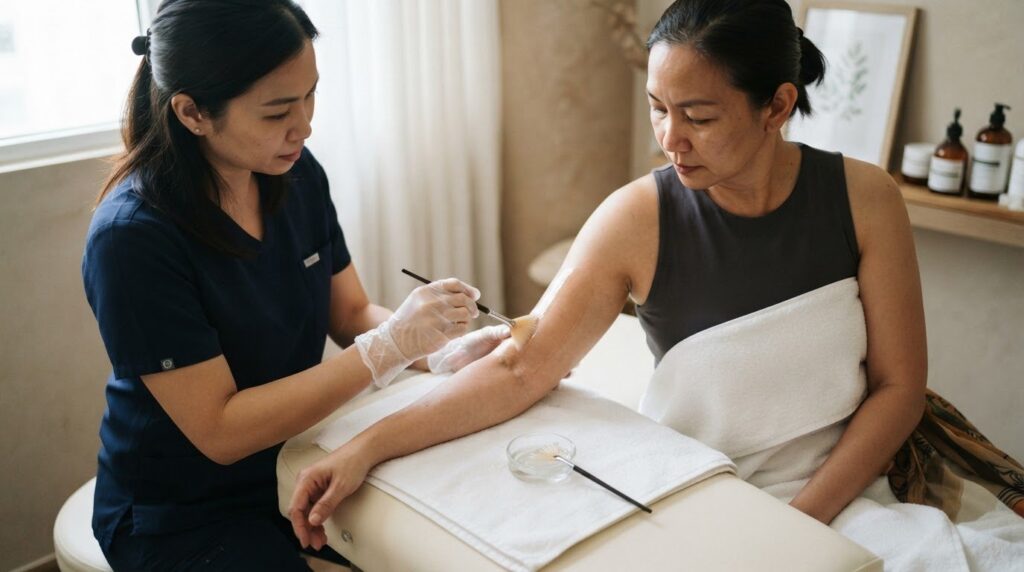
A body peel for glowing skin is less about scrubbing harder and more about controlled surface renewal. A chemical solution is applied for a specified time, then neutralised or removed to exfoliate the outer layer and refine the appearance of uneven texture and tone. The right approach depends on the area and concern.
It’s natural to want brighter, smoother-looking skin, while also wondering whether a peel is suitable for areas beyond the face. Results from a chemical peel can become visible as skin heals and regenerates, often within 1 to 2 weeks, though the timing and outcome depend on the peel and your skin.
This guide explains how body peels work, which areas and concerns they may address, what results and treatment timing to expect, and how to protect freshly treated skin from the sun. A clearer understanding helps you approach skin renewal with care and realistic expectations.
Key Takeaways
- Body peels exfoliate the skin’s surface to help improve the look of texture and uneven tone; the formula and strength should suit the area being treated.
- Different body areas and concerns may call for different peel approaches, so identify your skin goal before considering treatment.
- Freshly peeled skin can be more sensitive to sunlight. Prioritise broad-spectrum sun protection and limit direct exposure while skin recovers.
- Results and recovery vary with peel depth and skin type; allow time for healing and avoid expecting an instant transformation.
- Devotion Beautique’s Advanced Aesthetic Series Skin Boosting RETREAT may suit readers seeking a personalised approach to skin care and radiance.
How do chemical peels work?
A chemical peel uses a solution that is left on the skin for a set time, then neutralised or removed. Unlike a body scrub, which relies on physical friction, a peel uses acids or enzymes to loosen bonds between surface cells. At-home exfoliating acids use similar ingredients, but formulas and application instructions differ.
Exfoliation and Skin Brightening
Exfoliation loosens and removes surface skin cells to reveal a smoother-looking layer. On the body, it can soften the appearance of rough texture and uneven tone, helping skin look brighter.
For example, a peel for rough upper arms works through chemical action rather than grains rubbing across the skin. The solution stays on the area for a specified time before removal, so both the formula and exposure matter. This differs from a scrub, where pressure and repeated strokes create the exfoliating action.
Chemical Acids and Enzymes
Body peels may use alpha hydroxy acids (AHAs), beta hydroxy acids (BHAs), polyhydroxy acids (PHAs), or enzymes. These ingredients help loosen the bonds between surface cells, supporting exfoliation without abrasive particles.
Enzyme-based formulas may be considered for sensitive skin because enzymes gently weaken those bonds. AHAs, BHAs, and PHAs provide other approaches to surface exfoliation. The ingredients and their strength shape how a peel is used. Body peels may use higher concentrations of active ingredients than face peels, but that does not make every formula suitable for every area.
Types of Body Peels
Body peels can be grouped by their active ingredients and exfoliation depth. An AHA-focused peel, an enzyme peel, and a deeper chemical peel work differently, so the type matters when matching treatment to concerns such as rough texture or uneven tone.
Peel depth also affects the treatment experience and recovery. A deeper peel works beyond the most superficial layer, while a lighter approach focuses closer to the surface. These categories describe different levels of exfoliation, not a guaranteed result.
Choosing a formula is only part of the process. The treated area, skin sensitivity, and concern all influence the appropriate approach. An enzyme formula, for example, may be considered for sensitive skin, while an acid peel provides a different form of chemical exfoliation. The aim is to match the approach to the concern, not simply choose the strongest option.
After application, the solution is neutralised or removed at the appropriate point in the treatment. This ends the peel’s exposure and allows the skin to begin its renewal process. Understanding the ingredients and treatment depth can help set realistic expectations for smoother, brighter-looking skin.
Body peel treatment areas and skin concerns
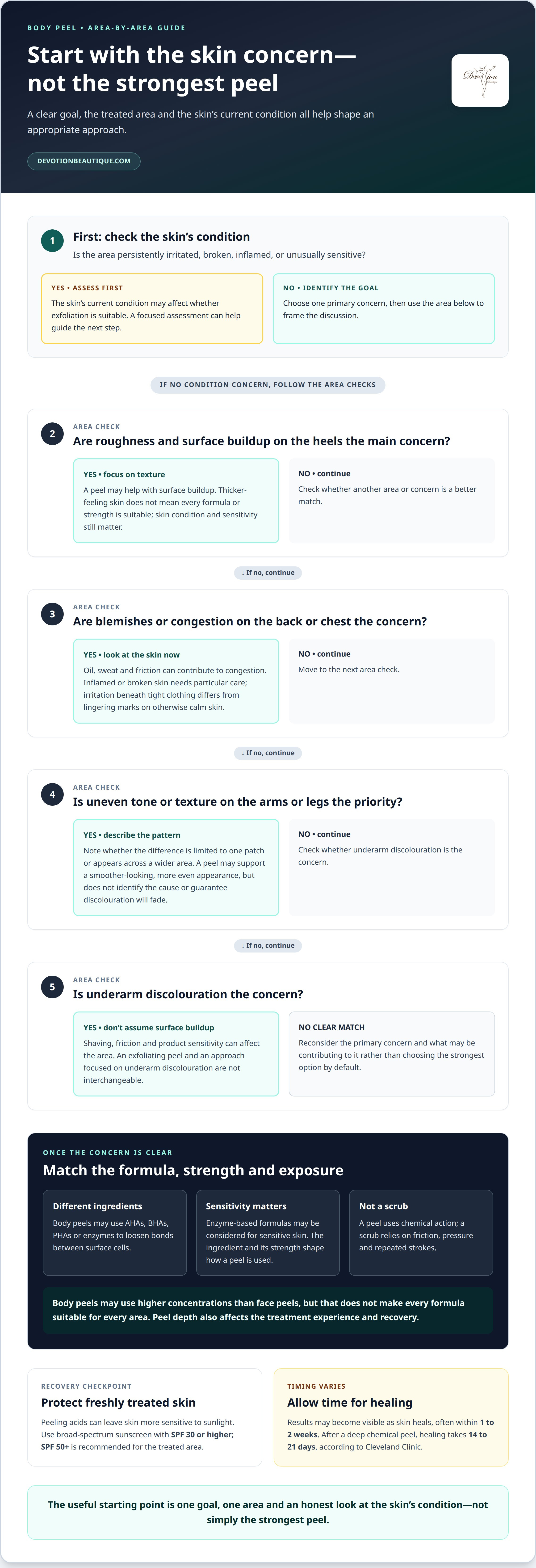
The area and concern help determine whether a body peel is appropriate. Rough heels, uneven tone on the arms, and blemish-prone skin on the back are different concerns, so they call for a considered approach rather than one routine for every area. A body peel for glowing skin should be matched to a clear treatment goal.
Heels are a distinct example when addressing texture: accumulated surface skin can feel coarse and look dull. A peel may help with surface buildup, but thicker-feeling skin does not mean every formula or strength is suitable. Skin condition and sensitivity still matter. A focused assessment can help distinguish roughness from dryness or irritation before exfoliation is considered.
For uneven tone, consider what may be causing the visible difference. Pigment concerns can occur on areas such as the arms or legs. A peel may support a smoother-looking, more even appearance, but it does not establish the cause of discolouration or guarantee it will fade. Note whether the concern is limited to one patch or appears across a wider area.
For blemish-prone skin, oil, sweat, and friction can contribute to congestion on the back and chest. A peel may be considered as part of addressing body acne, but inflamed or broken skin needs particular care. The area’s current condition matters as much as its location. Irritation beneath tight clothing, for example, may call for a different approach from lingering marks on otherwise calm skin.
- Heels: Consider whether roughness and surface buildup are the main concern.
- Back or chest: Identify whether congestion or blemishes are present.
- Arms or legs: Note whether uneven tone or texture is the priority.
- Underarms: Distinguish discolouration from irritation or another skin concern.
That distinction is important in the underarm area. Shaving, friction, and product sensitivity can affect how skin looks and feels, so darkening shouldn’t automatically be treated as surface buildup. An exfoliating peel and an approach focused on underarm discolouration are not interchangeable. The underarm skin treatment is a relevant option to explore for this specific concern.
Before treatment, the skin’s condition helps guide the decision. Persistent irritation, open blemishes, or a sensitive patch may affect whether exfoliation is suitable. The treated area also shapes aftercare: clothing friction and everyday sun exposure are worth considering while the skin recovers.
Start by choosing one primary goal for a body peel for glowing skin, such as heel roughness, back blemishes, or uneven arm tone. A clear goal makes it easier to discuss an appropriate approach and assess changes against the original concern. One treatment area can have several contributing factors, so realistic expectations matter.
Post-treatment sun protection
Downtime depends on peel depth and your skin’s response. After a deep chemical peel, healing takes 14 to 21 days, according to Cleveland Clinic; protect the treated area with broad-spectrum sunscreen, with SPF 50+ recommended in aftercare guidance.
Peeling acids can leave skin more sensitive to sunlight, so sun care matters during recovery. Use broad-spectrum sunscreen with SPF 30 or higher, and choose SPF 50+ for the treated area. Apply it to exposed skin, including areas such as the shoulders, chest, arms, or legs. Follow the sunscreen label for application and reapplication.
Consider your outdoor routine, too. If the treated area will be exposed during a commute or outdoor activity, cover it with clothing where practical and seek shade. Avoid sun exposure as much as possible the day after treatment. If clothing leaves part of the area exposed, protect that skin with sunscreen.
Sun protection is only one part of aftercare. The first hours matter, and the appropriate restrictions can depend on the treatment. Avoid showers and activities that cause perspiration for at least 8 hours after treatment. If the treated area is on your back, for example, postpone a workout that would make it sweaty during that period.
Give the skin time before adding more active products. Aftercare guidance advises avoiding retinoids, AHAs, BHAs, and exfoliants for 24 to 72 hours, depending on the treatment. Other hair or skin treatments should be postponed for one week. These pauses reduce the chance of layering irritation onto freshly treated skin.
- Protect: Use broad-spectrum SPF 30 or higher, with SPF 50+ recommended for the treated area.
- Reduce exposure: Avoid the sun as much as possible the day after a peel, and use clothing or shade outdoors.
- Allow recovery: Avoid sweating and showers for at least 8 hours, and pause other skin treatments for one week.
Match your plans to the peel’s depth, rather than assuming every treatment has identical downtime. A deeper peel can involve a longer healing period; Cleveland Clinic gives 14 to 21 days for healing after a deep chemical peel. During that period, follow the aftercare instructions for your treatment and protect the area whenever it’s exposed outdoors.
If redness, irritation, dryness, or peeling occurs, avoid adding exfoliating products while the skin settles. These effects can occur after chemical peels, and increased sun sensitivity is also possible. SPF and shade are practical measures, but they do not replace the treatment-specific recovery instructions.
Treatment schedules and expected results
Results unfold as treated skin heals and renews, rather than appearing all at once. Smoother texture, more even tone, and refined skin surface are possible outcomes. Visible changes can emerge within 1 to 2 weeks, while deeper peels take longer to reveal their full effect.
Peel depth shapes both recovery and timing. After a deep chemical peel, healing takes 14 to 21 days, according to Cleveland Clinic. Optimal results from deeper peels may take 4 to 6 weeks or more. Plan around recovery, not just the treatment appointment, especially if the treated area will be exposed during daily activities.
For texture concerns, one or two treatments can improve the appearance of skin texture. Pigment concerns or fine lines follow a different schedule: a series may involve six treatments spaced three weeks apart. For body acne, a series may involve up to six treatments spaced two weeks apart. These examples show how the concern can affect treatment spacing.
Heel buildup has its own schedule. Two to three body peel treatments spaced three weeks apart are recommended. This allows time between sessions rather than layering treatments close together. A plan for rough heel texture therefore differs from a series for acne or pigmentation.
- Texture: Skin texture can improve after one or two treatments.
- Pigment or fine lines: A series may involve six treatments, three weeks apart.
- Body acne: A series may involve up to six treatments, two weeks apart.
- Heel buildup: Two to three treatments, three weeks apart, are recommended.
Results can last from a few weeks to several months, depending on peel depth and skin type. Lighter peel results may last 1-2 months, while deeper peel results can last up to 6 months or longer. These ranges describe different peel depths, not a single timeline that applies to every concern.
Keep the treatment goal in mind when assessing change. If you are treating rough heels, observe the surface texture; if you are addressing body acne, track the appearance of blemishes across sessions. Compare like with like: consistent lighting and the same area make gradual changes easier to notice.
A body peel series is planned around both the concern and recovery interval. The schedule for heel buildup differs from the schedule for acne or pigment concerns. Allowing the stated spacing between sessions gives each treatment its own place in the skin’s renewal process.
What types of body peels are available for glowing skin?
Body peels differ in active ingredients, formulation, and exfoliation depth. These differences matter because a peel intended for rough texture may not suit sensitive skin or uneven tone. Compare the ingredient approach with your concern instead of choosing a formula simply because it sounds stronger.
Acid-based formulas
Alpha hydroxy acids (AHAs), beta hydroxy acids (BHAs), and polyhydroxy acids (PHAs) are chemical exfoliants used in body peel formulas. A formula may combine them rather than rely on one acid alone.
One labelled body-peel formula contains 10% AHA, 1% BHA, and 1% PHA. Those figures describe that specific formula, not every peel. A combination can bring different exfoliating ingredients together, so the full formulation matters more than any single percentage.
Enzyme-based formulas
Enzyme peels take a different approach: enzymes gently weaken the bonds between surface skin cells. They may be considered for sensitive skin when chemical exfoliation is preferred over a scrub’s physical friction.
For example, an enzyme formula may be a more relevant starting point for someone concerned about sensitivity than a product selected solely for a high acid percentage. Sensitivity depends on the individual and the formula, so the ingredient category alone cannot determine how skin will respond.
Choosing by formulation and depth
Peels also differ in how deeply they exfoliate, from lighter, surface-focused approaches to deeper chemical peels. A lighter formula may suit a goal focused on surface texture, while a deeper peel involves a different level of treatment and recovery. Depth does not determine suitability for every concern.
At-home formulas and professionally applied peels also differ in use. One product’s instructions recommend application 2-3 times a week, but that frequency applies to that product, not to every body peel. A treatment performed with a solution that is later neutralised or removed follows its own application process. Don’t transfer one label’s schedule to another formula.
- For sensitivity: Consider whether an enzyme-based approach fits the concern.
- For a combination formula: Read the listed AHA, BHA, and PHA ingredients together.
- For depth: Distinguish surface-focused exfoliation from deeper treatment and recovery.
- For at-home use: Follow the specific product instructions, not another formula’s routine.
A thoughtful choice begins with the skin goal, the ingredients, and the intended depth. For a personalised approach to skin care, explore a tailored skin-care option.
Devotion Beautique: Advanced Aesthetic Series Skin Boosting RETREAT
Devotion Beautique’s Advanced Aesthetic Series Skin Boosting RETREAT offers a personalised option for people seeking support with their skin goals. For body care, Body Refinement may be relevant; for underarm discolouration, the Underarm Bleaching Advanced Treatment addresses that specific concern. The right choice depends on the area and your desired outcome.
For facial concerns, ReProgram Facial is another option within Devotion Beautique’s skin programmes. These offerings are not chemical body peels, but they can form part of a broader, tailored approach to aesthetic care. Contact Devotion Beautique to discuss which treatment fits your concern.
Make Your Next Skin-Care Choice With Intention
Let your skin goal, rather than the promise of a quick glow, guide your next step. A body peel for glowing skin is one option within a broader approach to skin care. A useful next step is to discuss your priorities and identify an appropriate treatment direction.
Consider what you want to feel more confident about and what kind of care fits your routine. Sharing those priorities can help shape a considered plan, without rushing into a treatment simply because it is popular. Personalised care starts with listening to your concerns.
If you’re ready to discuss your skin goals and possible next steps, contact Devotion Beautique. Take the process at your own pace, with thoughtful guidance to help you move forward with confidence.
Frequently Asked Questions
Are there any risks?
Yes. Chemical peels can cause redness, irritation, dryness, and visible peeling; changes in pigmentation, scarring, infection, and increased sun sensitivity are also possible side effects. Skin that is already irritated, for example, may need a different approach from an unaffected area. Consider your skin’s current condition and history of sensitivity when discussing a peel, and follow the aftercare instructions for the specific treatment.
What is body peel?
A body peel uses a chemical solution to exfoliate skin on areas beyond the face. It may be considered for concerns such as rough texture or uneven-looking tone. For example, you might focus on the back rather than treating the whole body. The area and concern help shape the choice of formula and treatment depth.
When will I see results?
Visible changes may appear as skin heals and renews, often within 1 to 2 weeks. A deeper peel can take longer: optimal results may take 4 to 6 weeks or more. If you’re tracking a small area, such as one patch on an arm, compare it under similar lighting over time. A single glance immediately after treatment won’t show the full healing process.
What Are Body Peels?
Body peels are exfoliating treatments for areas such as the back, arms, legs, or heels. They can use acids or enzymes and differ in formulation and depth. “Body peel” therefore describes a category, not one standard treatment. An at-home product and a peel applied during a treatment may have different directions and schedules.
What can I expect?
Expect the treatment to be matched to a specific skin concern and area, rather than used as a one-size-fits-all body routine. Skin may look smoother or more even as it recovers, while temporary redness, dryness, or peeling can occur. If your focus is heel roughness, for example, assess changes there rather than expecting the same response across unrelated concerns.
What does aftercare look like post-peel?
Aftercare means protecting treated skin while it recovers and following the instructions for that peel. For exposed areas, broad-spectrum sunscreen and shade help limit sun exposure. Avoid exfoliating products or other active treatments during the advised pause. If the treated patch sits beneath clothing, choose soft, loose fabric to reduce rubbing. Keep your routine simple until the skin has settled.
What ingredients should you look for in a chemical peel?
Look for the ingredient names and concentrations on the formula label, including AHAs, BHAs, or PHAs. Enzymes are another option, particularly for those considering a gentler exfoliating approach. One labelled body-peel formula lists 10% AHA, 1% BHA, and 1% PHA, but that combination is not a universal standard. Match the product directions to the specific formula rather than borrowing another product’s routine.
What is procedure like?
The practitioner applies a peel solution to the selected area and leaves it on for a specified time. The solution is then neutralised or removed, ending its exposure to the skin. The process depends on the treatment and formula. A peel on the back, for example, may require different positioning from one applied to the lower legs, but both follow treatment-specific application and removal steps.
