
Smooth Skin Body Treatment: Moisture and Changing Texture
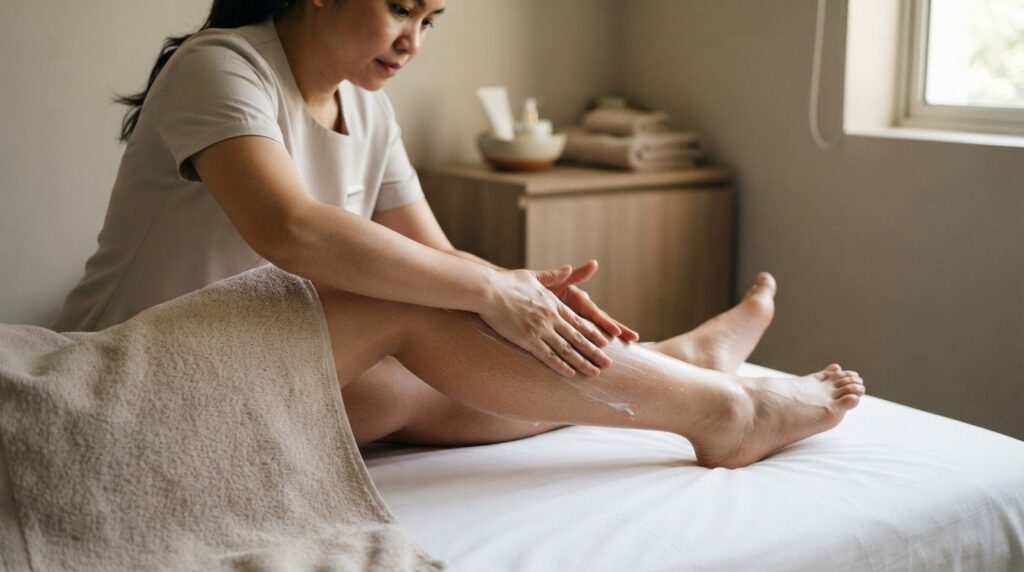
Soft, smooth skin is supported by consistent hydration, not a single treatment. Daily body moisturising, especially on slightly damp skin, helps maintain softness, while age-related changes can affect skin texture over time.
It’s understandable to want skin that feels comfortable and looks even, particularly when dryness or roughness makes texture more noticeable. A smooth skin body treatment can complement a considered care routine. Knowing what moisturising can do, and how skin changes with age, helps set realistic expectations.
This article explains how body moisturising supports hydration and why skin may feel less smooth with age. It also covers how exfoliation and professional body care can contribute to a longer-term approach to smoother-feeling skin.
Key Takeaways
- Moisturising regularly, especially while skin is slightly damp, can help support hydration and softness between treatments.
- Ageing can influence how the body’s skin feels and looks, so texture concerns may call for an approach tailored to individual skin needs.
- Exfoliation can help lift dead skin cells, but the right method and frequency depend on skin sensitivity and the area being treated.
- Body scrubs work through physical exfoliation, while chemical peels and laser treatments are more intensive options best handled by a dermatologist.
- Explore how professional body care may complement consistent moisturising when you want support for smoother-feeling skin.
1. Body moisturising and hydration
Daily body moisturising helps reduce water loss and keep the skin barrier comfortable. This outer protective layer helps limit moisture loss and shield skin from irritants. When it becomes dry, skin can feel tight, rough, or less supple. A consistent care routine supports comfort between professional treatments.
Skin renewal is ongoing: the body sheds millions of dead skin cells daily. Newer cells move towards the surface, while the skin barrier helps retain moisture. Dryness can make flakes and uneven texture more noticeable. Moisturiser supports the skin’s surface, but it doesn’t stop natural ageing or replace treatment for a persistent concern.
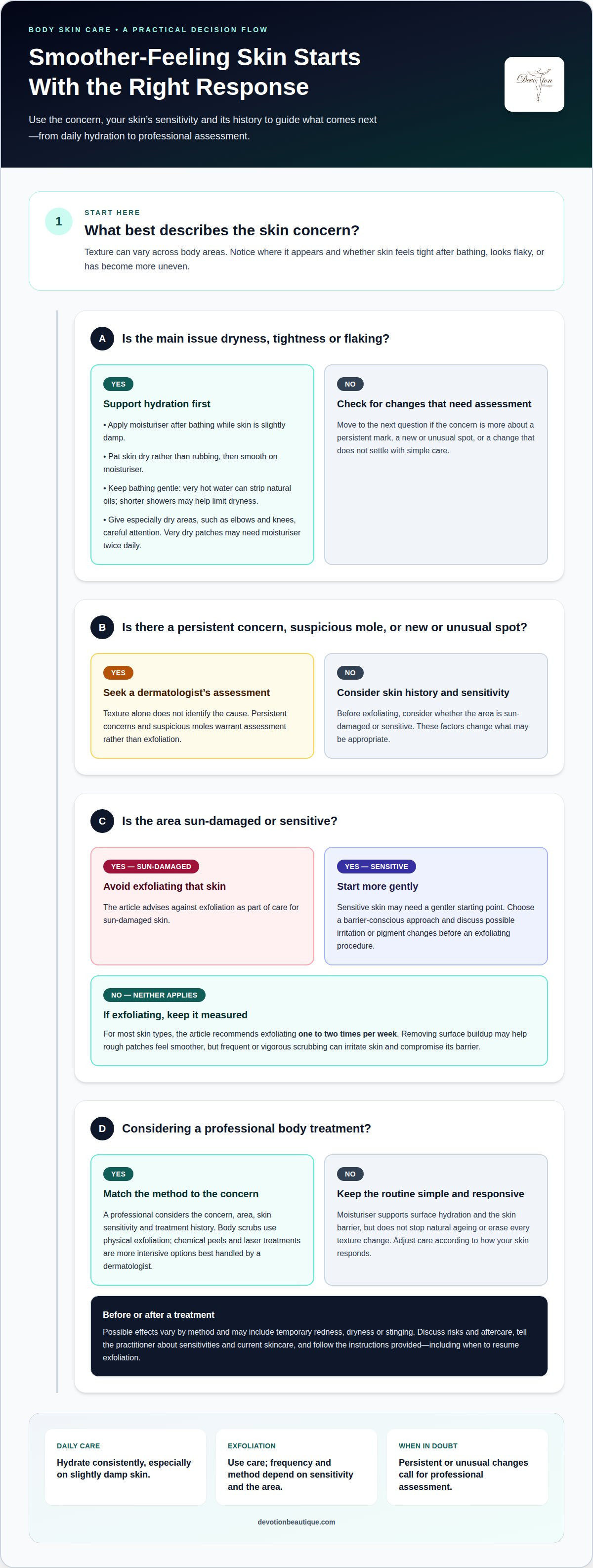
For a practical daily routine, apply moisturiser to slightly damp skin after bathing. Pat your skin dry rather than rubbing, then smooth the product over your body while a little moisture remains. This helps the product spread evenly and supports hydration. Choose a formula that feels comfortable, and consider an oil-based body lotion if your skin is naturally dry.
Keep bathing gentle. Water that is too hot can strip natural oils and contribute to roughness, while shorter showers may help limit dryness. Apply moisturiser carefully to especially dry areas such as elbows and knees. Very dry patches may need moisturiser twice daily. Adjust your routine according to how your skin feels rather than automatically adding more products.
Which body treatments suit sensitive or darker skin tones? Suitability depends on skin history, sensitivity, and the treatment method. A gentle, barrier-conscious approach is preferable. Before choosing an exfoliating procedure, discuss the possibility of irritation or pigment changes.
How much do body skin-smoothing treatments cost in Singapore? The price depends on the treatment, area addressed, and individual requirements, and is provided after a quote request. Daily moisturising is separate from professional treatment pricing.
How many sessions are usually needed for body skin treatments? The number depends on the concern, treatment method, and how your skin responds. A professional can explain the intended plan and review progress before further sessions.
What are the risks and side effects of body skin-smoothing treatments? Possible effects vary by method and may include temporary redness, dryness, or stinging. More intensive procedures can involve different risks, so discuss these and aftercare before proceeding.
How should you prepare for and care for skin after a body treatment? Arrive with the treatment area clean and tell the practitioner about any sensitivities or current skincare. Follow the aftercare instructions provided, including guidance on cleansing, moisturising, and when to resume exfoliation.
How can you find a licensed aesthetic clinic or dermatologist in Singapore? Look for a clinic that identifies the responsible practitioner and explains their relevant credentials, treatment method, risks, and aftercare. For medical skin concerns or procedures, seek a dermatologist or appropriately qualified medical practitioner.
2. Body skin ageing and changing texture
Ageing can change how body skin looks and feels, though changes vary from person to person and across body areas. Skin on the arms may feel less supple, while knees and elbows can appear rougher. These differences may reflect ageing and everyday factors such as clothing friction, bathing habits, and sun exposure. Texture alone doesn’t identify the cause, so consider where it occurs and how it has changed.
Look for patterns rather than judging a single patch. Dryness across the shins, for example, may feel different from roughness limited to the elbows. Note whether skin feels tight after bathing, looks flaky, or has become more uneven. These observations can help clarify whether hydration and a gentler routine may address the concern, or whether a professional assessment is more appropriate.
Hydration remains important as skin changes with age. A moisturiser can soften dry-feeling areas and support the skin barrier, but it won’t erase every change in texture. Apply it consistently and observe how your skin responds. If a product causes stinging or visible irritation, stop using it rather than layering additional skincare ingredients over the area.
Exfoliate with care. Removing surface buildup may make rough patches feel smoother, but frequent or vigorous scrubbing can irritate skin and compromise its barrier. For most skin types, the guidance in this article recommends exfoliating one to two times per week. Sensitive skin may need a gentler starting point, while sun-damaged skin should avoid exfoliation as part of its care.
Sun exposure is another consideration when assessing changes in texture. Regularly uncovered areas, such as the forearms, may look different from skin usually covered by clothing. Watch for changes in existing marks as well as new or unusual spots. Persistent concerns, including suspicious moles, warrant assessment by a dermatologist rather than exfoliation.
A practical routine can respond to the specific concern without treating all body skin alike. Use moisturizer for dryness, reduce friction where clothing repeatedly rubs, and avoid escalating exfoliation when skin becomes irritated. If texture changes persist despite simple care, a professional can assess the area and discuss suitable options. For guidance on personalised skin care for changing texture, consider how your skin’s history and current needs fit together.
3. What treatments help achieve smooth skin on the body?
The right treatment depends on the concern: roughness, dryness, uneven tone, or another visible change. A professional considers the area, skin sensitivity, and treatment history. A dry-feeling patch may need a different approach from a persistent mark or widespread texture change. This distinction matters because exfoliation can affect the skin barrier, while moisturising mainly supports surface hydration.
A body scrub massage combines physical exfoliation with massage. The scrub loosens surface buildup, while massage provides circulation-related benefits. Sea salt, sugar, and coffee grounds are examples of scrub ingredients with different properties and textures. Their feel and use shape the experience. A professional can adapt the method to the body area and avoid excessive friction on delicate or reactive skin.
Sensitive skin calls for a gentler pace. Start body exfoliation once weekly, then assess comfort and visible response before increasing frequency. Persistent redness, soreness, or stinging means the skin needs a pause, not stronger scrubbing. A professional assessment can help distinguish a temporary reaction from an ongoing concern that needs another approach.
Chemical peels and microdermabrasion work differently from a body scrub. They exfoliate the skin’s surface using methods beyond simple physical rubbing. Laser skin resurfacing uses separate technology, not a more powerful version of a scrub. These procedures are more complex, so body exfoliation methods such as chemical peels, laser resurfacing, and microdermabrasion should be left to a dermatologist.
Matching the method to the goal is essential. If the main concern is dry, rough skin, consistent moisturising may be more relevant than an intensive exfoliating procedure. A smooth skin body treatment should reflect the specific concern, treatment area, and skin sensitivity. If texture changes persist or involve an unusual spot, a dermatologist can assess the skin before treatment.
During a professional consultation, describe the area and the change you’ve noticed. Mention past irritation, sensitivity, and products that caused discomfort. The practitioner can use these details to discuss whether a gentle scrub massage suits your concern or dermatologist-led care is more appropriate. For sensitive skin, pay particular attention to the proposed frequency and aftercare.
Think of smoothness as a combination of surface care and skin comfort, not simply stronger exfoliation. Choosing a smooth skin body treatment means respecting your skin’s tolerance and supporting its barrier. A gentle scrub massage may suit surface roughness, while irritated skin may need no exfoliation. That distinction helps guide a considered treatment plan.
Daily care can complement professional treatment through shaving choices, moisture retention, and careful drying. Shaving with a sharp razor, using shaving cream, and shaving with the grain can help prevent ingrown hairs and razor bumps. If your skin is naturally dry, an oil-based body lotion can help retain moisture.
Patting skin dry rather than rubbing can help avoid irritation and damage. Omega-3 fatty acids from foods such as salmon and walnuts can help strengthen the skin barrier and calm inflammation. These habits offer practical ways to care for the skin alongside choosing treatments suited to its sensitivity and needs.
4. How do body exfoliation and moisturising improve skin texture?
The skin sheds millions of dead cells daily, and some remain on its surface. Exfoliation helps loosen this buildup, which can make rough areas feel smoother. It doesn’t replace hydration or address every cause of uneven texture. Flaky skin, for example, may benefit from moisture support, while persistent changes need a different assessment.
Technique matters. Gentle circular motions during exfoliation can stimulate blood flow while helping avoid damage to the skin barrier. Strong pressure doesn’t mean better results. Rough scrubbing can irritate skin and strip natural oils, leaving the surface uncomfortable. Adjusting friction for different body areas, including elbows and more delicate skin, helps keep the technique appropriate.
Frequency should reflect your skin’s tolerance. For most skin types, exfoliating one to two times per week is advised to remove dead cells without over-stripping natural oils. Sensitive skin should start body exfoliation once weekly. If your skin becomes sore or irritated, pause exfoliation rather than increasing pressure or frequency.
Moisturiser complements exfoliation by helping maintain soft skin after surface buildup is removed. Apply it within minutes of exfoliating or bathing. This supports moisture retention while the skin is still receptive to your skincare routine. For example, moisturising rough-feeling areas after gentle exfoliation addresses both surface texture and dryness.
These steps serve different purposes. Exfoliation addresses loose surface cells; moisturising supports hydration and comfort. A body scrub may leave skin feeling temporarily smoother, but continued moisturising helps maintain softness between exfoliation sessions. Neither step should leave your skin stinging or visibly irritated. These reactions suggest your routine may be too harsh.
Sun-damaged skin requires particular care. Avoid exfoliation when caring for sun-damaged skin, as friction may aggravate the area. A gentle, pH-balanced cleanser can clean without disrupting the natural barrier. If roughness appears alongside a suspicious mole or persistent skin concern, seek a dermatologist’s assessment instead of scrubbing the area.
Build a measured routine around your skin’s response. Exfoliate gently at an appropriate frequency, then apply moisturiser within minutes. Keep the pressure light and notice whether your skin feels comfortable afterwards. A smoother feel should not come at the cost of redness, soreness, or dryness. Adjusting these steps can support texture without overworking the skin barrier.
Consistency matters more than intensity. Daily moisturising supports softness, while occasional exfoliation addresses surface buildup. If you have sensitive skin, for example, you can begin with once-weekly exfoliation and observe the result before changing frequency. If texture remains uneven despite gentle care, a dermatologist can help determine whether another approach is suitable.
5. What are the differences between body scrubs, chemical peels and laser treatments?
These approaches address the skin’s surface in different ways. A body scrub uses physical exfoliation, a chemical peel uses exfoliating ingredients, and laser skin resurfacing uses laser technology. They aren’t interchangeable. The appropriate option depends on the skin concern, treatment area, and sensitivity.
A body scrub massage combines physical exfoliation with massage. Ingredients such as sea salt, sugar, and coffee grounds have different properties and textures. The practitioner’s technique matters too: gentle pressure differs from vigorous rubbing. This option focuses on surface exfoliation rather than a laser-based procedure or chemical peel.
Chemical peels rely on chemical exfoliation rather than scrub particles. Their ingredients and application distinguish them from a massage scrub. A peel may be considered for a different skin concern, but it isn’t simply a stronger scrub. Professional judgement is needed to determine the depth and suitability of a peel, especially when skin is sensitive or already irritated.
Laser skin resurfacing is distinct from both approaches because it uses laser technology. It is a specialised procedure, not an extension of a body scrub. The method, treatment area, and skin history all matter when planning care. Body exfoliation methods such as chemical peels, laser skin resurfacing, and microdermabrasion should be left to a dermatologist.
Frequency is separate from procedure choice. For most skin types, exfoliating one to two times per week is advised to remove dead cells without over-stripping natural oils. Sensitive skin should start body exfoliation once weekly. Sun-damaged skin should avoid exfoliation as part of its skincare approach.
After exfoliation or bathing, apply moisturiser within minutes to help maintain soft skin. This simple step supports comfort, whether exfoliation involved a scrub or was part of professional care. If your skin becomes sore or visibly irritated, pause exfoliation rather than switching to a peel or laser treatment without assessment.
For a straightforward comparison, consider the method and who should perform it. A scrub uses physical exfoliation and massage; a peel uses chemical ingredients; laser resurfacing uses laser technology. A dermatologist is the appropriate professional for the latter procedures. Skin sensitivity, the area being treated, and the concern all help guide the discussion.
Choose based on the concern, not on the assumption that a more intensive method is better. A gentle scrub may suit surface roughness, while a persistent concern calls for professional assessment. Discuss the method, expected aftercare, and skin-specific considerations before proceeding. Discuss suitable body skin treatment options as part of a considered care plan.
Whatever approach you’re considering, focus the discussion on your skin concern and the difference between surface exfoliation and specialist procedures. A daily hydration routine helps maintain softness between treatments. Include it in your care plan, but don’t treat it as a reason to move from a scrub to a peel or laser. The aim is to pair a considered treatment choice with ongoing attention to softness, not to assume that changing methods is necessary.
Devotion Beautique: Advanced Aesthetic Series Skin Boosting RETREAT
The Advanced Aesthetic Series Skin Boosting RETREAT at Devotion Beautique is a natural next step when daily moisturising alone doesn’t address your skin goals. Its personalised approach can support concerns such as hydration, repair, and age-related changes, helping you consider professional care alongside a consistent routine.
Bring your concerns into the conversation, such as dryness, uneven texture, or a particular body area. The right approach depends on your skin’s needs. For broader body-focused goals, Body Refinement may also be relevant; Underarm Whitening is intended for underarm brightening, not general body smoothing.
Contact Devotion Beautique to discuss which treatment best fits your skin goals.
Choose a Next Step That Fits Your Skin Goals
Your next step can be a conversation about the change you want to address, not a commitment to a particular procedure. A smooth skin body treatment should suit the area, your skin history, and the result you’re seeking. Share what matters most to you, whether that’s body texture, underarm tone, or a separate facial concern.
Devotion Beautique offers Body Refinement and the Advanced Aesthetic Series – Skin Boosting RETREAT! for body-focused care. Underarm Whitening addresses underarm brightening, while ReProgram Facial is a facial option. These are distinct services, so choosing according to your concern helps keep your next step focused.
A considered plan starts with your priorities and leaves room to discuss what suits your skin. Contact Devotion Beautique for advice and take the next step with clarity and care.
Frequently Asked Questions
How much do body skin-smoothing treatments cost in Singapore?
The price depends on the treatment, area addressed, and individual requirements. It is provided after a quote request.
How many sessions are usually needed for body skin treatments?
The number of sessions depends on the concern, treatment method, and how your skin responds. A professional can explain the plan and review progress before further sessions.