
How to build a skincare routine for Singapore’s tropical climate
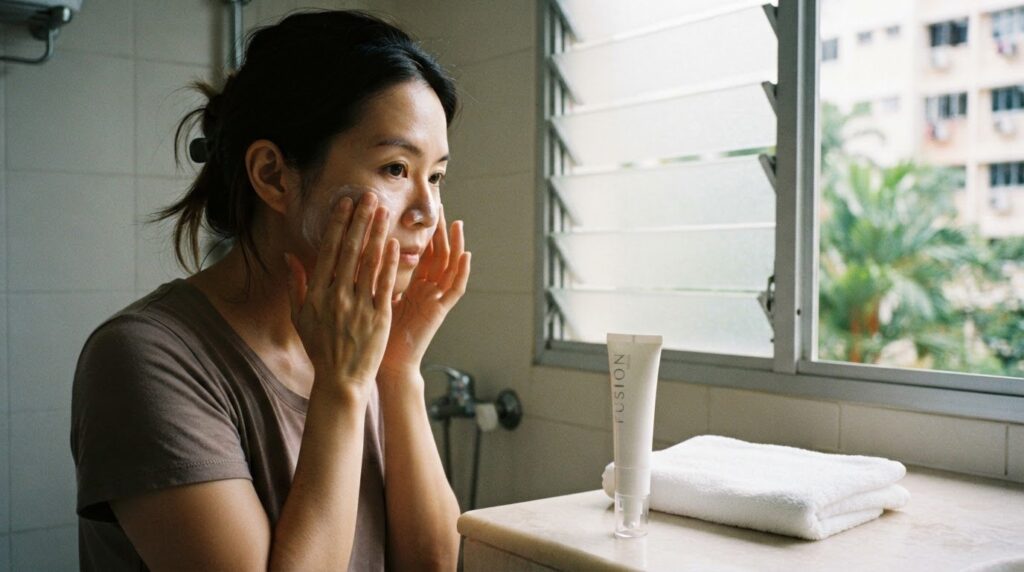
A lighter routine can be more suitable for Singapore’s tropical climate than the richer layers often used in temperate weather. Skincare for tropical climate Singapore starts with a gentle cleanser, lightweight hydration and broad-spectrum sunscreen of SPF 30 or higher each morning. Reapply sunscreen after swimming or sweating.
Humidity can leave skin feeling oily without keeping its barrier comfortably hydrated. Sweat and excess sebum may also contribute to congestion, so stripping the skin with harsh cleansing can work against the balance you’re trying to restore.
This guide explains how Singapore’s climate can affect your skin barrier, hydration and sebum, then shows how to build a routine around your skin type. Learn what to keep simple, when lighter textures may help, and how to adjust care for dry, oily, combination or sensitive skin. A considered routine is less about adding more and more about choosing what supports your skin day after day.
Key Takeaways
- Build a simple routine around gentle cleansing, lightweight hydration and daily broad-spectrum sun protection.
- Understand how Singapore’s mean relative humidity of about 82 per cent, according to Meteorological Service Singapore, can shape how your skin feels and responds.
- Choose cleansing and exfoliation habits that help manage congestion without stripping or irritating your skin.
- Learn how to adapt your routine for haze and particulate pollution, as well as for your skin type.
- See why skincare choices that feel comfortable in tropical humidity may differ from those suited to temperate climates.
What Is The Right Skincare Routine For Singapore’s Weather?
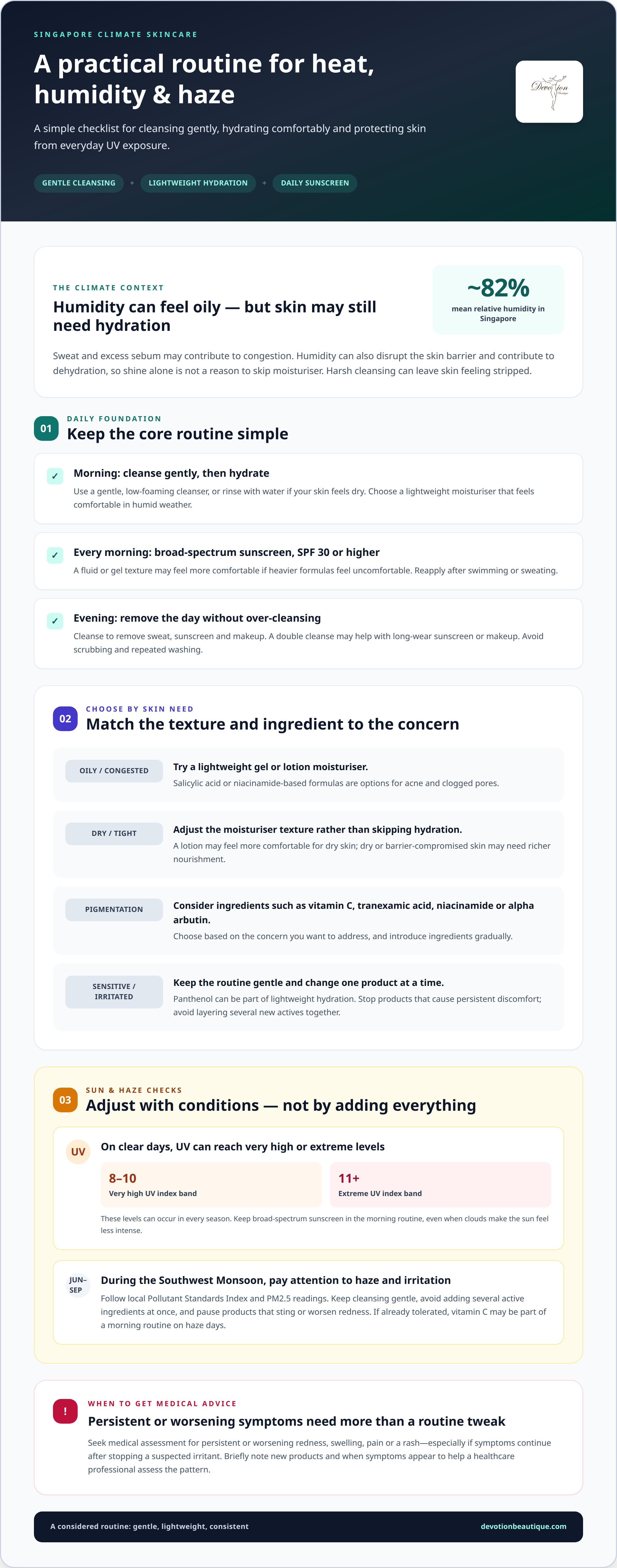
Use a simple routine that cleanses without stripping, hydrates comfortably and protects your skin from daily sun exposure. Choose products for your skin’s needs instead of adding steps whenever the weather changes.
-
Cleanse Without Disrupting the Skin Barrier
Choose a gentle cleanser that removes sweat, sunscreen and excess oil without leaving your skin tight. In the morning, use a low-foaming formula, or rinse with water if your skin feels dry. Cleanse again in the evening, especially after wearing sunscreen or makeup. A double cleanse may help remove long-wear sunscreen or makeup. Avoid scrubbing or washing repeatedly.
-
Adapt Products to Skin Needs and Seasonal Weather
Keep your core routine consistent, then adjust one product at a time as your skin responds. A lightweight gel or lotion moisturiser may feel more comfortable in humid weather, while dry or barrier-compromised skin may need richer nourishment. Introduce new ingredients gradually, particularly if your skin is sensitive. During Singapore’s Southwest Monsoon, from June to September, pay attention to haze conditions and any changes in irritation.
-
Address Haze and Particulate Pollution
During haze episodes, follow local readings of the Pollutant Standards Index and PM2.5 to understand particulate pollution conditions. Haze can coincide with skin discomfort, so keep cleansing gentle and avoid adding several active ingredients at once. If you already tolerate vitamin C, it may be part of your morning routine on haze days. Pause products that sting or worsen redness, rather than trying to scrub particles away.
- Apply broad-spectrum sunscreen of SPF 30 or higher every morning. Reapply after swimming or sweating. On clear days, Singapore’s UV index can reach the very high band of 8 to 10, or the extreme band at 11 and above, in every season. Choose a fluid or gel texture if heavier formulas feel uncomfortable. Sunscreen supports protection from everyday UV exposure, including when clouds make the sun feel less intense.
- Seek medical assessment for persistent or worsening redness, swelling, pain or a rash. These symptoms may need more than a routine adjustment, especially if they continue after you stop using a suspected irritant. Briefly note new products and when symptoms appear. This can help a healthcare professional understand the pattern and assess what care may suit your skin.
- Dermatologist-recommended skincare products are available through pharmacies and dermatology clinics in Singapore. Costs vary by product, ingredients and size, so there is no single price for every routine.
Singapore’s humid climate and skin-barrier challenges
Singapore’s mean relative humidity is about 82 per cent, according to Meteorological Service Singapore. For breakouts, pigmentation and sweat-related discomfort, consider ingredients such as salicylic acid, niacinamide, vitamin C, tranexamic acid or alpha arbutin.
-
Assess Heat and Humidity Effects on Skin
Notice how your skin feels after outdoor exposure, commuting and time in air-conditioned rooms. Singapore’s heat and humidity can leave sweat on the skin, and perspiration may contribute to clogged pores and breakouts. Humidity can also disrupt the skin barrier, increasing transepidermal water loss and dehydration. If tightness and oiliness appear together, don’t assume that shine means your skin needs no hydration.
-
Choose Lightweight Moisturizers
Choose a lightweight, water-based moisturiser that replenishes hydration without leaving a heavy, greasy layer. Gel creams and lightweight emulsions can suit daytime use in humid weather; a lotion may feel more comfortable if your skin is dry. Apply a modest layer and notice how it feels through the morning. If your skin remains tight, adjust the texture rather than skipping moisturiser.
-
Select Ingredients for Humidity-Related Concerns
Match ingredients to the concern you want to address, and introduce them gradually. Salicylic acid or niacinamide-based formulas are options for acne and clogged pores. For pigmentation, consider vitamin C, tranexamic acid, niacinamide or alpha arbutin. Panthenol can be part of lightweight hydration, but don’t expect one ingredient to resolve every kind of irritation. Stop using a product that causes persistent discomfort.
- Keep cleansing gentle when sweat and sunscreen build up. Cleanse in the evening to remove residue, but avoid harsh scrubbing or repeated washing that leaves skin feeling stripped. If your face feels tight after cleansing, reduce friction and choose a gentler formula. A disrupted barrier can feel dehydrated even when humidity makes the surface seem oily.
- Change one product at a time and observe your skin’s response over several uses. For example, if a rich cream feels uncomfortable in Singapore’s humid weather, try a lighter gel moisturiser before replacing the rest of your routine. Keep products that feel comfortable, and avoid layering several new active ingredients together. Persistent or worsening irritation, swelling or painful breakouts warrant medical assessment rather than further experimentation.
Need help Identifying the best skincare for your skin type and climate?
Choose cleansing and hydration according to your skin type, not shine alone. Heavy products can feel greasy in humid weather, while over-exfoliation may damage the skin barrier and cause irritation.
-
Begin with Gentle Daily Cleansing
Cleanse morning and evening with a gentle formula to remove sweat, sunscreen and excess oil. In the morning, a low-foaming cleanser may suit many routines; dry skin may need only water. In the evening, cleanse thoroughly after sunscreen or makeup. A double cleanse can help remove makeup or long-wear sunscreen, but avoid scrubbing or washing repeatedly to chase every trace of oil.
-
Cleanse and Hydrate at Night
After evening cleansing, use hydration that suits your skin type. A lightweight moisturiser with hyaluronic acid can support hydration without the feel of a heavy cream. If your skin feels tight after cleansing, adjust the cleanser or moisturiser rather than adding several new products. Keep your routine simple so you can tell whether a formula feels comfortable or causes irritation.
-
Use Exfoliation with Care
Limit exfoliation to no more than twice a week to reduce the risk of barrier damage and irritation. Daily exfoliation can be too much, especially when your skin already feels sensitive or tight. For sensitive skin, mild exfoliators containing lactic acid or polyhydroxy acids may be gentler options. Avoid combining several exfoliating products in one routine, and pause them if redness or stinging develops.
- Choose a cleanser texture that suits your skin’s daily needs. If you have oily or combination skin, gentle cleansing can remove sweat and residue without stripping natural oils. If your skin is dry, rinsing with water in the morning may feel more comfortable than using another cleanser. Notice how your skin feels after washing: persistent tightness suggests the formula may be too harsh, while leftover sunscreen calls for a more thorough evening cleanse.
- Choose a moisturiser based on how your skin responds, not just a “healthy skin” label. A gel or water-based formula may feel lighter in Singapore’s humidity, while dry skin may need more moisture. Apply a small amount after cleansing, then assess its comfort and texture. Avoid layering several rich products if they leave your skin greasy or contribute to pore congestion.
- Introduce changes gradually and keep the rest of your routine steady. For example, try one new exfoliating formula without also changing your cleanser and moisturiser. This makes it easier to identify what suits your skin. If irritation persists after simplifying your routine, seek medical assessment rather than increasing exfoliation or adding more active ingredients.
Hydration and sebum production
In Singapore’s humid climate, skin can feel oily yet still lack comfortable hydration. Choose lightweight moisture according to your needs, including whether your skin is dry, oily or combination. Hydration is central to skincare for tropical climate Singapore, particularly when outdoor humidity and air-conditioned interiors leave your skin feeling different throughout the day.
-
Support Internal Hydration
Drink water regularly throughout the day, especially after time outdoors or exercise. Staying hydrated supports overall skin health, but it doesn’t replace moisturiser or directly balance sebum. Notice whether your skin feels tight after cleansing or spending time in air-conditioned spaces. Those cues can help you decide whether your routine needs more surface hydration. Keep a water bottle nearby if you tend to forget during a busy day.
-
Add Hydration with Toners
Use a hydrating toner if it adds a comfortable layer without feeling sticky. Look for humectants such as glycerin or hyaluronic acid, and apply the toner after cleansing. Follow with moisturiser to maintain comfort. Toner is optional: skip it if your routine already supports hydration or the formula causes stinging. Introduce it separately from other new products so you can tell how your skin responds.
-
Hydrate and Moisturize
Apply a lightweight moisturiser after cleansing to replenish moisture without an unnecessarily heavy feel. Gel or water-based creams can suit humid conditions, while dry or barrier-compromised skin may prefer a richer texture. Hyaluronic acid, glycerin and panthenol are lightweight hydrating ingredients to look for. Adjust the amount and texture according to how your skin feels, not its shine alone. Start with a small amount to assess comfort before applying more.
- Distinguish oiliness from dehydration before changing products. Sebum is the skin’s natural oil, while hydration concerns water content; combination skin can show both shine and tightness. If a heavy cream feels uncomfortable, try a lighter emulsion rather than dropping moisturiser altogether. Skin can produce more sebum in drier weather, so don’t assume oily skin never needs hydration. A balanced skincare for tropical climate Singapore routine addresses comfort, not just surface shine.
- Keep your routine measured. If your skin needs extra comfort, a well-formulated day moisturiser can also be applied more generously in the evening. Add one new hydrating product at a time so you can notice changes in texture or irritation. For persistent dryness, sensitivity or concerns such as pigmentation, a personalised facial programme may help address your skin goals. ReProgram Facial supports targeted correction and long-term improvement.
- Judge the result by comfort, not by a matte finish. If your face feels tight after cleansing, adjust the cleanser or moisturiser. If it feels greasy, reduce the amount or choose a lighter formula. This gradual approach helps maintain moisture without getting stuck in a cycle of stripping oil and layering creams.
Differences between tropical and temperate-climate skincare
Build your routine around the conditions your skin actually encounters. Singapore’s persistent warmth, humidity and year-round UV exposure call for different choices than a routine designed for cooler, drier weather.
- Prioritise sunscreen consistently in Singapore, rather than treating it as a summer-only step. Broad-spectrum SPF 30 or higher every morning is a practical baseline for daily protection. In temperate climates, seasonal changes may influence how often sunscreen feels necessary, but your routine should still reflect actual exposure. Reapply after swimming or sweating, and choose a comfortable texture you’ll use reliably.
- Adjust moisturiser texture to the weather and your skin’s response. A rich cream that feels comforting in dry weather can feel heavy during a humid Singapore day. Try a gel, lotion or lightweight emulsion, then assess whether your skin feels comfortable. Don’t remove moisturiser just because your forehead looks shiny: oiliness and dehydration can occur together.
- Keep cleansing gentle in any climate, but adapt it to what collects on your skin. In Singapore, sweat, sunscreen and excess sebum may call for a thorough evening cleanse. In colder, drier conditions, frequent or harsh washing can leave skin feeling stripped. Choose a cleanser that removes residue without tightness, and avoid scrubbing to compensate for humidity.
- Adjust active ingredients gradually when moving between climates. A product that felt comfortable in a temperate setting may cause irritation when combined with sweat, sun exposure or a lighter barrier routine. Introduce one active ingredient at a time, then observe your skin’s response. For sensitive skin, fragrance-free formulas and mild exfoliators such as lactic acid or polyhydroxy acids are options.
- Let your skin’s condition, not the calendar alone, guide adjustments. Air conditioning can leave skin feeling dry in Singapore, even when outdoor humidity is high. After a day in cooled indoor spaces, apply a little more moisturiser if tightness appears. If a temperate season brings dryness, a richer cream may suit you better than your usual lightweight daytime formula.
- Keep your routine familiar when travelling. Pack a gentle cleanser, moisturiser and sunscreen, then change textures only if your skin gives you a clear reason. Don’t layer several new active products during a trip, when sun exposure and weather are already changing. The key is not a completely different set of ingredients, but thoughtful adjustments for climate, exposure and comfort.
Devotion Beautique: Advanced Aesthetic Series Skin Boosting RETREAT
Devotion Beautique’s Advanced Aesthetic Series Skin Boosting RETREAT offers personalised support when your home routine needs an additional step. If your focus is hydration, calming or skin repair, a tailored programme can complement consistent daily care without replacing it.
For concerns that call for a more targeted approach, ReProgram Facial supports goals such as correction and long-term improvement, while Remedial Facial addresses specific skin needs. The right option depends on your skin’s condition and your goals. Keep your everyday routine gentle and consistent alongside any treatment plan.
To explore a suitable next step for your skin, contact Devotion Beautique.
Make your next skincare choice with confidence
A lasting routine isn’t the one with the most steps. It’s one you can follow and refine as your skin responds. Keep a simple note of changes in comfort, oiliness or sensitivity, and adjust products thoughtfully rather than replacing everything at once. This gives you a clearer sense of what supports your skin through Singapore’s changing daily conditions.
Skincare for tropical climate Singapore should feel personal, not prescriptive. If persistent concerns make it difficult to decide what comes next, tailored support can help you consider an approach that fits your skin goals. Devotion Beautique offers facial programmes including ReProgram Facial, alongside the Advanced Aesthetic Series Skin Boosting RETREAT.
Contact Devotion Beautique for skincare guidance and take a considered next step towards a routine that feels right for you.
Frequently Asked Questions
How to find the best skincare to solve your skin problems?
Start by identifying your main concern and the products that seem to affect it. For example, note whether discomfort appears after cleansing, using a new active ingredient or spending a day outdoors. Change one product at a time so you can observe your skin’s response. Persistent or worsening symptoms deserve medical assessment. Your routine should fit your skin’s current needs, not simply follow a trend or include the most steps.
Why does Singapore weather change how skin behaves?
Singapore’s warmth, humidity, outdoor sun exposure and air-conditioned interiors create different demands throughout a typical day. Moving from a humid commute into a cooled office, for example, can leave skin shiny on the surface yet uncomfortable underneath. Let your skin’s response guide you: tightness may call for more comfortable hydration, while greasy residue may mean a product feels too heavy.
Why does my skin feel oilier and break out more in Singapore?
Sweat and sebum can build up on the skin in Singapore’s humid conditions, contributing to clogged pores and breakouts. Try cleansing after your day rather than washing repeatedly whenever you notice shine. Avoid touching or rubbing sweaty areas, which can add friction and make irritation harder to assess. If breakouts persist or become painful, seek medical assessment instead of layering multiple acne products at once.
What skincare routine works best in Singapore’s hot, humid tropical climate?
A practical routine is one you can follow consistently: gentle cleansing, comfortable hydration and broad-spectrum sun protection. Keep the number of products manageable, then introduce changes individually. For example, if your skin feels uncomfortable after a new serum, pause it while keeping familiar products steady. This makes it easier to notice patterns and adapt your skincare without confusing a reaction with a weather-related change.
Which lightweight moisturizers suit humid weather and different skin types?
Gel creams, lightweight emulsions and water-based moisturisers are options to consider in humid weather. Oily or combination skin may prefer a lighter finish, while dry or barrier-compromised skin may feel more comfortable with a lotion or richer texture. Ingredients such as glycerin, hyaluronic acid and panthenol can support hydration. Apply a modest amount first, then adjust based on how your skin feels once it settles.
What SPF sunscreen is recommended for Singapore’s UV index, and how often should it be reapplied?
Choose broad-spectrum sunscreen of SPF 30 or higher for each morning in Singapore. Reapply after swimming or sweating, and plan protection around the time you spend outdoors. A comfortable formula can make daily use easier, especially if you dislike a heavy finish. For prolonged outdoor exposure, combine sunscreen with shade and protective clothing rather than relying on one product alone.
Which sunscreen brands in Singapore are affordable, water-resistant, and suitable for sensitive skin?
Choose sunscreen by its label and your skin’s response rather than relying on a brand name alone. Look for broad-spectrum protection, a water-resistance claim if you need it, and a fragrance-free formula if your skin is sensitive. Test a new sunscreen on a small area before applying it more widely. When considering affordability, compare pack size and how comfortably you can use the product regularly.
How can you prevent acne, clogged pores, and excess oil in Singapore’s humidity?
Focus on removing sweat, sunscreen and residue without stripping your skin. Cleanse after your day, use lightweight products that don’t leave a heavy film, and avoid scrubbing congested areas. Salicylic acid or niacinamide-based formulas are options for acne-prone or clogged skin; introduce one new active at a time. If irritation or breakouts continue, seek medical advice rather than increasing exfoliation or adding several treatments together.
