
Chemical Peel Aftercare: Caring for Skin During Recovery
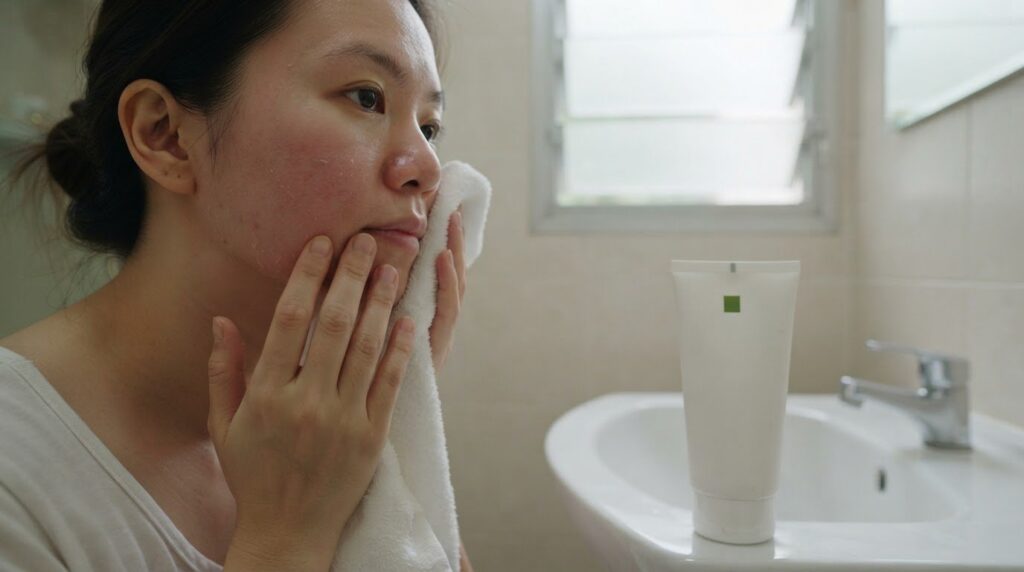
The peel is only part of the treatment; how you care for your skin as it recovers matters just as much. The most important chemical peel aftercare instructions are to avoid direct sunlight for at least 1 week, wear broad-spectrum sunscreen with SPF 30 or higher, and resist picking or peeling flaking skin. Keep your routine gentle while sensitivity and shedding settle.
It’s natural to wonder when you can return to exfoliants, retinoids, exercise or other facial treatments. Recovery guidance depends on peel depth, so medium-depth peels call for particular care rather than a rushed return to your usual routine. This guide covers what to avoid, how to cleanse and moisturise, when to reintroduce active skincare, and how to protect your skin from Singapore’s sun as it heals.
Key Takeaways
- Give your skin a break from strenuous exercise, sweating and heat while it recovers, and avoid picking at peeling areas.
- Keep cleansing gentle and moisturise regularly to support comfort as your skin heals.
- Wait until peeling has subsided before returning to active products such as retinoids, and reintroduce them gradually.
- Protect treated skin from direct sun and use broad-spectrum SPF 30 or higher, reapplying every two hours when exposed to sunlight.
- Medium-depth peels can need more attentive aftercare, so follow the treatment-specific recovery guidance.
1. What should you avoid after a chemical peel?
After a chemical peel, avoid strenuous exercise, heat, exfoliation and picking at loose skin. These activities can irritate sensitive, recovering skin and interfere with its natural shedding. For the first 24 hours, skip exercise that causes sweating, steam rooms and hot tubs. Keep your routine simple while the treated area settles.
Ease back into movement gradually. Sweating and increased warmth may sting or aggravate freshly treated skin, so pause intense workouts until your skin shows signs of recovery. If even light activity makes your face feel hot or uncomfortable, stop and let it cool. Avoid rubbing away sweat with a towel; pat gently instead.
Pay attention to heat beyond the gym. Avoid saunas, steam baths and hot tubs during early recovery, and wait until your skin has healed before returning to activities that cause heavy perspiration. Hot showers can also intensify discomfort, so choose a comfortably warm temperature. A calm, cool environment helps limit avoidable irritation.
In Singapore, aftercare costs depend on the peel and recommended care products; the total is given after a quote request. Product choices and the care plan affect the amount needed.
Peeling often begins 24–48 hours after the procedure and usually lasts 2–7 days. Redness and sensitivity are common during the first 1–3 days, though individual recovery varies. A light peel may settle sooner than a deeper treatment. Peeling less visibly does not mean the procedure has failed.
Do not pull, scratch or pick at flakes, even when loose edges catch your attention. Let peeling skin shed on its own; interfering can cause bleeding, scarring or changes in pigmentation. Avoid exfoliating for at least 72 hours after treatment. After a light peel, wait at least 3 days before exfoliating, and longer if skin remains sensitive.
Pause facial waxing, depilatories and other hair removal on treated skin. Allow at least 2 weeks after a peel, or wait until initial redness and swelling have resolved, before waxing. Avoid using tweezers to remove flakes or hairs from areas that are still tender. Friction from removal can disturb the recovering surface.
Give makeup a short pause, too. Avoid applying it for 24 hours after the procedure, unless your treating practitioner gave different instructions for your peel. Also avoid swimming for at least 24 hours. These simple limits reduce exposure to friction, heat and other potential irritants while the skin begins to recover.
2. Cleansing and moisturising during recovery
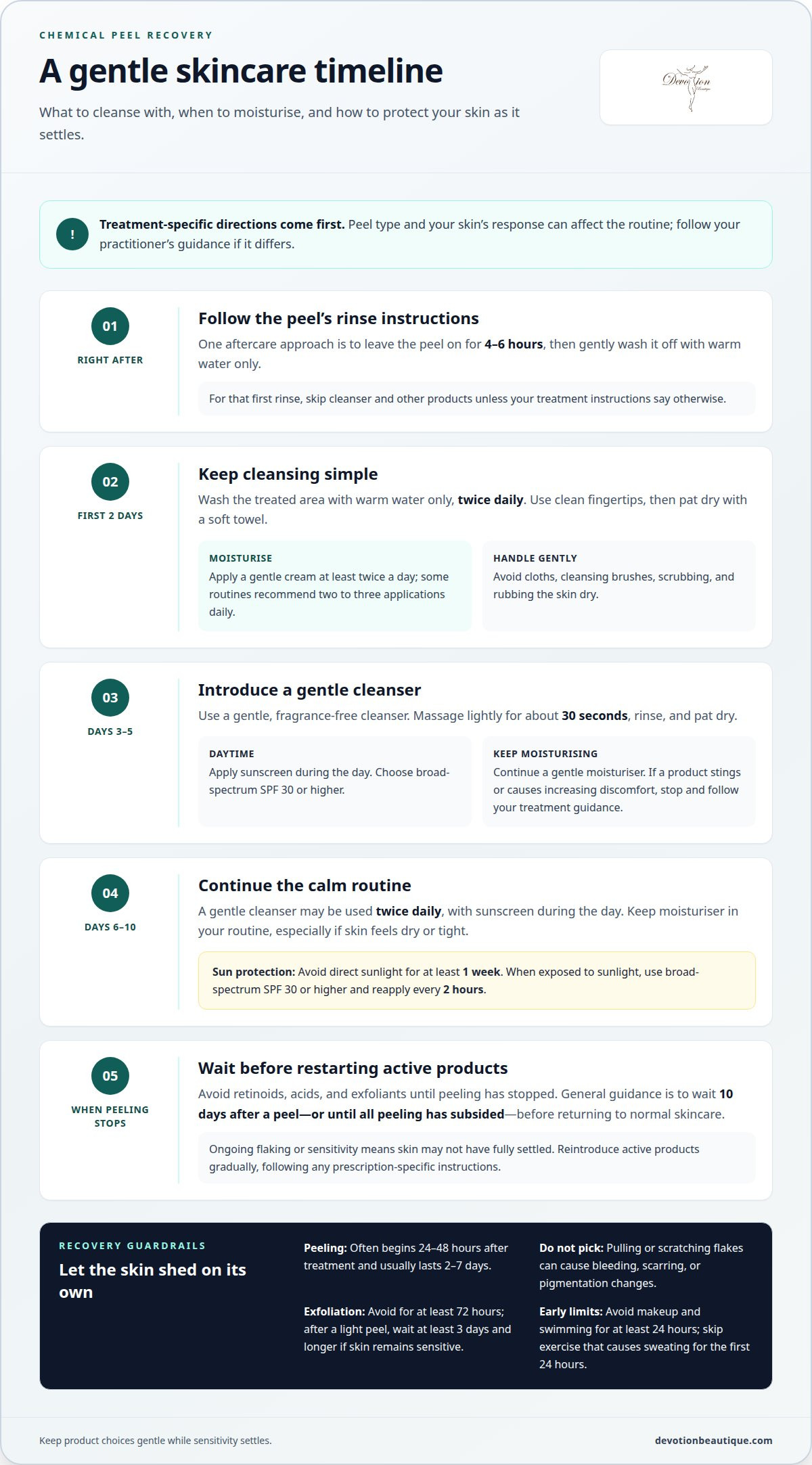
Immediately after a chemical peel, follow the instructions for the solution used. One approach is to leave the peel on for 4–6 hours, then gently wash it off with warm water only. Avoid adding a cleanser or other products during that first rinse unless your treatment instructions say otherwise.
For the first 2 days after treatment, wash the treated area with warm water only, twice daily. Use clean fingertips instead of a cloth or cleansing brush, then pat the skin dry with a soft towel. These chemical peel aftercare instructions keep cleansing gentle while the skin may feel sensitive.
From days 3–5, use a gentle, fragrance-free cleanser, then apply sunscreen during the day. Massage the cleanser gently for about 30 seconds, rinse, and pat dry. If your face feels tight or stings, avoid scrubbing and return to the simplest routine in your treatment-specific directions.
Moisturising helps keep the treated area comfortable as it recovers. Apply a gentle moisturising cream at least twice a day; some aftercare routines recommend two to three applications daily. Use a light layer rather than rubbing firmly. If a product causes burning or increasing discomfort, stop using it and follow your treatment guidance.
Choose simple, gentle care products while sensitivity settles. Fragrance-free cleanser is suitable from days 3–5 in this schedule; avoid introducing several new products at once. This makes it easier to notice whether a formula irritates your skin. Gentle skincare is recommended for at least 2 weeks after a peel. For individuals with easily irritated or redness-prone skin, specialized resources like rosacea-treatment-clinic-1094.myshopify.com provide skincare solutions formulated specifically to soothe sensitivity.
From days 6–10, a gentle cleanser may be used twice daily, with sunscreen during the day. Keep moisturiser in your routine, especially if the treated area feels dry or tight. Makeup is separate from cleansing, so follow the timing guidance provided for wearing it after your peel.
Consistency matters more than a complicated routine. Use lukewarm water, cleanse without scrubbing, pat dry, moisturise, and apply sunscreen as directed. Follow the chemical peel aftercare instructions for your treatment if they differ, since the routine depends on the peel and your skin’s response.
Moisturising cream can be applied to the treated area two to three times a day, as the aftercare guidance specifies. The guidance also recommends moisturizer with sunscreen of at least SPF 44 after a chemical peel. Keep these recommendations within a simple routine, and avoid rubbing the skin when applying products. If your treatment-specific directions differ, follow those directions.
Cool water is another option for washing your face after a peel; pat it dry rather than rubbing. Keep your skincare formulas gentle for at least two weeks. OHSU recommends using post-procedure products for three to five days or until flaking has resolved. This provides a clear period for keeping product choices focused while your skin flakes. Follow your treatment’s aftercare instructions if they give different guidance.
3. Resuming retinoids and prescription skincare
Use gentle cleanser, moisturiser and sunscreen while skin recovers; avoid retinoids, acids and exfoliants until peeling has stopped. Makeup can usually wait at least 24 hours, while strenuous exercise should wait until skin shows signs of recovery.
For a general routine, wait 10 days after a peel or until all peeling has subsided before returning to normal skincare. The visible calendar date isn’t the only guide: ongoing flaking or sensitivity means the skin hasn’t fully settled. Continue gentle cleansing and moisturiser instead of restoring every active product at once.
Retinoids can increase irritation on recently treated skin. Wait until your skin has healed before restarting retinol, and follow the specific instructions for prescription products. OHSU recommends delaying tretinoin and certain other topical retinoids for five days after a peel. That minimum interval doesn’t mean every skin type is ready on day five.
Pause alpha hydroxy acids, glycolic acid and other exfoliating products for at least 7 days after treatment. OHSU also recommends avoiding other topical over-the-counter medications and alpha hydroxy acid products for seven days. After a light peel, wait at least 3 days before exfoliating; a medium peel may require a longer pause guided by the practitioner.
When restarting products, add one active at a time rather than layering a retinoid, exfoliant and prescription cream together. Keep the rest of your routine simple, with a gentle cleanser and moisturiser. If stinging, redness or peeling returns after reintroducing a product, stop using it and return to gentle care while your skin settles.
Makeup timing differs across aftercare instructions, so follow the directions for your procedure. A common recommendation is to avoid makeup for 24 hours. When you resume, remove it gently with a suitable cleanser; don’t scrub or use a cleansing brush on skin that is still peeling. Makeup shouldn’t replace sunscreen in your daytime routine.
Make exfoliation the last step to return, not the first. After a medium-depth peel, your skin may need more time than the minimum pause used after a light peel. Resume only when peeling has ended and your skin feels settled, following the practitioner’s timing for your treatment. Keep exercise gentle until signs of recovery appear, since sweat can irritate sensitive skin.
4. Sun protection and limiting sun exposure
After a chemical peel, protect treated skin from direct sun for at least 1 week. Use broad-spectrum sunscreen with SPF 30 or higher for at least 6 weeks after treatment. These steps matter because recently treated skin is more sensitive to ultraviolet exposure, which can worsen redness or contribute to uneven pigmentation.
Apply sunscreen at least 20 minutes before going outdoors, giving the formula time to form an even layer. Reapply every two hours when exposed to sunlight, and sooner after sweating or swimming. Follow the product’s directions for the amount to apply. Cover the entire treated area, including exposed skin near the hairline, ears and jaw.
Singapore’s bright outdoor conditions make planning worthwhile. Choose shade where possible and limit time in direct sun during the first week. A covered route between indoor spaces can reduce exposure during errands. Clouds don’t remove the need for sunscreen, so apply it even when the sky looks overcast.
Which SPF should you use? Choose broad-spectrum SPF 30 or higher for at least 6 weeks after a peel; SPF 40 or higher can be part of your long-term daily routine. Reapply every two hours during sun exposure.
For daily protection, make sunscreen the last step in your morning skincare routine. Apply it evenly after moisturiser, without rubbing vigorously over the treated area. If you wear makeup, let sunscreen settle before applying it, and don’t let makeup application become a reason to skip or reduce sunscreen.
Sun protection takes more than a single application. Keep sunscreen accessible when spending time outdoors, such as during a lunch break or afternoon walk. After swimming or heavy sweating, reapply rather than assuming the morning layer remains effective. If you cannot avoid sunlight, combine sunscreen with shade and clothing that covers the treated area.
Continue these precautions beyond the first week. Avoiding direct sun is especially important during early recovery, while sunscreen remains part of care for at least 6 weeks. After that period, maintain daily sun protection as a long-term habit. A consistent routine helps protect newly recovering skin from avoidable exposure.
If redness increases after sun exposure, move out of direct sunlight and protect the area gently. Don’t try to correct irritation with exfoliating products or by rubbing your skin. Follow your peel-specific aftercare directions, and consult the practitioner if redness or discomfort persists or worsens.
5. Medium-depth peel aftercare
A medium-depth peel needs a more measured recovery than a superficial treatment. Redness may last 2–3 days, and flaking can peak between days 3–7. Skin may feel tight as it sheds. Allow flakes to come away naturally; pulling them can cause irritation, bleeding or hyperpigmentation.
For an MD Peel (CCl3), avoid overheating for seven days after the procedure. This includes strenuous exercise that causes heavy sweating, saunas and steam rooms. Heat and perspiration can aggravate irritation while the surface heals. Keep activity gentle during this period, and return to intense exercise only as recovery progresses.
Keep the routine simple while flaking continues. Cleanse gently, moisturise the treated area, and avoid exfoliating products or abrasive tools. With an MD Peel (CCl3), exfoliation can continue for up to seven days after treatment. Don’t speed it along by applying scrubs, acids or a cleansing brush to loosen skin.
Facial waxing and depilatories also need a pause after an MD Peel (CCl3). Wait until the treated skin has recovered before using them. Hair removal can add friction or chemical irritation to an area that is still healing. If redness, tenderness or flaking remains, avoid disturbing that skin.
Plan other skincare treatments with care. A separate treatment may need to wait 2–3 weeks after a peel, allowing time for recovery. The interval depends on peel depth and how the treated skin is healing. Avoid layering a facial or another peel over active flaking, persistent redness or irritation.
Deeper peels can take several weeks to heal, and redness or changes in skin tone may last beyond visible flaking. Follow the aftercare instructions for your specific peel rather than relying only on when peeling stops. Attend any recommended follow-up appointment, even if the surface appears to be settling.
Seek medical attention for hot, red, shiny skin, pus, fever or feeling generally unwell after treatment. These symptoms may indicate infection. Contact the treating practitioner promptly about other unwanted effects, especially worsening irritation or unexpected changes during healing.
For a separate, personalised approach to ongoing skin goals, explore tailored facial treatments once your peel recovery is complete.
After a deeper chemical peel, redness, tingling or a burning sensation may occur during the first few hours; mild swelling, irritation or dryness may appear during the first 1 or 2 days. Side effects are expected to diminish and the skin to return to normal in 5 to 7 days. Minor bruising after a chemical peel may take 1-2 weeks to resolve.
Devotion Beautique
Once your skin has recovered from a chemical peel, Devotion Beautique can support your longer-term skincare goals. Its ReProgram Facial and Remedial Facial are personalised programmes that address different skin concerns, offering a considered next step when you’re ready to focus on ongoing care. For now, follow your peel aftercare instructions and allow healing to finish before arranging another facial treatment.
When discussing next steps, share your skin goals and the treatment you’ve recently had. This helps shape an approach around your skin’s current condition, rather than rushing into another treatment while it remains sensitive. For guidance on your ongoing skincare journey, contact Devotion Beautique.
Carry your skin care forward with intention
Recovery can be a useful time to reconsider what you want from your long-term skincare routine. Keep your chemical peel aftercare instructions handy, and let your skin settle before planning further treatments. Once recovery is complete, a personalised conversation can help connect your skin goals with a suitable next step.
Devotion Beautique offers the ReProgram Facial and Advanced Aesthetic Series Skin Boosting RETREAT as part of its aesthetic treatment range. These options may suit you when you’re ready to focus on ongoing skincare beyond the peel. The right direction depends on the goals you want to prioritise, such as hydration, brightness or a more tailored facial approach.
For a considered conversation about your next step, contact Devotion Beautique. Give your skin the time and attention it needs, then move forward with care.
Frequently Asked Questions
What should you avoid after a chemical peel?
Avoid friction, heat and strong active ingredients while your skin is recovering. For example, don’t use a cleansing brush on a flaky cheek or apply an exfoliating acid to tight skin. Pause hair removal on treated areas, too. If you’re unsure whether a product is an active, check its ingredient list for retinol, glycolic acid or other exfoliating acids before using it.
When can I use Retinol or tretinoin again?
Wait until your skin has healed and peeling has stopped before restarting retinol. For tretinoin and certain other topical retinoids, OHSU recommends delaying use for five days after a peel. That interval is not a signal to restart if your skin remains irritated. Reintroduce one product at a time, and keep the rest of your routine simple so any returning sensitivity is easier to identify.
When to Contact a Dermatologist?
Contact your treating practitioner promptly if you notice an unwanted or worsening reaction. Seek medical advice if redness lasts more than a week after the peel or comes with swelling. Don’t wait for a routine follow-up if symptoms are getting worse. If your skin feels unusually hot, looks shiny and red, or develops pus, fever or general unwellness, seek medical attention.
How long should I wait before washing my face after a chemical peel?
Follow the instructions for the particular peel, since wash-off timing can vary. One post-peel approach is to leave the solution on for 4–6 hours, then rinse gently with warm water only. If your treatment instructions specify a different time, use those directions rather than applying a general schedule. Avoid adding a cleanser, exfoliant or washcloth during that first rinse unless instructed.
What are the warning signs of infection, burns, or an allergic reaction after a chemical peel?
Hot, shiny red skin, pus, fever or feeling generally unwell after treatment may indicate an infection and requires medical attention. For a suspected burn or allergic reaction, seek prompt medical assessment if symptoms are severe, worsening or unexpected. Don’t try to manage a concerning reaction by applying acids, retinoids or other active products. Contact the treating practitioner as soon as possible about new unwanted effects.
Do aftercare instructions differ for light, medium, and deep chemical peels?
Yes. A superficial peel may heal within a week, while deeper peels can take several weeks. With an MD Peel (CCl3), exfoliation may continue for up to seven days, so flaking alone doesn’t mean the skin is ready for active products. Peel depth and how the skin is healing affect the aftercare timeline; use the specific directions provided for your treatment.
Where can I get medical advice in Singapore if my skin reacts badly after a chemical peel?
Start by contacting the practitioner who performed the peel. Describe what changed, when it began and which areas are affected. A dermatologist or medical clinic can assess a concerning skin reaction in Singapore. If symptoms are severe or you feel acutely unwell, seek urgent medical attention rather than waiting for a routine appointment. Keep a record of products applied after treatment to share during assessment.