
How to Prepare Your Skin for a Chemical Peel

Chemical peel results depend not only on the treatment, but also on how you prepare your skin. A peel uses a specialised solution to exfoliate the outer layers, allowing smoother-looking skin to emerge. Knowing how to prepare skin for a chemical peel can help you arrive with a calm, protected complexion and a clear understanding of what to expect.
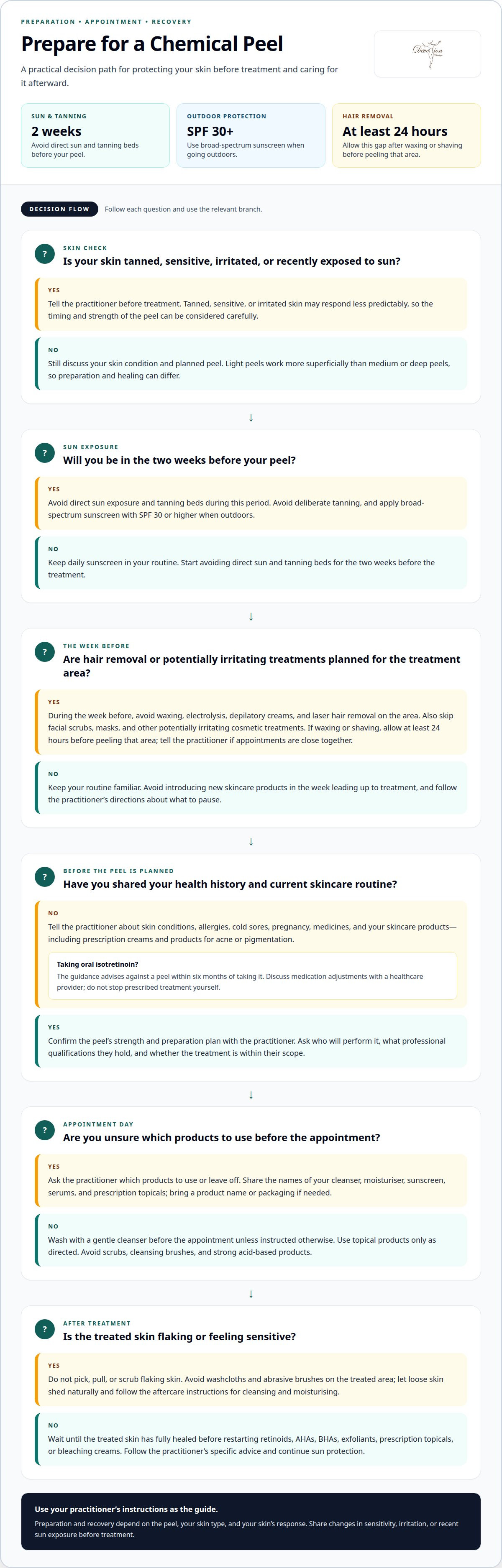
It’s natural to focus on the peel itself. Preparation matters too: avoid direct sun exposure and tanning beds for at least two weeks beforehand, and apply broad-spectrum sunscreen with SPF 30 or higher when you go outdoors. Your practitioner’s instructions should guide any changes to your usual skincare routine, since the right approach depends on the peel and your skin.
This guide explains what a chemical peel does, which active ingredients and exfoliating steps may need to pause, and how to cleanse on appointment day. You’ll also learn what recovery can involve, so you can plan for the skin’s renewal with care and confidence.
Key Takeaways
- Understand how peel depth shapes the resurfacing process and the recovery you may need to plan for.
- Pause hair removal and other potentially irritating cosmetic treatments before your appointment to help avoid aggravating the skin.
- Keep appointment-day cleansing gentle, and follow your practitioner’s directions for products before treatment.
- Review retinoids, exfoliating acids and other active ingredients in your routine so you know what to pause and when.
- Plan aftercare around your skin’s response, avoid picking at flaking skin, and follow the recommended recovery guidance.
What is a chemical peel?
A chemical peel uses a specialised solution to exfoliate the outer skin layers, allowing smoother skin to grow back. Peels may be light, medium, or deep, and preparation should reflect your skin type and the treatment planned.
Tanned, sensitive, or irritated skin may respond less predictably, with a greater risk of irritation or uneven-looking pigmentation. Tell the practitioner about recent sun exposure, sensitivity, or active irritation before treatment so the timing and strength of the peel can be considered carefully.
- Understand the procedure and your skin’s condition. A light peel works more superficially than a medium or deep peel, so the preparation and healing experience can differ. Before treatment, identify current irritation, sensitivity, or a recent tan, and share these details during your skin assessment. For example, redness after a new product is relevant even if it seems mild. Don’t treat an irritated area as normal skin; let the practitioner know what has changed before the peel begins.
- Limit sun exposure for at least two weeks. Avoid direct sun and tanning beds during the two weeks before your peel. Apply broad-spectrum sunscreen with SPF 30 or higher when going outdoors, and keep daily sunscreen in your routine. In Singapore, outdoor time can add up during commutes and errands, so use sun protection consistently rather than only on beach days. Avoid deliberate tanning; a fresh tan can affect how prepared the skin is for the procedure.
- Pause hair removal and cosmetic treatments. During the week before your peel, avoid waxing, electrolysis, depilatory creams, and laser hair removal on the treatment area. Also skip facial scrubs, masks, and other potentially irritating cosmetic treatments during that week. Waxing or shaving can leave the surface more vulnerable; allow at least 24 hours after either before peeling that area. If a hair-removal appointment falls close to your peel, tell the practitioner rather than layering procedures onto recently treated skin.
- Keep the routine familiar, then protect healing skin. Avoid introducing new skincare products in the week leading up to treatment. A new cleanser or serum can trigger a reaction that’s difficult to distinguish from peel-related sensitivity. Afterward, don’t pick, pull, or scrub flaking skin, even when peeling becomes visible. Skip washcloths and abrasive brushes on the treated area. Let loose skin shed naturally, and follow the aftercare instructions for cleansing and moisturising. Gentle care supports the healing process; friction can disturb skin that’s still recovering.
Cleansing and products on appointment day
Keep cleansing simple on appointment day, then follow the practitioner’s directions for topical products. This helps avoid unnecessary irritation before the procedure.
-
Cleansing on Appointment Day
Wash your face with a gentle cleanser before the appointment unless your practitioner gives different instructions. Avoid scrubs, cleansing brushes, and strong acid-based products that could leave your skin feeling sensitive. For example, skip an exfoliating cleanser simply to make your skin feel extra clean. If you’re unsure about a product, bring its name or packaging to discuss.
-
Following Instructions for Topical Products
Use topical products only as directed by the practitioner preparing your skin for the peel. Instructions vary with the formula and your skin type, so don’t add an acid, retinoid, or acne treatment on appointment day without guidance. Mention prescription creams and products you use for acne scars, even if you apply them only to small areas.
- Ask which skincare products to use before cleansing and which to leave off. Share the names of your cleanser, moisturiser, sunscreen, serums, and prescription topicals. This helps identify ingredients that could irritate your skin or affect the preparation plan. Don’t assume a product is suitable just because it is labelled “gentle”; both its ingredients and your skin’s response matter.
- Have a gentle, soap-free cleanser, soothing moisturiser, and sunscreen ready for post-peel care. After treatment, use ointments or creams to lubricate the skin only as instructed. The right product and application depend on the peel and your aftercare directions. Avoid adding products for a smoother finish or to address acne scars while your skin is tender.
- Wait until the treated skin has fully healed before restarting active skincare, and follow the practitioner’s specific advice. This includes retinoids, AHAs, BHAs, exfoliants, prescription topicals, and bleaching creams. Peeling or sensitivity can mean your skin is still recovering, even if it looks smoother. Continue sun protection after treatment, and don’t layer actives just because your usual routine feels overdue.
For a broader routine tailored to your skin concerns, explore personalised skincare support.
Stopping certain skincare ingredients before a peel
Choose the peel and preparation plan based on your skin type, current skincare products, and concerns such as fine lines or uneven tone.
- Ask about the provider’s qualifications and peel choice. In Singapore, ask who will perform the peel, what professional qualifications they hold, and whether the treatment falls within their scope. Discuss your skin type, concerns, and the peel’s strength before proceeding. A skincare professional can assess your skin and select an appropriate option. Ask how the choice may affect preparation, healing, and the likelihood of complications.
- Share your health and skincare history. Tell the dermatologist or aesthetician about skin conditions, allergies, cold sores, pregnancy, and medicines you take. Describe your current routine, including prescription creams and products for acne or pigmentation. Mention oral isotretinoin: the guidance advises against a peel within six months of taking it. Discuss medication adjustments with a healthcare provider rather than stopping prescribed treatment yourself.
- Pause potentially irritating actives as directed. Retinoids, including tretinoin, may need to stop one to two weeks before treatment unless your physician advises otherwise. Discontinue retinoids, exfoliating acids, benzoyl peroxide, and scrubs at least five days beforehand. Product strength, peel depth, and skin sensitivity affect the plan. Don’t combine strong acids with abrasive exfoliation to try to achieve faster results.
- Keep pre-peel exfoliation professional-guided. Some preparation plans use gentle exfoliation, while others require a pause from acids and scrubs. Don’t add an AHA, BHA, or retinoid simply because it is marketed for fine lines or uneven tone. Follow the specific schedule provided for your peel, and keep skin hydrated with a suitable moisturiser. Stop and report unexpected irritation before treatment.
- Resume active skincare only after healing. After the peel, use gentle cleansing and moisturising while the skin recovers. Wait until it has fully healed before restarting retinoids, AHAs, BHAs, prescription topicals, exfoliants, or bleaching creams. Your skin’s sensitivity and the peel’s strength influence when products can return. Daily sun protection remains part of care, since newly treated skin can be more vulnerable to sun damage.
Preparation advice can vary with the products used and your skin’s response, so confirm the timing with the professional planning your peel rather than combining schedules. Some skincare routines may include retinoids or alpha hydroxy acids before a peel, depending on the individual plan. However, the page advises people preparing for a chemical peel to stop using retinoids, AHAs, BHAs and other exfoliating products at least one week before the peel. People with sensitive skin are advised to stop using retinol or acid serum 2-3 days before a peel. Ask which instruction applies to your treatment and skin, particularly if you have already noticed redness, stinging, or flaking.
Avoid abrasive scrubs or cleansers with beads a day or two before a peel, and do not exfoliate immediately beforehand. If you have rosacea, discuss alternative exfoliants with your skincare professional, as Retin-A can aggravate the condition. Hydroquinone is usually used for three weeks before a chemical peel and stopped the day before. Since this timing differs from guidance for other actives, ask how it fits your preparation plan. Tell the provider about every product you use, including over-the-counter serums and cleansers, and ask what to pause and when. If irritation develops, contact the provider before proceeding instead of trying another exfoliating product.
Recovery timelines and professional recommendations
Plan recovery around the peel’s depth, your skin’s response, and the aftercare instructions you receive. Superficial peels generally involve shorter recovery, while medium and deep peels affect more skin layers and need more healing time.
Preparation depends on peel depth: a light peel may need minimal preparation, while medium and deep peels call for a more individual plan. Your skin type, sensitivity, and history of hyperpigmentation all help shape the discussion.
- Match your schedule to the peel’s likely recovery. After a light peel, recovery may take a few hours to a few days; redness and scaling may last three to seven days. After a medium peel, recovery may take a week or more, with treated areas taking about seven to 14 days to heal. A deep peel may take 14 to 21 days to recover.
-
Planning Around Recovery Downtime
Schedule your peel around work, social plans, and important events. For a light peel, leave a few days to a week before an event; plan several weeks or even months ahead for deeper peels. Medium peels may require a few days up to a week away from work or social engagements. Consider these timelines when choosing an appointment date.
-
Expected Peeling and Recovery
Expect peeling to begin a few days after treatment, though timing varies with peel strength. Medium-peel skin may crust and peel over seven to 14 days, while redness can last for months. Swelling may last or worsen for 48 hours after a medium peel. Don’t pick or pull flaking skin; friction can disrupt the healing surface.
- Follow the aftercare instructions for your specific peel, and use a gentle cleanser and moisturiser until your skin has fully healed. Avoid exfoliants and active ingredients during recovery, and continue daily SPF because treated skin is more susceptible to sun damage. If you have a history of sensitivity or uneven pigmentation, discuss it before treatment so it can inform your recovery plan.
- Ask the practitioner to explain the peel’s strength, expected healing, and signs that need attention. Breakouts, rash, dark spots, itching, swelling, bruising, or burning can occur after a peel. Contact your esthetician or dermatologist promptly if you experience a reaction. Clear aftercare guidance helps protect your comfort and appearance as new skin emerges.
Chemical peel skin resurfacing
Think of resurfacing as controlled exfoliation, not simply a stronger scrub. A chemical solution removes outer skin layers, and the skin that grows back may look smoother. Preparation helps keep the surface calm before treatment and supports careful recovery afterward.
- Connect the peel’s depth to your skin goal. Light, medium, and deep chemical peels reach different layers, so they don’t share one preparation plan. A superficial peel may suit surface texture concerns, while deeper treatment involves more extensive resurfacing. Discuss pigmentation, sensitivity, and previous reactions before selecting an approach. The practitioner can consider your skin type and concerns when deciding whether a peel is suitable.
- Keep the skin barrier comfortable before treatment. In the weeks before a peel, use a gentle moisturiser that suits your skin and avoid adding new skincare products. Unfamiliar acids or scrubs can cause irritation that complicates preparation. Tell the practitioner if you notice redness, stinging, or unusual dryness. These changes matter because treatment begins on the skin’s existing condition, not an imagined baseline.
- Protect the skin from sun damage. Avoid direct sun and tanning beds for at least two weeks before the peel. Apply broad-spectrum sunscreen with SPF 30 or higher when outdoors, and keep daily sun protection consistent. In Singapore, sun exposure can happen during ordinary errands as well as outdoor recreation. A fresh tan may affect the skin’s readiness and can complicate assessment of pigmentation.
- Share factors that can affect resurfacing. Before treatment, discuss skin conditions, allergies, medicines, and your current routine. Mention a history of cold sores or pigmentation changes, along with any recent irritation. These details help shape the choice of peel and the care plan. If you’re pregnant, don’t proceed with a chemical peel; discuss an appropriate alternative with a healthcare professional.
- Follow a measured aftercare routine. Resurfacing continues through recovery as treated skin sheds and new skin emerges. Use gentle cleansing and moisturising, avoid picking or scrubbing flakes, and follow the practitioner’s instructions. Keep using sunscreen because newly treated skin is more susceptible to sun damage. Hold exfoliants and active ingredients until the skin has fully healed, rather than restarting them to accelerate texture changes.
For guidance on matching a skin plan to your concerns, discuss a tailored skincare approach.
Devotion Beautique: Advanced Aesthetic Series Skin Boosting RETREAT
The Advanced Aesthetic Series Skin Boosting RETREAT offers a personalised option for ongoing skin support alongside your skincare goals. If you’re considering a chemical peel but want to focus on hydration, brightness, firmness, calming, or repair, Devotion Beautique offers facial programmes tailored to your concerns. The ReProgram Facial and Remedial Facial support different skin goals through customised care, without replacing peel-specific preparation or aftercare instructions.
Consider a tailored approach to skin health beyond a single treatment. Share your concerns and current routine so your programme can reflect your needs and longer-term goals.
Contact Devotion Beautique to discuss which facial programme suits your skincare priorities.
Make your next skincare decision with intention
A peel is one option in a broader approach to skin health. Before choosing your next treatment, consider what you want to address, how your skin responds to active ingredients, and what recovery time fits your routine. That makes planning how to prepare skin for a chemical peel part of a considered decision, rather than a last-minute change to your skincare.
If you’re weighing your options, discuss your concerns and current routine with a skincare professional. A thoughtful conversation can help you understand which approach aligns with your goals and whether your skin needs a gentler focus first. Your next step should feel clear, personal, and grounded in your skin’s needs.
Contact Devotion Beautique to discuss your skincare goals and explore a considered path forward. Your skin journey can begin with one informed conversation.
Frequently Asked Questions
How are chemical peels performed?
A practitioner applies a specialised chemical solution to exfoliate the outer skin layers. Peels are commonly described as light, medium, or deep, depending on how far they act into the skin. The peel itself typically takes 20 to 30 minutes. The solution and technique depend on peel depth, so ask what sensation and immediate aftercare to expect for the specific treatment being considered.
How should you prepare your skin before a chemical peel?
To understand how to prepare skin for a chemical peel, start by sharing your skin history and routine before treatment, including allergies, skin conditions, medicines, and recent irritation. For example, mention a prescription cream even if you apply it only to one blemish. Follow the practitioner’s individual preparation plan rather than creating your own combination of products. If your skin becomes unusually red or sore before the appointment, report the change before the procedure begins.
How many days before a chemical peel should you stop retinoids, exfoliants, and acids?
A common preparation baseline is to stop retinoids, exfoliating acids, benzoyl peroxide, and scrubs at least five days beforehand. Retinoid use may need to be adjusted before treatment, so discuss it as part of your preparation plan. Follow the plan for your specific peel and prescription. If products overlap, such as a retinoid and an acid serum, give the practitioner both names.
Should you avoid waxing, shaving, or laser treatments before a chemical peel?
Yes. Avoid waxing, electrolysis, depilatory creams, and laser hair removal on the treatment area before a peel; hair removal is commonly paused about a week beforehand. Allow at least 24 hours after waxing or shaving before peeling that area. For example, tell the practitioner if facial waxing was recent, even if the skin looks settled, so they can account for it when assessing the area.
What skincare products should you use or avoid before a chemical peel?
When planning how to prepare skin for a chemical peel, keep your routine gentle and familiar. Use a mild cleanser and moisturiser rather than adding a new serum before treatment, and avoid scrubs and potentially irritating actives according to your preparation plan. Check product labels for retinoids, glycolic acid, or salicylic acid, and share the names with your practitioner. This is especially useful when several products target the same concern, such as acne or pigmentation.
Should you avoid sun exposure and use sunscreen before a chemical peel?
Yes. Avoid direct sun exposure and tanning beds for at least two weeks before treatment. Apply broad-spectrum sunscreen with SPF 30 or higher when going outdoors, and use it daily during preparation. For instance, include sunscreen on ordinary commuting days, not only during outdoor recreation. If you arrive with a recent tan or sun irritation, mention it before the peel so your skin can be assessed.