
How to Treat Dark Underarms in Singapore with Laser and Peels

Dark underarms aren’t always caused by surface-level pigmentation. If you’re exploring how to treat dark underarms in Singapore, start by considering possible triggers such as friction, shaving irritation, deodorants, or hormonal changes. Options may include laser, chemical peels, or topical treatments. Thickened, velvety dark patches can be associated with an underlying medical condition, so speak with a doctor if you notice this kind of change.
It’s understandable to want a clear, gentle way to brighten the area, especially if shaving or changing products hasn’t helped. The right approach depends on your skin’s condition and the likely cause, rather than a one-size-fits-all solution.
This guide covers common reasons underarms darken, how laser, peels, and topical care work, and practical ways to reduce irritation. You’ll also learn when professional assessment can help you choose a suitable next step for your skin.
Key Takeaways
- Dark underarms can have several causes, from shaving irritation and friction to hormonal changes, so identifying the likely trigger helps guide care.
- Thickened, velvety dark patches may be linked to an underlying medical condition and are a reason to consult a doctor.
- Laser treatment targets pigment, but the approach and number of sessions depend on the skin and pigmentation involved.
- Chemical peels and topical treatments offer other options; peel strength and product choice should suit your skin’s sensitivity.
- Gentler shaving habits and clothing that reduces rubbing can help limit ongoing irritation while you explore treatment options.
What Causes Dark Underarms?
Underarm darkening often follows irritation or friction, but hormones, genetics, medications, and health conditions can also contribute. Identifying the likely trigger helps distinguish surface pigmentation from changes that may need medical attention.
Common Causes of Underarm Darkening
Underarm pigmentation involves excess melanin, the pigment that gives skin its colour. It can affect any skin tone, though it occurs more often in darker skin tones. For example, repeated rubbing from tight clothing can irritate the underarm and contribute to darker patches.
Other possible triggers include hormonal changes, genetics, certain medications, and inflammation. Lack of exfoliation is also listed as a possible contributor. Consider when the colour change began and whether it followed a new product, medication, clothing habit, or change in routine.
Shaving, Waxing and Deodorant Irritation
Yes. Frequent shaving can irritate delicate underarm skin, and shaving or waxing may contribute to post-inflammatory hyperpigmentation. Deodorants or antiperspirants can also trigger irritation for some people. Notice whether darkening follows hair removal or a product change.
To reduce irritation, avoid dull razors, shave less often, and consider deodorants with natural ingredients. Loose-fitting clothes can reduce rubbing. Regular exfoliation is also suggested as a preventive step, but avoid vigorous scrubbing that leaves the area sore or inflamed.
Possible Links to Health Conditions
Dark underarms can sometimes be associated with a health condition. Acanthosis nigricans may appear as thickened, velvety dark patches and is associated with obesity, diabetes, insulin resistance, or hormonal disorders. Darkening alone doesn’t establish a diagnosis.
If the skin becomes thick or velvety, or the change seems unexplained, consult a doctor about possible medical causes before focusing on underarm whitening treatment. Addressing the underlying trigger matters: a cosmetic approach targets appearance, not a health condition.
A simple review of possible causes can make the next step clearer:
- Note whether darkening appeared after shaving, waxing, or switching deodorant.
- Check for tight clothing or fabrics that repeatedly rub the underarms.
- Consider whether a medication or hormonal change coincided with the pigmentation.
- Look for thickened, velvety patches and seek medical advice if they appear.
- Reduce friction and irritation before considering treatment sessions; laser targets pigmentation, while downtime depends on the chosen approach.
Laser treatment for underarm pigmentation
Laser treatment uses selected light wavelengths to target dark pigment gradually. If you’re considering how to treat dark underarms in Singapore, suitability depends on pigmentation depth, skin sensitivity, and whether a medical cause needs attention.
Laser Targeting of Pigment and Melanin
Underarm whitening lasers use specific light wavelengths to target and break down dark pigments. The body clears pigment gradually, so results aren’t instant. A single laser treatment may be insufficient when pigmentation affects more than one skin layer, and unsuitable treatment can lead to hypopigmentation, or lighter patches.
Ask how the treatment plan accounts for pigment depth and the surrounding skin. A numbing agent may be applied before laser treatment to reduce discomfort. Mild redness or tingling may settle within hours, while temporary redness, swelling, or mild discomfort can last a few days.
When discussing fractional laser, consider which skin layers are affected. The term alone doesn’t determine suitability: pigment depth and skin condition guide the approach. Laser whitening is gradual, and the treatment plan should account for pigmentation that may affect more than one level.
Dermatologist-Led Treatment Options
In Singapore, consult a doctor accredited by the Ministry of Health before aesthetic or medical procedures. A medical examination can help rule out skin disease, while an assessment considers skin type, sensitivity, and the cause of pigmentation.
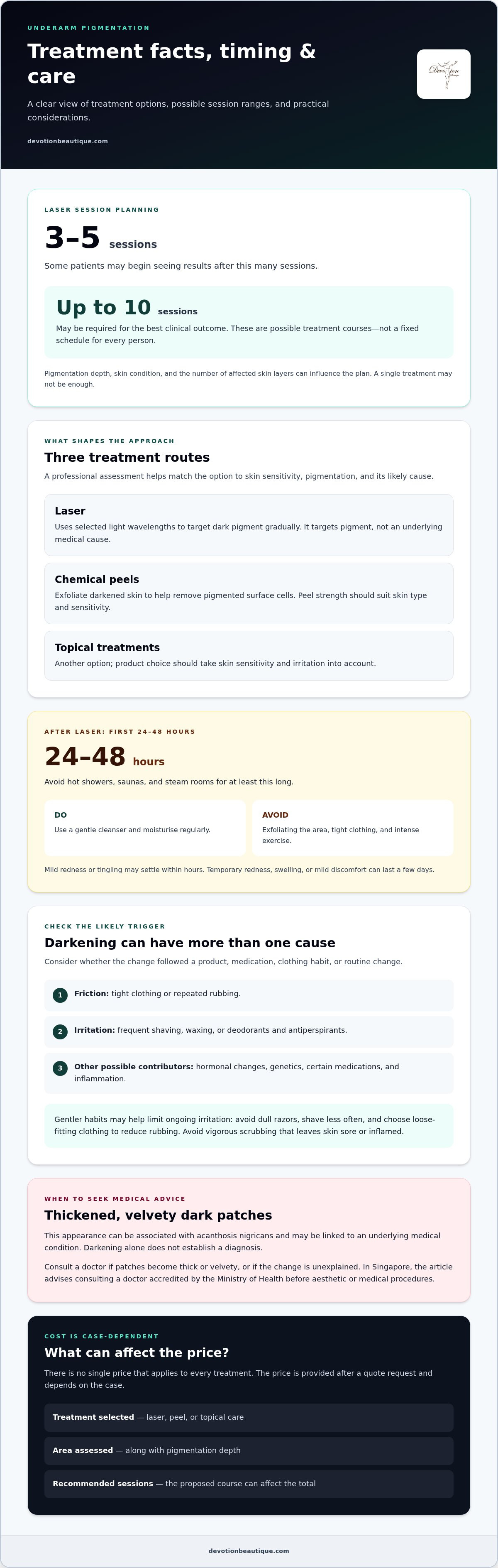
Some patients may begin seeing results after 3-5 sessions, and up to 10 sessions may be required for the best clinical outcome. These figures describe possible treatment courses, not a fixed schedule for every underarm. The type and depth of pigmentation influence the plan.
Laser is one option, not the only one. Depending on the assessment, a professional may consider topical treatments or chemical peels instead. Hormonal changes or an underlying medical condition also matter: cosmetic laser targets pigment, not its underlying cause.
Treatment Costs in Singapore
There isn’t one price that applies to every underarm pigmentation treatment. The price depends on the case and is provided after a quote request. Factors include the selected treatment, the area assessed, pigmentation depth, and the number of recommended sessions.
When weighing how to treat dark underarms in Singapore, compare the treatment method and the overall plan. Laser, chemical peels, and topical care take different approaches, and the number of sessions can affect the total. Consider the proposed course and its cost factors together, rather than judging by a single session alone.
After laser treatment, gentle care supports the treated skin. Use a gentle cleanser and moisturise regularly; avoid exfoliating the area, tight clothing, and intense exercise. Avoid hot showers, saunas, or steam rooms for at least 24 to 48 hours. For a considered next step, explore underarm pigmentation treatment options.
Chemical peels and topical treatments
Chemical peels and topical products offer alternatives to laser for underarm pigmentation. Their suitability depends on skin sensitivity, irritation, and the ingredients used.
Chemical Peel Options
A chemical peel exfoliates darkened skin, helping remove pigmented surface cells. The peel’s strength should match your skin type and sensitivity. For example, sensitive underarms need a gentler approach than skin that tolerates stronger exfoliation. The aim is gradual improvement, not instant whitening.
Ask how the chosen peel suits your skin and what aftercare to follow. Irritation can contribute to further pigmentation, so the treatment plan should avoid aggravating the area. If shaving or hair removal has recently left the skin inflamed, that matters when deciding the timing and choice of treatment.
Peels and IPL work differently. A peel exfoliates darkened skin, while IPL uses light energy to target melanin and may require multiple sessions. Neither approach is automatically suitable for every underarm. Skin sensitivity and the pattern of pigmentation help guide the choice.
Topical Treatment Options
Topical underarm creams may contain skin-lightening ingredients and may be available over the counter or by prescription. A clinician may prescribe a non-hydroquinone product to lighten pigmentation while avoiding irritation-related darkening. Ingredient choice matters, particularly if the area has reacted to past products.
Medically prescribed whitening creams may be more effective than over-the-counter options. Some may contain hydroquinone or kojic acid. These ingredients aren’t interchangeable with every cosmetic brightening product, so follow the directions for the specific cream you use. Avoid layering multiple active products without professional guidance.
Track how your skin responds after introducing a topical product. If redness or irritation appears, stop using it and seek medical advice before adding another whitening treatment. A calm routine is more useful than repeated product changes that may further irritate the underarms.
Peels and creams don’t remove the cause of pigmentation if it persists. For example, ongoing friction or irritation can work against a brightening plan. Addressing the trigger alongside treatment supports a more considered approach.
Before choosing a treatment, note your skin’s sensitivity, the products you’ve used, and any irritation after shaving or hair removal. Share those details during assessment. They help determine whether a peel, topical product, IPL, or another option better suits your concern.
How Does Underarm Whitening Treatment Work?
A suitable plan matches the treatment to your skin’s condition, sensitivity, and likely cause of darkening. In Singapore, medical or aesthetic treatment should follow an appropriate professional assessment.
Skin Consultation and Suitability
An assessment helps distinguish pigmentation from irritation or a possible medical condition. Discuss when the change began, which products you use, and whether shaving or clothing causes discomfort. These details help identify possible triggers and guide the choice between laser, a chemical peel, or topical care.
Before an aesthetic or medical procedure in Singapore, consult a doctor accredited by the Ministry of Health. A professional assessment should consider your skin type, the cause of darkening, and your desired outcome. Thickened, velvety patches call for medical attention rather than a cosmetic plan alone.
During the consultation, describe how your skin responds, not just its colour. For example, mention a topical product that caused stinging or a peel that left the area irritated. Share your current skincare products and recent hair-removal habits. This context helps assess whether your skin is ready for treatment or needs a gentler approach first.
- Cause: Note product changes, friction, or hair removal associated with the darkening.
- Sensitivity: Describe past reactions, including redness or discomfort.
- Skin condition: Mention irritation, thickening, or texture changes.
- Goal: Explain whether you want gradual lightening or support for ongoing irritation.
Sensitivity and Skin Tone Considerations
Underarm pigmentation can occur across all skin tones, though it’s more common in darker skin tones. Melanin gives skin its colour, and excess melanin contributes to pigmentation. Skin tone alone doesn’t determine which treatment is suitable; sensitivity, pigment pattern, and cause also matter.
For sensitive skin, treatment intensity and product choice need careful consideration. Chemical peel strength should suit your skin type and sensitivity. Topical products can also irritate, so share any previous reactions before starting a new routine. These factors help reduce unnecessary inflammation that could worsen darkening.
Ask how the proposed approach accounts for pigment depth and irritation risk. A single laser treatment may be insufficient when pigmentation affects more than one skin layer and may lead to hypopigmentation. That possibility makes treatment selection and assessment important, especially when the underarm is sensitive or pigmentation appears uneven.
Choose a plan based on skin condition and desired outcome, not skin tone alone. If irritation is active, address it as part of the plan. If a medical cause is suspected, seek a doctor’s assessment before pursuing cosmetic lightening.
Aesthetic clinics offering underarm treatments in Singapore
Clinics in Singapore may discuss laser, chemical peels, or topical care for underarm pigmentation. The appropriate option depends on skin sensitivity, pigmentation depth, and likely causes.
What a suitable assessment covers
Before an aesthetic or medical procedure in Singapore, consult a doctor accredited by the Ministry of Health. A professional assessment should consider your skin type, the cause of darkening, and your desired outcome. For example, pigmentation following repeated irritation may need a different approach from thickened, velvety patches.
Describe when the change started and what affects the area. Mention shaving, waxing, deodorant, tight clothing, and previous reactions to skincare. These details help distinguish ongoing irritation from pigmentation that may need medical attention. If an underlying condition is possible, cosmetic underarm whitening won’t address its cause.
Understanding treatment choices
Laser treatment uses selected light wavelengths to target pigment. A chemical peel exfoliates darkened skin, while topical products use skin-lightening ingredients. IPL uses light energy to target melanin and may require multiple sessions. These methods work differently, so the discussion should explain why one approach suits your skin condition.
Skin sensitivity matters. Peel strength should reflect your skin type and sensitivity, while topical products should be chosen to avoid irritation-related darkening. Laser treatment may be insufficient when pigmentation affects more than one skin layer and can lead to hypopigmentation. A careful plan considers both the pigment and surrounding skin.
Ask what the proposed treatment targets, how the plan accounts for sensitivity, and what aftercare involves. For example, after underarm whitening laser treatment, guidance includes gentle cleansing, moisturising, and avoiding exfoliation. Clear aftercare helps you understand how to care for the treated area.
How to assess information about results
Some patients may begin seeing laser results after 3-5 sessions, while up to 10 sessions may be required for the best clinical outcome. These figures describe possible courses, not a guaranteed schedule. Treatment choice, pigmentation, and skin response influence the plan.
Under PHMC regulations, clinics in Singapore cannot share before-and-after photos of underarm lightening treatments on digital platforms. Such photos can be shown during an in-clinic consultation. This helps explain why online images may not be available, while allowing a face-to-face discussion of treatment examples.
A considered clinic discussion connects the treatment to your skin’s needs, rather than focusing on whitening alone. Share relevant skin changes, ask what each option targets, and understand the care it involves. This gives you a clearer basis for deciding whether clinical treatment fits your concern.
Devotion Beautique: Advanced Aesthetic Series Skin Boosting RETREAT
Advanced Aesthetic Series Skin Boosting RETREAT offers a personalised path for skin-focused care. For underarm pigmentation, Devotion Beautique’s Underarm Bleaching Advanced Treatment is the directly relevant option. It may be a next step if you’re considering professional support after learning about possible causes and treatment approaches.
Every skin concern has its own history. Share what you’ve noticed, including irritation or changes after hair removal, so your needs can guide the discussion. The ReProgram Facial and Remedial Facial address other facial skin goals, while the underarm treatment focuses on your underarm concern.
Contact Devotion Beautique to discuss the Underarm Bleaching Advanced Treatment and whether it suits your goals.
Choose a Considered Next Step for Your Skin
Deciding how to treat dark underarms in Singapore can be the start of a more intentional approach to skincare. Rather than chasing quick changes, pay attention to what your skin tolerates and how its appearance evolves. Keeping a simple note of product changes, irritation, and visible changes can make your treatment discussion clearer and more useful.
Personal care should feel considered, not pressured. If you’re ready to discuss an underarm-focused option, Devotion Beautique offers the Underarm Bleaching Advanced Treatment. A conversation can help you understand how it relates to your goals and which next step feels right for you.
Explore underarm care with Devotion Beautique and take your next step with clarity and confidence.
Frequently Asked Questions
How many sessions do I need?
Some people may begin seeing underarm laser results after 3-5 sessions, while up to 10 sessions may be needed for the best clinical outcome. The treatment plan depends on pigmentation and skin response. Keep a record of changes between appointments, such as uneven colour or irritation, and discuss these observations during follow-up. A session count describes a possible course, not a promised result.
Can I lighten my underarms naturally at home?
Natural remedies are better suited to mild pigmentation, and results can be inconsistent. Cucumber is described as less irritating than lemon juice, which may irritate skin because of its acidity. Coconut oil contains vitamin E and can moisturise the area. Potatoes contain catecholase, described as an enzyme with mild bleaching properties. These home remedies aren’t equivalent to clinical treatment.
Is underarm lightening treatment painful?
A numbing agent is applied before underarm laser treatment to minimise discomfort. Mild redness or tingling may subside within a few hours, while temporary redness, swelling, or mild discomfort can last a few days. Keep the area clean and dry afterward, wear loose clothing, and avoid intense exercise. Follow the treatment’s aftercare guidance, especially if your skin feels sensitive.
What causes dark underarms, and when should you see a doctor?
Common causes include friction, shaving irritation, deodorants, hormonal changes, genetics, and certain medications. See a doctor if the skin becomes thickened and velvety, or if darkening may have a medical cause. Acanthosis nigricans can be associated with diabetes, insulin resistance, obesity, or hormonal disorders. Medical assessment can help identify the cause before you pursue cosmetic lightening.
How can you treat dark underarms at home safely?
To understand how to treat dark underarms in Singapore at home, focus first on preventing irritation. Shave less often, avoid dull razors, and choose loose clothing that reduces rubbing. Use a gentle cleanser and moisturise the area. Don’t scrub with baking soda, as incorrect or excessive use can cause dryness, peeling, or irritation. Stop any remedy that causes discomfort.
Which skincare ingredients help lighten underarm pigmentation?
Topical creams can contain skin-lightening ingredients and may be available over the counter or by prescription. Medically prescribed creams may contain hydroquinone or kojic acid; non-hydroquinone products are another option. If you’re considering how to treat dark underarms in Singapore with a topical product, discuss previous reactions and sensitivity with a doctor before adding active ingredients to your routine.
How effective are chemical peels and laser treatments for dark underarms?
Chemical peels exfoliate darkened skin, while lasers use specific light wavelengths to target pigment. Peel strength should suit your skin type and sensitivity. A single laser treatment may be insufficient when pigmentation affects more than one skin layer and may lead to hypopigmentation. IPL also targets melanin with light energy and may require multiple sessions. Suitability depends on your skin and the pigmentation involved.
What are the risks and side effects of underarm lightening treatments?
Laser treatment can cause temporary redness, swelling, tingling, sensitivity, or mild discomfort. A single pigmentation laser treatment may be insufficient when pigment affects multiple skin layers and may lead to hypopigmentation, or lighter patches. Peels and topical products can irritate underarm skin, and irritation can contribute to further darkening. Follow aftercare guidance and avoid exfoliating skin after laser treatment.