
Microcurrent Facial for Lifting in Singapore: Treatment Time
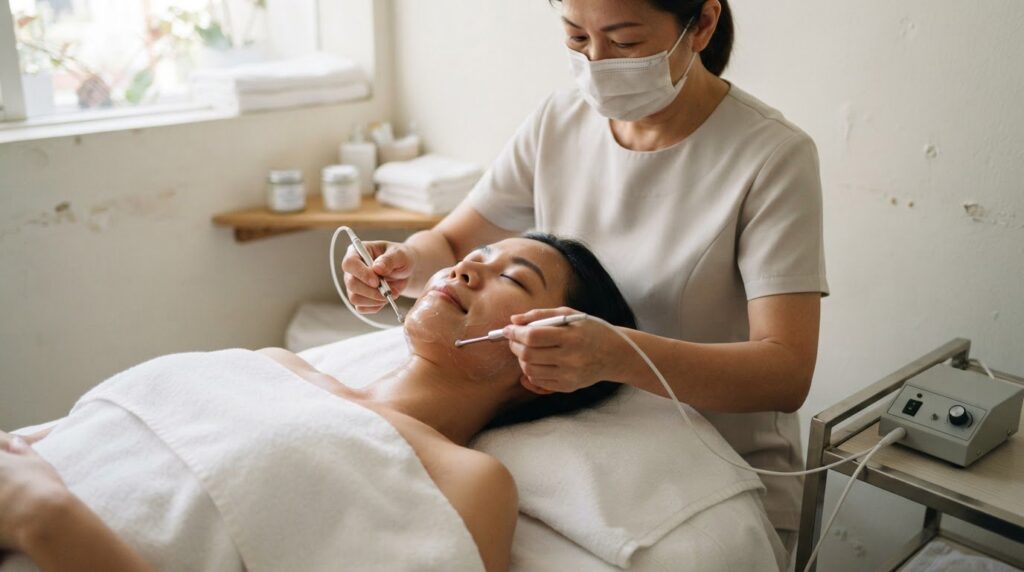
Can a microcurrent facial fit into a busy Singapore schedule? Anti-ageing facials with stated durations commonly take 75 to 90 minutes, while the exact appointment time depends on the steps included. A microcurrent facial for lifting in Singapore may give facial contours a more defined appearance, but the effect from one treatment is subtle and short-lived.
It’s natural to want to know how long a treatment takes and whether you can book online. Booking options and facial steps vary by provider. This guide explains what microcurrent may do for facial contours, skin tone and texture, how long a session may take, and what to consider after a device-based facial, including avoiding a sauna or heavy sweating for about a day. It also covers what to look for when considering a Singapore provider, so you can decide whether this treatment fits your skin goals and routine.
Key Takeaways
- Look beyond the treatment name: the steps included in a facial can affect how much time to set aside.
- Understand how gentle electrical stimulation may support a more defined-looking facial contour, and keep expectations realistic.
- Consider your skin goals separately: contour definition, skin texture and the appearance of fine lines are related but distinct concerns.
- Plan for simple aftercare by allowing your skin time to settle and avoiding sauna or heavy sweating for about a day after a device facial.
- When exploring Singapore providers, compare the treatment approach and appointment format with the results you hope to achieve.
Treatment duration
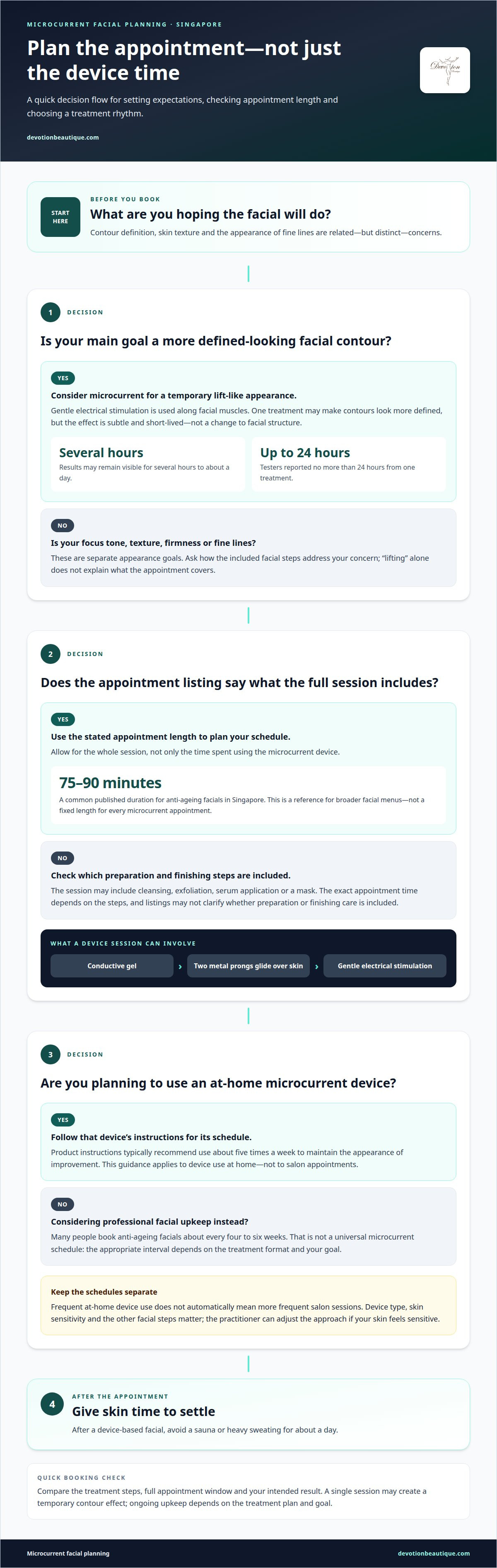
In Singapore, an anti-ageing facial with a published duration commonly takes 75 to 90 minutes. That range describes reviewed facial menus from April to September 2026, not every microcurrent appointment. The full session time depends on the steps included, such as cleansing, exfoliation, serum application and a mask.
A microcurrent treatment uses conductive gel and two metal prongs that glide over the skin, delivering gentle electrical stimulation along facial muscles. Appointment listings may not make clear whether preparation or finishing steps are included. Check the stated appointment length as a whole, not just the time spent using the device.
For a lifted appearance, one session may offer a temporary change rather than lasting contour definition. Reported results can remain visible for several hours to about a day; testers reported no more than 24 hours from one treatment. This helps explain why salons may present microcurrent as a series. A treatment plan may involve repeated visits, rather than relying on one appointment for ongoing upkeep.
How often might treatments be scheduled?
Two different schedules appear in guidance, and they apply to different contexts. Product instructions typically recommend microcurrent treatments about five times a week to maintain the appearance of improvement. That frequency relates to device use, not a universal schedule for salon appointments. Many people book anti-ageing facials for upkeep about every four to six weeks. The appropriate interval depends on the treatment format and the goal.
Before settling on a routine, distinguish an at-home device schedule from a professional facial plan. Frequent use at home does not automatically mean more frequent salon sessions. The device, skin sensitivity and other facial steps all matter. If your skin feels sensitive during treatment, the practitioner can adjust the approach rather than treating frequency as a fixed target.
What about price and appointment length?
Singapore facial prices vary with the treatment format and included steps. Compare like with like rather than choosing by the word “lifting” alone. One menu entry may cover only microcurrent, while another appointment may add cleansing, exfoliation, serums or a mask. Those differences affect the experience and the time reserved. When arranging an appointment, ask what the listed duration covers.
For planning, allow the full stated appointment window, especially when the facial combines device work with skin preparation and finishing care. A 75-to-90-minute anti-ageing facial provides a useful reference for broader menu formats, but it does not establish a fixed duration for every microcurrent session. A smoother, lifted appearance may be the aim; the schedule should reflect the actual treatment components and whether the plan is for a single occasion or continued upkeep.
Facial contouring and collagen stimulation
Microcurrent facials use low-level electrical currents to stimulate facial muscles and support a more defined-looking appearance. Contouring and collagen-related aims are connected, but they describe different aspects of the treatment.
Facial Contouring
Facial contouring means working towards a more sculpted appearance by stimulating muscles with low-level electrical current. This may suit a goal of temporary lift rather than a change to facial structure. The effect is subtle and short-lived after a single treatment, so consider the intended look before choosing it.
A lifting or sculpting massage facial may leave the face looking more defined for a day or two. Massage and microcurrent use different approaches: massage applies hands-on movement, while microcurrent delivers low-level electrical current to facial muscles. Both relate to temporary contour definition, but neither changes the face’s underlying structure.
Collagen Stimulation
Collagen stimulation refers to encouraging processes associated with collagen, a structural protein in skin. Microcurrent facials are described as non-invasive treatments that use minor electrical currents to stimulate collagen and elastin production. This may matter if your concern includes skin firmness as well as facial contours, because those goals involve more than the appearance of lifted muscles.
The muscle-focused and collagen-focused aims are not identical. A session may target facial muscles while also being used to support collagen and elastin production. That description does not establish how much collagen an individual treatment produces or how quickly visible changes appear. Keep the distinction clear when considering the treatment’s purpose.
Collagen Production
Collagen production is the skin’s creation of collagen, which helps support its structure. Microcurrent is used with the aim of stimulating this process, alongside elastin production. For someone considering a facial for a smoother, firmer appearance, that is a different objective from the immediate contour effect created by muscle stimulation.
Think of the treatment as addressing two visible concerns through related but separate aims: facial definition and skin support. A routine focused only on a momentary sculpted appearance may not suit someone seeking broader skin improvement. Be clear about whether contour, firmness or both matter most, and discuss those priorities as part of a facial plan. “Collagen stimulation” is not a promise of a specific or lasting result.
If your focus is broader skin correction rather than temporary contour definition, explore the ReProgram Facial as a separate option for targeted skin concerns. It is a facial choice, not a microcurrent treatment.
Skin tone, texture and fine lines
Microcurrent facials are used to improve the appearance of skin tone and texture, as well as facial contours. They’re also used to soften the appearance of fine lines and wrinkles. These are appearance-focused aims, not a promise that every concern will change in the same way. Someone focused on uneven-looking tone, for example, may judge a session differently from someone concerned about expression lines.
Skin texture and tone are separate concerns. Texture describes how smooth the skin’s surface looks, while tone refers to its overall evenness. A microcurrent facial may support both aims, but it is not the same as a treatment designed specifically to exfoliate the skin. If rough texture or uneven tone is your main concern, identify that goal when discussing facial options.
Fine lines and wrinkles are related, but not identical. Fine lines are smaller creases that may become more visible with facial movement; wrinkles can appear as more established lines. Microcurrent facials are used to improve their appearance and tighten or lift the skin. They may be relevant if your priority is a fresher-looking finish, rather than changing your face’s underlying structure.
Keep the distinction between visible appearance and treatment mechanism in mind. Low-level electrical currents stimulate facial muscles, while microcurrent is also used with the aim of supporting collagen production. Neither mechanism provides a specific measure of line reduction. Consider how the concern looks on your face, whether it is most noticeable at rest or during expression, and which outcome matters most to you.
Your skin type and current condition help shape which facial approach is suitable. Someone with sensitive skin, for example, may need a different treatment plan from someone primarily concerned with fine lines. Skin concerns can overlap: uneven tone, texture changes and wrinkles may all influence the desired result. Discussing those priorities helps match the treatment approach to the appearance you want to address.
A facial is only one part of a skin-care routine. Daily broad-spectrum sunscreen with SPF 30 or higher helps slow skin ageing, while consistent care supports the appearance of skin between treatments. Keep expectations focused on visible tone, texture and line concerns. A smoother-looking surface or softer-looking fine lines are different goals from facial contouring, even when both are considered during the same treatment plan.
Device-treatment precautions
A microcurrent facial uses a device to deliver a very low electrical current through probes moved across the face. Conductive gel helps the probes glide over the skin. A session may also include cleansing, exfoliation, serums and a mask, so the device is only one part of the appointment. Knowing the sequence helps you understand what the treatment involves.
Before the device portion begins, describe your skin’s current condition and any sensitivity you notice. Mention, for example, if a product or recent facial step has left your skin feeling unusually reactive. This gives the practitioner useful context and helps shape the approach. If a sensation feels uncomfortable during the procedure, speak up rather than staying silent.
Microcurrent is not the same as facial massage, even though both may be used with contouring goals. The device delivers electrical stimulation; massage uses hands-on movement. Lymphatic massage is another distinct technique, so don’t assume a microcurrent session includes lymphatic work. When comparing descriptions, ask what the treatment steps involve, especially if you want a particular kind of facial experience.
After a device facial, avoid sauna use or heavy sweating for about a day. In Singapore’s warm, humid climate, plan around activities such as a strenuous workout or sauna visit. Give your skin a quieter interval before returning to those activities. Aftercare can vary by treatment, so follow the guidance for the facial you receive.
Follow the practitioner’s instructions for your specific session, including any guidance about products applied during the facial. A session that includes exfoliation, serums and a mask has more steps than device work alone. Keep track of how your skin feels after each appointment, especially if sensitivity is a concern. A simple record can help you describe your experience clearly at a future visit.
At-home use also calls for attention to the device’s own instructions. Follow its directions for conductive gel, placement and treatment frequency rather than assuming every device works identically. Product instructions typically recommend microcurrent use about five times a week to maintain the appearance of improvement. This schedule relates to device guidance, not a standard frequency for professional facials.
A considered beauty routine includes both treatment and aftercare. Make room for the post-facial pause, communicate changes in your skin condition, and distinguish electrical stimulation from massage or lymphatic techniques. These practical checks help you understand what happens during a microcurrent session and plan around it.
Microcurrent facial providers in Singapore
In Singapore, provider listings may use “lifting” to describe different facial approaches. Compare the treatment method, included steps and appointment length rather than relying on the label alone. This helps you understand what a booking covers and whether its focus matches your goal, such as temporary contour definition or a broader skincare experience.
Microcurrent applies low-level electrical stimulation to facial muscles. HIFU, radiofrequency and EMS are separate treatment modalities, not interchangeable names for microcurrent. Their labels alone don’t tell you what a particular appointment includes. Compare the stated method, treatment area, session format and aftercare, then match those details to the result you’re seeking.
A Singapore microcurrent appointment commonly begins with skin preparation. The facial may include cleansing and exfoliation, followed by serums and a mask. For the device portion, conductive gel is applied, then two metal prongs glide over the skin to deliver microcurrents. The order and combination of steps can vary across facial menus, so check the appointment description.
Timing also deserves attention. Reviewed Singapore anti-ageing facial menus with stated durations commonly listed appointments lasting 75 to 90 minutes. That is a reference for broader anti-ageing facials, not a fixed duration for every microcurrent session. Read the booking details to see whether the stated time covers preparation, device use and finishing steps.
Before booking, connect the treatment description to your skin priority. If facial-muscle stimulation and contour appearance are your focus, look for a clear explanation of the microcurrent device stage. If texture or tone is your priority, note whether the menu also describes exfoliation, serums or a mask. These details show how the facial is structured, without assuming every “lifting” facial follows the same routine.
For a considered discussion, describe your skin type, current condition and desired appearance. Distinguish a gentle electrical treatment from massage or other device-based methods. Clarify which facial steps are included and how the session fits your routine. This makes it easier to compare Singapore providers by treatment details and aims, not promotional terms alone.
To explore a personalised facial approach for your skin priorities, book a facial consultation.
Devotion Beautique
Devotion Beautique connects facial concerns with a personalised skincare approach. If you’re weighing microcurrent against other options, consider the skin goal behind your decision: contour definition, texture, hydration or longer-term skin improvement. The ReProgram Facial and Remedial Facial support different facial needs, while the Relaxation Facial offers a calming experience.
For broader skin support, the Advanced Aesthetic Series Skin Boosting RETREAT is another option. It is not a microcurrent facial, but it can be a starting point for discussing your priorities and a suitable facial direction. Share what you hope to address and what matters in your routine. Contact Devotion Beautique to discuss your skincare goals and facial options.
Choose a Skincare Direction That Fits
Choosing a microcurrent facial for lifting in Singapore is most useful when you start with a clear personal priority, not an idealised before-and-after image. Decide whether you’re exploring temporary contour definition or a broader skincare plan. That distinction gives you a grounded way to consider treatment options and how they might fit your routine.
Before taking your next step, bring together the concerns you want to address, your skin’s current condition and the level of ongoing care that feels practical. A focused conversation can connect these priorities with a suitable facial approach without treating one technique as the answer to every skin goal. It also gives you space to express what a comfortable, considered treatment experience means to you.
Devotion Beautique offers personalised facial programmes for different skin concerns. If you’re ready to discuss your skincare direction, contact Devotion Beautique. Let your next step reflect your goals, your skin and the care you want to sustain.
Frequently Asked Questions
Can I book a microcurrent facial online?
Online booking depends on each Singapore provider’s booking system. Some accept appointments through an online calendar, while others use another booking route. Before selecting a time, check that the appointment description identifies microcurrent and explains what the session includes. A listing that names cleansing, device treatment, finishing steps and appointment length, for example, makes planning easier than a treatment title alone.
How do microcurrent devices work?
Microcurrent devices deliver a very low electrical current through probes placed against the skin. During a facial, conductive gel helps the probes glide over the face and conduct the current. The device moves across selected areas, including regions over facial muscles. This differs from a skincare product applied by hand: the device provides electrical stimulation, while serums and masks are separate facial steps.
How do I find microcurrent facial providers near me?
Start with Singapore-based listings, then look for a clear description of the device treatment rather than relying on “lifting” in the service name. Compare the stated appointment length, facial steps and whether the session includes cleansing, exfoliation or finishing products. These details help distinguish a microcurrent facial from massage-based sculpting or other electrical treatments, even when menu descriptions use similar language.
What is a microcurrent facial and how does it lift or tone the face?
A microcurrent facial is a non-invasive treatment that uses low-level electrical stimulation on facial muscles. Its aim is a more lifted or defined appearance, rather than a change to facial structure. If you’re considering a microcurrent facial for lifting in Singapore, separate this temporary contour-focused aim from concerns such as uneven tone or rough texture, which involve different skin goals.
How effective is microcurrent facial treatment for lifting, and what results are supported by evidence?
Reported benefits include a more defined-looking contour and improvements in the appearance of fine lines, wrinkles, skin tone and texture. The lifting effect from one treatment is subtle and short-lived, so it’s best understood as a temporary appearance change, not a lasting structural lift. Results depend on the concern being addressed and the treatment plan. Consider whether temporary contour definition matches your priority.
How long do microcurrent facial results last and how often should treatments be done?
Visible results are reported to last from several hours to about a day, with testers reporting no more than 24 hours from one treatment. Product instructions typically recommend device use about five times a week to maintain the appearance of improvement. Salon appointments are a different routine, with many people booking anti-ageing facials every four to six weeks for upkeep.
What is the average price of a microcurrent facial in Singapore?
There isn’t one meaningful average for every Singapore microcurrent facial, because menus can describe different treatment formats. The total depends on what the appointment includes, such as skin preparation, exfoliation, serums, a mask and device treatment. Compare the listed inclusions and appointment length together. A low-cost device-only session and a longer facial with several skincare steps aren’t directly comparable.
Which Singapore clinics and beauty salons offer microcurrent lifting facials, and what are their prices?
Provider menus and prices vary, so use current Singapore listings to compare the named treatment method, included steps and appointment format. This article doesn’t provide a third-party provider directory or price list. Devotion Beautique offers the ReProgram Facial, Remedial Facial and Relaxation Facial for related facial goals. These programmes address different skincare needs, so consider the concern you want to prioritise when exploring your options.