
Benefits of Regular Facial Treatments for Clearer-Looking Skin
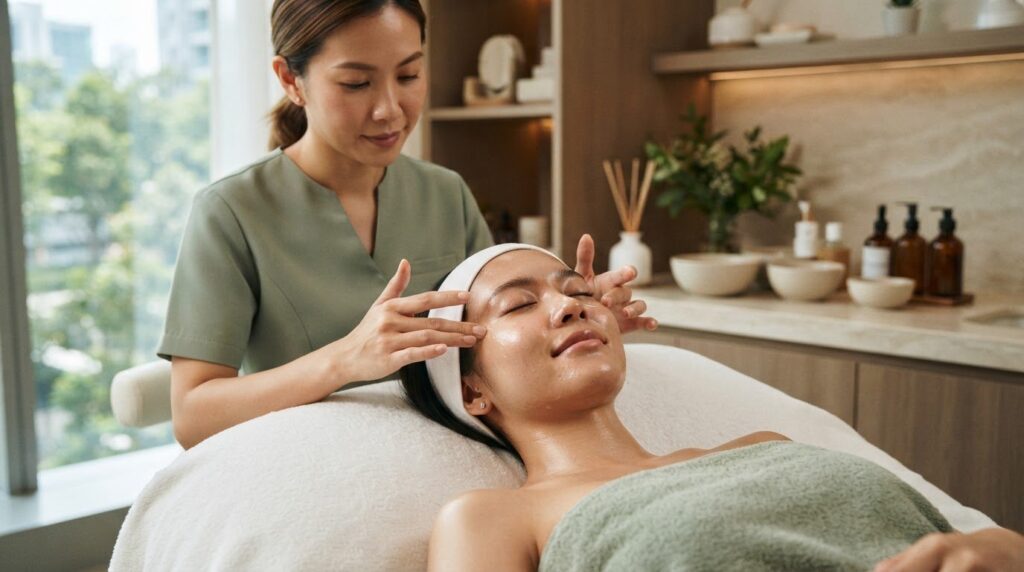
A facial can be more than a complexion reset. The benefits of regular facial treatments may include clearer-looking, smoother, more hydrated skin, as well as a restorative pause in a busy routine. Cleveland Clinic aesthetician Amanda Kanaan advises that an interval of four to six weeks is ideal for facials, in line with the skin’s natural cycle.
Visible improvements matter, but a treatment can also add focused care to your routine. Facials may combine cleansing, exfoliation, extraction, hydration and targeted care, with the approach adapted to different skin needs.
This article explains how regular treatments may support clearer-looking, hydrated skin, who may benefit and what to consider when deciding whether a facial is worthwhile for your time and budget. It also looks at how relaxation and consistent care can support skin confidence, without replacing everyday skincare.
Key Takeaways
- Professional exfoliation and extractions can help clear surface buildup and congestion, while at-home picking may irritate skin.
- Hydrating treatments can replenish moisture and leave skin looking plumper and dewier.
- Consider a facial if congestion, dryness, or uneven-looking skin is a recurring concern, and look for care suited to your skin’s needs.
- Keep cleansing, moisturising, and applying sunscreen as part of your daily routine between treatments.
- A facial can offer a restorative pause as well as skin-focused care, supporting a more confident and consistent approach to your wellbeing.
Exfoliation, extraction and clearer-looking skin
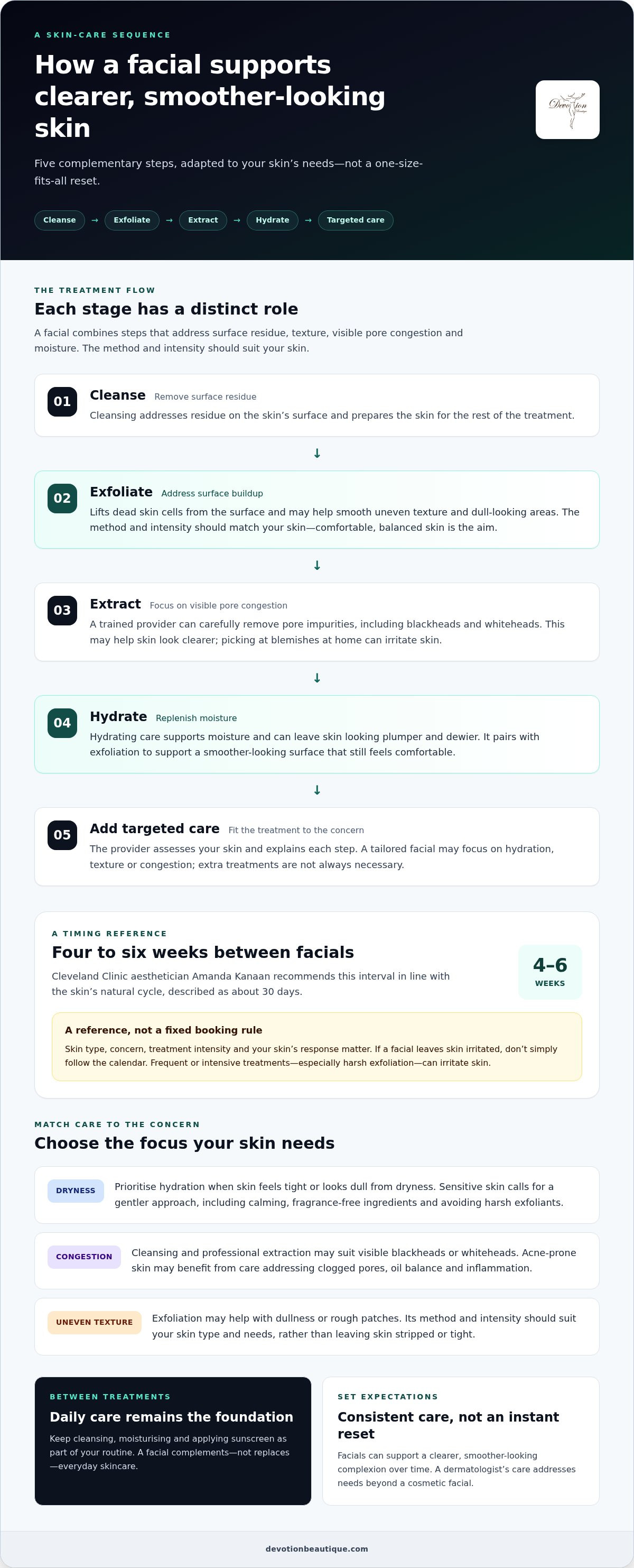
A professional facial may combine cleansing, exfoliation, extraction, hydration and care selected for your skin’s needs. These steps address surface buildup and pore congestion while supporting moisture.
Exfoliation and Skin Texture
Exfoliation removes dead skin cells from the surface and promotes cell turnover, which can help smooth uneven texture. It may be useful when dullness or rough patches make skin feel less refined. In a facial, exfoliation is one part of a broader sequence, not a substitute for cleansing or hydration. Its method and intensity should suit your skin type and needs.
For example, dry, flaky areas around the nose or chin can look more noticeable when surface buildup makes makeup sit unevenly. Exfoliation helps lift dead cells, leaving the skin’s surface looking smoother and supporting its renewal process. The aim is comfortable, balanced skin, not a stripped or tight feeling.
Hydration matters alongside exfoliation. Moisturising care after exfoliation can help replenish moisture and support a plump, dewy appearance. This pairing may suit skin that looks dull and feels dry. A tailored treatment considers both concerns, rather than focusing on texture alone, to leave the skin looking smoother while still feeling comfortable.
Extraction and Clearer-Looking Skin
Extraction is the careful removal of pore impurities, including blackheads and whiteheads, as part of deep cleansing. Clearing congestion may help pores appear smaller and skin look clearer. Trained providers can perform extractions safely. Picking at blemishes at home, by contrast, can irritate skin and make a congested area more uncomfortable.
A facial commonly includes cleansing, exfoliation, extraction, hydration and targeted care. Each step has a distinct role: cleansing addresses surface residue, while extraction focuses on visible pore congestion. Hydration afterward supports the skin’s moisture and appearance. This sequence offers an alternative to squeezing blackheads or whiteheads in front of a mirror.
Regular facial treatments can help maintain a clear, smooth-looking complexion and prevent future breakouts. They are best understood as ongoing skin care, not an instant reset or a replacement for daily cleansing and moisturising. If blackheads recur around the nose, for example, consistent attention to cleansing, gentle exfoliation and suitable hydration can support a clearer appearance over time.
Exfoliation and extraction work on different concerns, so their value depends on what the skin shows. Texture may call for surface exfoliation; visible blackheads may benefit from professional extraction. A facial can bring these steps together with hydration, making clearer-looking skin the outcome of several complementary forms of care.
Are facials worth the hype?
Facials can be worthwhile when their purpose and frequency match your skin goals. Cleveland Clinic aesthetician Amanda Kanaan recommends a facial every four to six weeks, relating that interval to the skin’s natural renewal timing.
A facial complements rather than replaces daily skincare. Cleansing, moisturising and sunscreen support skin between appointments, while a dermatologist’s care addresses needs beyond a cosmetic facial.
Cleveland Clinic aesthetician Amanda Kanaan identifies four to six weeks as an ideal interval between facials. Your skin type and concern still matter: dryness, sensitivity, congestion and breakouts call for different treatment choices, not automatically more appointments.
Frequent or intensive treatments can irritate skin, especially when they involve harsh exfoliation. After a first facial or new products, purging-related breakouts may occur and should subside within a week or two, according to Cleveland Clinic aesthetician Amanda Kanaan.
In Singapore, look for a trained provider who assesses your skin and explains the purpose of each step. Cleveland Clinic aesthetician Amanda Kanaan also advises against adding facial extras every time, because they aren’t always necessary.
Facial Frequency and Skin Renewal
Facial frequency is the interval between treatments, considered alongside the skin’s renewal cycle. Cleveland Clinic aesthetician Amanda Kanaan says the skin’s natural cycle is about 30 days and recommends facials every four to six weeks.
That timing offers a practical reference, not a reason to book automatically. A facial once a month can align with the skin’s roughly 28-day renewal cycle, but the treatment’s intensity and your skin’s response also matter. If a facial leaves skin irritated, the next appointment should not simply follow the calendar.
Treatment Frequency by Skin Type and Concern
The recommended frequency depends on the concern and how your skin responds to treatment. Someone focused on dryness may prioritise hydration, while a person concerned about congestion may value cleansing and extraction.
Sensitive skin calls for a gentler approach, including calming, fragrance-free ingredients and avoiding harsh exfoliants. Acne-prone skin may benefit from care that addresses clogged pores, oil balance and inflammation. The four-to-six-week interval is a reference point; skin comfort can help you decide whether that rhythm suits you.
To judge value, consider how a treatment fits alongside your everyday routine. A monthly appointment may offer structured attention to skin changes, while daily cleansing, moisturising and sunscreen remain the foundation. Each visit feels more worthwhile when it has a clear focus, rather than unnecessary extras.
If you’re considering a tailored facial rhythm, explore personalised facial care as a way to align treatment choices with your skin goals.
Hydration and skin barrier support
Hydration-focused facials replenish skin moisture and can leave the complexion looking plumper and dewier. They may suit skin that feels tight or looks dull from dryness. The skin barrier is the outer layer that helps retain moisture, so comfort matters alongside appearance. A facial supports your routine but does not replace the moisturiser you use at home.
Consider a treatment’s purpose and sequence, not just its label. A facial may begin with cleansing, then provide hydrating care suited to your skin’s needs. For example, someone experiencing dryness may prefer a treatment centred on moisture rather than extra exfoliation. Adding more steps does not automatically make a facial more suitable for dry or sensitive skin.
HydraFacial and DiamondGlow are names you may encounter when comparing facial options. A name alone does not explain which steps a treatment includes or whether it prioritises hydration. Compare the stated aim: what care addresses moisture, what exfoliation is involved and how the treatment suits your concern. This helps you compare by purpose rather than assume two named options work identically.
Skin comfort should guide the approach, especially when dryness comes with sensitivity. Fragrance-free, calming ingredients can suit sensitive skin, while harsh exfoliants may be best avoided. If your face feels tight after cleansing, for example, a gentler, hydration-led facial may make more sense than aggressive surface renewal. The details matter more than a promise of instant transformation.
Weather can affect how dryness feels. In cold, dry winter conditions, a hydrating facial may address moisture concerns and give skin a dewy appearance. Singapore’s climate differs from a cold winter setting, so consider the conditions you actually experience, such as air-conditioned rooms that leave skin feeling dry. Your skin’s comfort and appearance matter more than the season on the calendar.
Between appointments, keep daily care simple and consistent: cleanse gently, apply moisturiser and use sunscreen. If your skin feels tight after washing, notice whether your cleanser or surroundings may contribute. These observations can help clarify whether your priority is replenishing moisture or adjusting daily habits.
Hydration and exfoliation serve distinct purposes. A dry, lacklustre complexion may benefit from moisture-focused care, while rough texture may call for a different emphasis. Do not choose HydraFacial or DiamondGlow by name alone; compare the treatment’s focus with your skin’s needs. A considered choice supports a comfortable, hydrated-looking complexion while keeping the skin barrier’s moisture needs in view.
Who Should Get Regular Facials?
Facials may suit people managing recurring congestion, acne, dryness or uneven-looking pigmentation. Let your skin type and current concerns shape the treatment. If you have sensitive skin, avoid harsh exfoliants and favour fragrance-free, calming ingredients. During pregnancy, choose non-invasive facials and avoid harsh chemicals or heat therapy.
For acne-prone skin, facial care can focus on unclogging pores, balancing oil production and reducing inflammation. A treatment may also include blue LED light, which can kill bacteria and speed acne healing. These options address different aspects of blemish care, so the right focus depends on whether your concern is clogged pores, excess oil or inflammation.
Congestion is another reason to consider professional facial care. A facialist can perform extractions of blackheads and whiteheads, while picking at them at home can further irritate skin. Recurring blackheads around the nose, for example, are a reason to discuss pore-focused care rather than repeatedly squeezing the area yourself.
Uneven pigmentation calls for a different focus from acne or congestion. Yellow LED light can reduce hyperpigmentation, while a facialist may observe skin changes over time and recommend home-care products. Noticing whether dark patches become more prominent helps clarify the concern and connect treatment choices to what you see.
Regular care works best alongside a consistent home routine. Cleanse, moisturise and apply sunscreen daily between facials. For instance, someone addressing breakouts can keep these steps steady while using professional treatments for targeted care. A facial can support your routine, but it does not replace daily basics.
At-home habits matter for irritated or blemish-prone skin, too. Avoid removing whiteheads and blackheads yourself, as this can aggravate the area. If breakouts follow a new product or facial, note when they started and what changed. Purging after a facial can settle within a week or two, according to Cleveland Clinic aesthetician Amanda Kanaan.
If acne, pigmentation or irritation persists or worsens, seek a dermatologist’s advice before choosing cosmetic care. A dermatologist can assess the concern. Sensitive skin also calls for gentler ingredients and avoiding harsh exfoliation. During pregnancy, keep the same safety priorities in view: choose non-invasive care and avoid harsh chemicals or heat therapy.
Continuity can be useful when you want to track a skin concern. Professional facialists can notice changes in your skin over time and recommend products for home use. Appointments can be an opportunity to review what is changing and whether your home-care products still suit your concern. Regular care is most relevant when there is something you want to monitor, rather than following a fixed approach regardless of your skin.
Care between appointments matters if you have whiteheads or blackheads. Do not remove them at home, as this can further irritate your skin. A facial is no reason to pick at blemishes between visits. Instead, discuss recurring concerns and home products with your facialist, while avoiding actions that may irritate the area.
Relaxation, stress relief and confidence
A facial can create a deliberate pause in a packed day. Cleansing, gentle touch and quiet time give the experience a restorative quality alongside its skin-focused steps. Someone balancing work, travel and family commitments, for example, may value an appointment as protected time to slow down. The calm is part of the experience, not a substitute for medical care or a promise to resolve ongoing stress.
That pause can make skincare feel more considered. Rather than rushing through a routine at home, you can pay attention to how your skin feels and what it needs. Notice whether dryness, congestion or sensitivity affects your comfort. A facial can help you reconnect with those observations, instead of treating every concern as a flaw to correct.
Confidence can grow from feeling more comfortable in your skin, not from pursuing a flawless complexion. Someone concerned about dullness may appreciate a smoother-looking finish; another person may value the gentle, attentive experience itself. These personal measures of value can help you reflect afterward on both your skin’s appearance and how cared for you felt during the appointment. Just as skin treatments support overall wellness, addressing broader facial harmony and oral health through specialists like Dr Samintharaj Kumar can also play a key role in building lasting personal confidence.
Set a simple intention before booking: relaxation, focused skin care or a blend of both. This helps clarify what you want from the experience. During the appointment, notice whether the pace and level of touch feel comfortable. Afterward, keep your routine uncomplicated: cleanse, moisturise and apply sunscreen. This connects a restorative pause with practical care at home.
Regularity can create a reassuring rhythm, provided appointments fit your schedule and skin needs. A monthly facial is one possible routine, but the value lies in a sustainable rhythm, not automatically adding appointments. If your main goal is relaxation, time away from daily demands may matter as much as visible change. If your priority is skin appearance, track the concern you want to address and whether it changes over time.
Use that reflection to decide whether a facial feels worthwhile. Consider the time involved, the treatment’s purpose and the care you can maintain between visits. If an appointment leaves you feeling restored and gives your skin focused attention, it may earn a place in your personal wellness routine. Likewise, for those pairing aesthetic self-care with broader health and wellness goals, Medi Slim provides physician-supervised guidance designed to support lasting lifestyle changes. If you are experiencing persistent emotional distress, a facial is not a replacement for appropriate support.
For a calm, dedicated pause centred on facial care, explore a restorative facial experience.
Devotion Beautique: Advanced Aesthetic Series Skin Boosting RETREAT
Devotion Beautique’s Advanced Aesthetic Series Skin Boosting RETREAT offers a next step for readers seeking focused skin support. Choose a treatment direction that reflects your priority: the ReProgram Facial and Remedial Facial support targeted skin concerns, while the Relaxation Facial centres on a restorative experience.
If dryness, congestion or uneven-looking skin shapes your goals, consider which concern matters most and choose a facial approach aligned with it. A consistent home routine remains part of long-term care, while a tailored treatment adds focused attention. The right choice depends on the experience and skin goal you want to prioritise.
For a considered next step, contact Devotion Beautique or visit devotionbeautique.com.
Choose a Skin-Care Rhythm That Feels Right
The benefits of regular facial treatments matter most when care fits comfortably into your life, reflects your priorities and supports habits you can sustain. Before choosing your next step, decide what you want skincare to make room for: greater confidence in your complexion, a restorative pause or focused attention on a recurring concern. That intention can help you decide whether a treatment belongs in your routine, rather than making appointments another obligation.
Let your next decision be guided by your own experience. Notice what feels worthwhile, how your skin responds and what kind of care you are ready to maintain. A thoughtful approach leaves room for progress without demanding perfection. It also lets you adjust your routine as your priorities change, keeping personal comfort at the centre of your choices.
For a facial experience shaped around your goals, contact Devotion Beautique and take the next step at your pace. Your skincare journey can begin with one considered choice.
Frequently Asked Questions
What Are Facial Treatments?
Facial treatments are non-invasive skin-care sessions tailored to a person’s skin type and needs. A session may include cleansing, moisturising and exfoliation, with the selection shaped by concerns such as dryness or congestion. For example, someone whose skin feels tight may prioritise moisture, while a person bothered by rough texture may focus on surface renewal. Facials complement everyday care rather than replace it.
What are the benefits of regular facial treatments for skin health?
The benefits of regular facial treatments may include a clearer, smoother-looking complexion and support for skin moisture. Consistent appointments can also help you notice changing concerns, such as recurring congestion or dryness, and adapt your care accordingly. Value comes from matching treatment to your skin’s needs, not simply booking more often. Daily cleansing, moisturising and sunscreen remain important between visits.
What happens during a typical facial treatment, step by step?
A typical facial follows a sequence of care: cleansing prepares the skin, exfoliation lifts surface buildup, and extraction may address pore congestion. Hydrating care follows, with targeted steps selected for your concerns. For example, a session focused on dryness may emphasise moisture, while one addressing blackheads may include extraction. The precise combination varies with skin type and treatment goals.
Can regular facials help with acne, clogged pores, dullness, or ageing?
Facials can support care for these concerns, though the approach differs. Acne-focused treatments may address clogged pores, oil balance and inflammation; exfoliation can smooth dull-looking surface texture. Facials designed for ageing may encourage cell turnover and collagen production. If blackheads or whiteheads concern you, avoid squeezing them at home, as this can irritate skin. Keep daily cleansing, moisturising and sunscreen in your routine.
