
Over-exfoliated skin repair treatment and recovery time
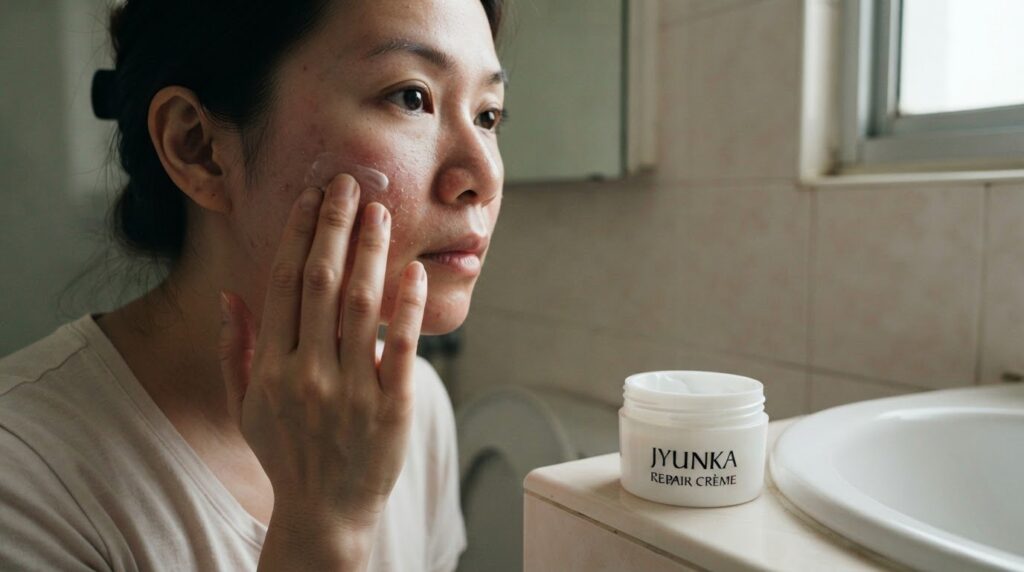
Recovery is measured in days to weeks, not by a fixed countdown. Mild over-exfoliation typically settles in 3-5 days, moderate irritation may take 1-2 weeks, and a severely compromised skin barrier can take up to 4 weeks. An over-exfoliated skin repair treatment starts with a pause on exfoliants and a gentle routine that supports the skin barrier while it recovers.
If your skin feels tight, stings when you apply products, or looks red and flaky, it’s understandable to want relief quickly. The safest course is to give your skin time, protect it from the sun with SPF 30+ each morning, and avoid potential irritants such as retinol and acids until it feels normal again. This article explains what affects recovery time, how to care for your skin barrier, and how to reintroduce exfoliation gradually. You’ll also learn when professional guidance may help you choose a more considered path back to comfortable, balanced skin.
Key Takeaways
- Recognise signs such as persistent stinging, tightness, redness or flaking as cues to simplify your routine.
- Choose gentle, unscented cleansing and moisturising to help protect skin that feels dry or reactive.
- Understand how damage to the skin’s outer layer can affect moisture retention and sensitivity.
- When your skin feels normal again, reintroduce one exfoliation method at a time and watch how your skin responds.
- Learn when professional guidance may help you decide on a more personalised approach to skin recovery.
How long does over-exfoliated skin take to recover?
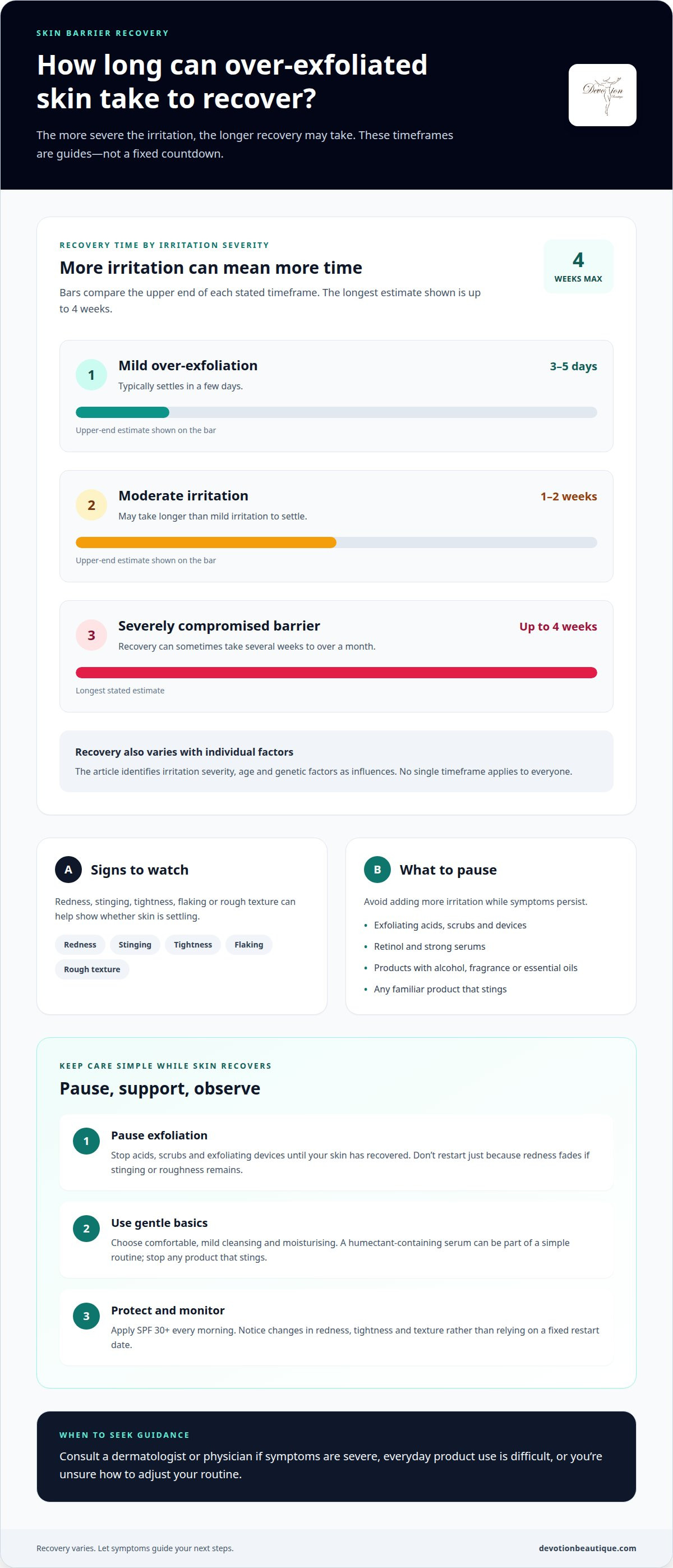
Recovery depends on irritation severity, age and genetic factors. Mild cases may settle in 3-5 days, while moderate irritation can take 1-2 weeks.
A severely compromised barrier may need up to 4 weeks, and recovery can sometimes take several weeks to over a month. These ranges are guides, not a countdown; redness, stinging and changes in texture can help show whether the skin is settling.
Pausing Exfoliation During Recovery
Pausing exfoliation means stopping acids, scrubs and exfoliating devices until your skin has recovered. This gives irritated skin time without further exfoliation. Set aside products containing hydroxy acids and pause high-intensity exfoliation devices while irritation is present. Don’t restart just because redness fades if stinging or roughness remains.
Adjusting Other Skincare Products
Simplifying your routine means temporarily removing products that could further irritate sensitive skin. Avoid retinol, acids, alcohol-containing products, fragrances and essential oils until your skin has recovered. Gentle cleansing, moisturising and sun protection keep daily care straightforward. When you resume your routine, avoid combining exfoliation, retinol and strong serums on the same night. Layering them can make it harder to identify what is irritating your skin.
Keep your routine gentle while symptoms persist. Choose familiar, mild products rather than adding several new formulas at once. If a product you usually tolerate stings, pause it and return to simpler care. A short, consistent routine also makes it easier to notice whether redness, tightness or rough texture is improving.
Yes, sunscreen is appropriate during recovery. Apply SPF 30+ every morning; gentle mineral sunscreen is recommended for the face and body. Daily sun protection matters because skin can be more vulnerable while it recovers.
For an over-exfoliated skin repair treatment, start by pausing exfoliation and simplifying your routine, not by adding more active products. Recovery may take several weeks, depending on the irritation and individual factors. Let your symptoms guide when you resume exfoliation instead of relying on a fixed date.
Consult a dermatologist or physician for advice on caring for over-exfoliated skin, especially if symptoms are severe or you’re unsure how to adjust your routine. A professional can assess the irritation and guide appropriate care. If redness or stinging makes everyday product use difficult, seek advice before restarting exfoliants.
How over-exfoliation affects the skin barrier
The skin barrier helps limit moisture loss and protects the skin’s surface from irritants. Over-exfoliation can disrupt this protective layer, leaving skin dry, tender or reactive.
Damage to the Skin Barrier
The stratum corneum is the outermost skin layer, and it may be only 10 to 30 layers thick. Over-exfoliation can disrupt this layer and the skin’s moisture barrier, leaving the surface less able to retain moisture. That matters because a compromised barrier can feel uncomfortable, and ordinary products may sting instead of feeling soothing.
Chemical exfoliators use alpha hydroxy acids, beta hydroxy acids or polyhydroxy acids to loosen the bonds between skin cells and remove dead cells. Used too aggressively, they can disrupt the skin’s protective surface. For example, applying an acid product to already irritated skin adds more exfoliation when your skin needs gentler care.
The skin barrier is not a single coating that one product can restore instantly. It is a layered structure, and visible changes such as dryness or rough texture can reflect disruption at the surface. When the barrier is compromised, moisture may escape more readily and irritants may feel more noticeable. This helps explain why a formula that once felt comfortable can suddenly sting.
Hydration and Barrier Support
Supporting the skin barrier means reducing further irritation while helping the skin retain moisture. A serum and moisturiser containing humectants can hydrate the skin after exfoliation. During recovery, use them as part of a simple routine instead of adding several new ingredients at once. Consistent care makes it easier to notice whether tightness or dryness is easing.
Hydration and moisturising play related but distinct roles in skincare. A hydrating serum can provide humectant ingredients, while moisturiser helps support the skin’s surface. Choose gentle formulas that feel comfortable, and stop using any product that causes stinging. Adding one product at a time also helps you identify what your skin tolerates.
Think of barrier care as a pause in intensity, not a reason to layer on every product labelled “repair.” While your skin is irritated, avoid adding alpha hydroxy acids or other exfoliants to your hydration routine. Keep the steps simple: cleanse gently, apply a humectant-containing serum and moisturiser, then observe any changes in comfort and texture.
Once the skin barrier is disrupted, more exfoliation is not a shortcut to smoother skin. A routine focused on hydration and gentle care supports the skin’s surface while it recovers. Notice how your skin responds after each step, especially when applying products that previously felt comfortable.
Gentle cleansing and moisturising
During recovery, a cleanser should remove everyday residue without causing unnecessary irritation. Choose a gentle, unscented cleanser with hydrating benefits, then rinse without scrubbing. Skip cleansing brushes, rough cloths and exfoliating tools while your skin feels tender. Use a soft touch: friction can make uncomfortable areas feel more sensitive and make it harder to tell whether your products are helping.
Keep cleansing simple. Use your usual cleanser only if it feels comfortable. If it stings, switch to a mild, fragrance-free option. Avoid strongly scented products, and don’t add a new active formula just because your skin feels dry. Keep chemical exfoliants paused during recovery. Using fewer products also makes it easier to identify which step causes discomfort.
After cleansing, apply moisturiser while your skin still feels comfortable and slightly damp. Choose a fragrance-free formula with a texture you can tolerate instead of layering several products at once. If a moisturiser causes burning or persistent stinging, stop using it and simplify your routine. Aim for consistent, comfortable care, not a crowded shelf of products labelled “soothing” or “natural.”
Natural ingredients aren’t automatically gentle on irritated skin. Fragrance and essential oils can be potential irritants, so avoid them until your skin has recovered. Read product labels and keep your routine focused on a gentle cleanser and moisturiser. Don’t introduce several unfamiliar ingredients together. If discomfort follows, it can be difficult to identify which product may be contributing.
In more severe cases, petroleum jelly may help keep irritants out and prevent exposed skin from drying. Use it as a protective layer where needed, not as an exfoliant or cleanser. If the affected area is extensive, painful or unusually raw, seek medical advice before adding products. A dermatologist or physician can guide care for irritated skin.
Notice how your skin responds after cleansing and moisturising. Persistent tightness, redness or stinging may mean your routine still feels too harsh. Keep chemical exfoliants aside, and don’t scrub flaky areas to remove roughness. Peeling skin needs gentle handling, not extra friction or repeated cleansing.
Breakouts can also occur during recovery. Over-exfoliation may prompt sebaceous glands to produce more sebum, which can contribute to clogged pores and breakouts. Resist the urge to treat every blemish with acids or scrubs while your skin remains irritated. Continue gentle cleansing and moisturising, and seek professional advice if symptoms are severe or worsening.
Signs and symptoms of over-exfoliation
Over-exfoliation can leave skin irritated rather than smooth. Look for redness, tightness, stinging, dryness or flaky patches after using chemical exfoliants or physical exfoliants such as scrubs. Several signs can appear together: your cheeks may feel tight while your nose looks red. Rougher texture is another reason to pause exfoliation instead of trying to polish the surface again.
Pay attention to how your skin feels during your usual routine. A cleanser or moisturiser that once felt comfortable may sting when your skin is irritated. Note the product and when the discomfort starts, such as right after applying an acid or scrub. This can help you see whether symptoms follow exfoliation, though it cannot establish the cause on its own.
Breakouts can accompany over-exfoliation. Irritation may prompt sebaceous glands to produce more sebum, which can contribute to clogged pores and blemishes. If new spots appear alongside redness or stinging after repeated exfoliation, avoid treating them with more scrubs or chemical products. Further exfoliation may intensify irritation rather than improve the change in skin texture.
Consider the overall pattern, not just one isolated sign. Redness after a single exfoliation session, for example, differs from ongoing tightness and stinging after repeated use. Review which products contain exfoliating ingredients, including acids, and whether you also used a scrub or exfoliation device. This context can help you describe your skin’s response when seeking professional advice.
Over-exfoliation involves excessive or repeated exfoliation. An allergic reaction is a response to an ingredient, while a chemical burn involves injury from chemical exposure. Their symptoms can overlap, so appearance alone cannot reliably distinguish them. Stop using the suspected product and seek medical assessment if symptoms are severe, worsening or concerning.
Keep a simple record while irritation settles. Note the exfoliant you used, when you applied it, and whether redness, dryness or stinging followed. Include other products used at the same time, such as retinol or a strong serum. This timeline can help a dermatologist or physician assess the pattern without you testing the product again.
During recovery, don’t treat flaking as a reason to scrub harder. Peeling, tightness or discomfort after a chemical exfoliant or physical scrub calls for gentler care, not another attempt to remove skin cells. Pause exfoliation while symptoms remain, and notice whether everyday products still cause stinging. Seek medical guidance for persistent or severe irritation.
Gradually reintroducing exfoliation
Wait until your skin feels normal again before reintroducing exfoliation. If sensitivity, redness, stinging or flaking remains, continue with gentle care. A compromised barrier needs time without repeated exfoliating exposure. Restarting while symptoms persist can make it harder to tell whether your skin has recovered or is reacting to another product.
Begin with one exfoliation method at a time. For example, choose a chemical exfoliant or a physical exfoliant rather than combining an acid with a scrub. This measured approach makes your routine easier to follow and helps you notice how your skin responds. Avoid adding retinol or strong serums on the same night as exfoliation.
Once your skin has healed, limit exfoliation to 1-2 times a week. This is a ceiling, not a target you need to reach immediately. Start less often if your skin feels sensitive, then observe its texture and comfort before deciding whether to continue. If stinging, redness or flaking returns, stop exfoliating and return to gentle care.
Keep your routine simple while you assess your skin’s response. If you use a chemical exfoliant, don’t use a physical exfoliant on the same day. For normal and combination skin, leave a day between physical and chemical exfoliation, and use only one type at a time. Avoid switching between several acids in quick succession, as this makes reactions harder to interpret.
If you use an exfoliation device, apply light pressure rather than rubbing firmly. Microdermabrasion should be used no more than once per week. Neither recommendation is a reason to exfoliate during active irritation. Your skin’s comfort comes first: a smooth feel should not come at the expense of renewed redness or sensitivity.
Keep the rest of your routine familiar while reintroducing an exfoliant. Avoid starting a new cleanser, serum and exfoliating product together, as that makes it harder to identify what caused discomfort. Add one method while keeping other products unchanged, then notice how your skin feels. If irritation returns, pause that method rather than layering on more products to counter it.
Exfoliation is optional, not a required step for every skincare routine. If your skin remains compromised or reacts again after restarting, keep exfoliants paused and seek guidance from a dermatologist or physician. For personalised facial care as you consider your skin goals, explore a tailored facial approach.
Devotion Beautique: Advanced Aesthetic Series Skin Boosting RETREAT
Devotion Beautique’s Advanced Aesthetic Series Skin Boosting RETREAT may suit you once irritation has settled and you’re ready to focus on broader skin goals. Its personalised approach complements gentle home care, with attention to concerns such as hydration, calming and skin repair. For targeted correction or longer-term improvement, the ReProgram Facial or Remedial Facial may also suit your needs.
If redness, stinging or significant discomfort is ongoing, seek medical advice before considering an aesthetic facial. Once your skin feels comfortable, contact Devotion Beautique to discuss a facial approach suited to your skin goals.
Choose a considered next step for your skin
Recovery is an opportunity to reconsider what your routine needs, rather than automatically returning to every product you used before. Let comfort guide your choices, and pay attention to how your skin responds over time. If you’re considering an over-exfoliated skin repair treatment, look beyond a quick reset: the next step should suit your skin’s current condition and longer-term goals.
Professional skincare support can help you explore a more personalised approach. Devotion Beautique offers the Advanced Aesthetic Series Skin Boosting RETREAT and facial programmes, including the ReProgram Facial. These options can be a starting point for discussing your skin goals and the care you’re looking for.
Contact Devotion Beautique for skincare support and take your next step with care and confidence.
Frequently Asked Questions
So how do you know you’re over-exfoliating?
Suspect over-exfoliation if irritation follows repeated use of exfoliating products. For example, skin that starts stinging after an acid and then feels tight after cleansing may be signalling that your routine is too intense. Note which products you used and when symptoms appeared. This pattern can help you describe your concern to a dermatologist or physician without deliberately reapplying the product to test your reaction.
What Happens When You Over-Exfoliate?
Over-exfoliation can disrupt the skin’s outer layer and moisture barrier, leaving it less comfortable and more reactive. You may notice dryness, redness, stinging or changes in texture, even with products you previously tolerated. Sebaceous glands may also produce more sebum, potentially contributing to clogged pores and breakouts. Continuing to exfoliate through these changes adds further irritation instead of giving your skin a chance to recover.
When can you start exfoliating again?
Restart only after your skin feels normal again, without ongoing irritation such as stinging, redness or flaking. Reintroduce one method at a time, then observe how your skin responds before changing your routine further. Once healed, limit exfoliation to 1-2 times a week. If discomfort returns after a product, pause that method rather than adding another exfoliant to achieve a smoother feel.
What are the signs and symptoms of over-exfoliated skin?
Common signs include redness, tightness, stinging, dryness, flaking and rougher texture. A familiar product, such as your usual moisturiser, suddenly stinging can be a useful clue when other irritation is present. Breakouts may also occur as sebum contributes to clogged pores. Symptoms alone cannot establish the cause, so note recent exfoliating products and seek medical advice for severe or worsening irritation.
How long does it take for over-exfoliated skin to heal?
Mild over-exfoliation typically takes 3-5 days to recover, while moderate irritation often takes 1-2 weeks. A severely compromised barrier may take up to 4 weeks, and recovery can extend to several weeks or over a month. The duration depends on symptom severity, age and genetic factors. These ranges aren’t a substitute for observing how your skin feels as it recovers.
What should you do immediately after over-exfoliating your face?
Stop exfoliating, including acids, scrubs and exfoliation devices, and simplify your routine. Use a gentle, unscented cleanser and moisturiser if they feel comfortable, and avoid retinol, alcohol-containing products, fragrance and essential oils. Apply SPF 30+ every morning; gentle mineral sunscreen is recommended for the face and body. If irritation is severe or you’re unsure how to care for your skin, consult a dermatologist or physician.
Which gentle moisturisers and barrier-repair ingredients help over-exfoliated skin?
Choose a gentle, fragrance-free moisturiser that feels comfortable, and avoid introducing several unfamiliar formulas at once. Humectants in a serum and moisturiser can help hydrate your skin. Keep your routine uncomplicated so you can notice whether a product causes stinging or discomfort. In more severe cases, petroleum jelly may help keep irritants out and prevent exposed skin from drying.
Which skincare ingredients and products should you avoid while skin recovers?
Pause retinol, acids, alcohol-containing products, fragrances and essential oils until your skin has recovered. This includes exfoliating products containing alpha hydroxy acids, beta hydroxy acids or polyhydroxy acids. Set aside scrubs and high-intensity exfoliation devices while irritation is present. When you resume your routine, avoid combining exfoliation, retinol and strong serums on the same night. Introduce one exfoliation method at a time instead.
