
LED therapy facial benefits for acne and what it may help
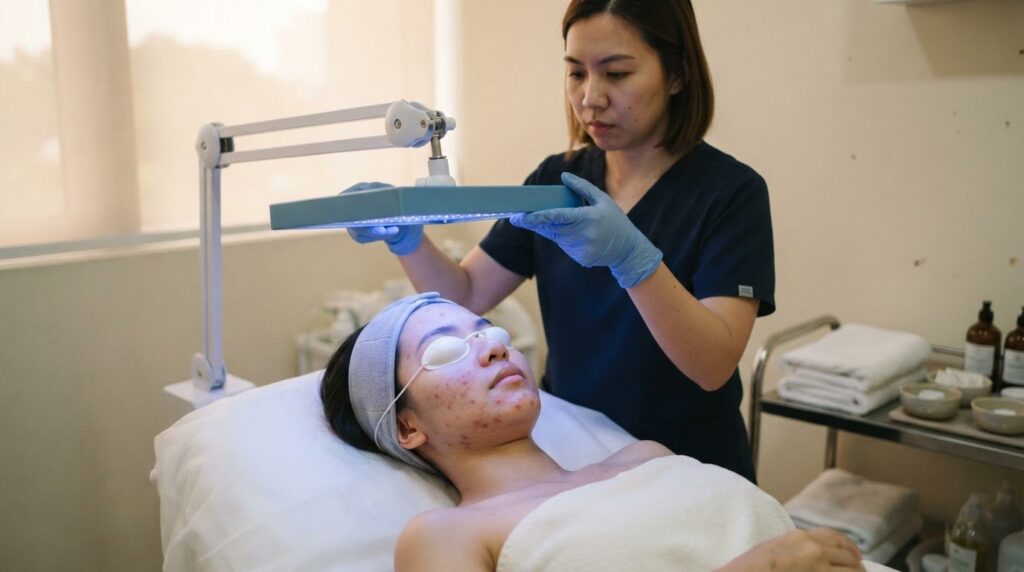
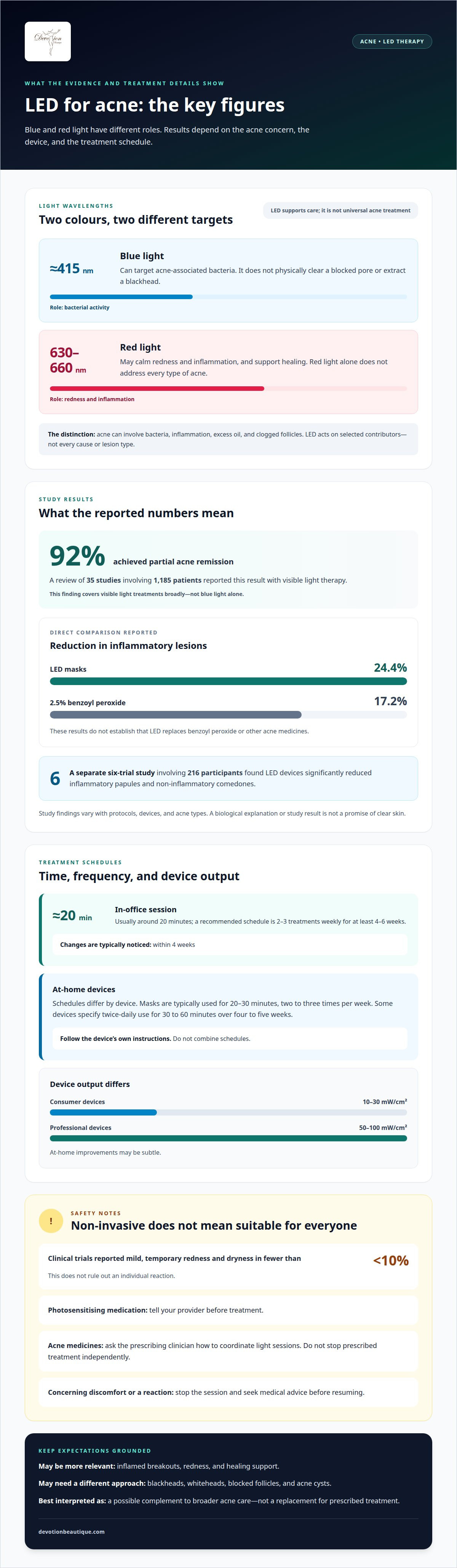
LED light can support acne care, but it isn’t a one-light-fits-all solution. The potential LED therapy facial benefits for acne depend on the type of breakout: blue light at about 415 nanometers can help target acne-associated bacteria, while red light between 630 and 660 nm may calm redness and support healing. Neither should be assumed to address every form of acne.
If LED therapy appeals because it feels gentle and non-invasive, it is reasonable to ask whether red light alone is enough or whether a facial can make a meaningful difference. LED therapy may be more relevant to inflamed breakouts than to blackheads, whiteheads, or acne cysts, which may need a different approach.
This guide explains how LED light works, which acne concerns it may help with, and why colour and treatment approach matter. It also covers what to consider before a session, including possible side effects, light sensitivity, and how LED fits alongside prescribed acne care. The goal is a clear, balanced view of where LED may fit into a considered skincare routine.
Key Takeaways
- Understand how blue and red light work differently, and why the treatment approach matters for acne.
- Learn which breakouts may respond to LED therapy and which may need a different form of care.
- See why red light alone may not address every acne concern or replace other treatment options.
- Know which light-sensitivity concerns and acne medications to consider before starting LED sessions.
- Explore how a personalised facial programme may support your wider skincare goals.
How Does LED Light Kill Acne Bacteria?
Acne develops through several connected processes: blocked follicles, oil production, inflammation, and acne-associated bacteria such as Cutibacterium acnes. Blue light therapy targets one part of this picture. It does not work like a cleanser that removes surface oil or physically clears a blocked pore. Instead, its effect depends on light reaching acne-associated bacteria within the skin.
Blue light at about 415 nanometers can trigger a reaction that helps kill acne-associated bacteria. The wavelength matters because the bacteria contain light-sensitive compounds. When blue light activates these compounds, a reaction can damage the bacteria. This offers a reason blue LED is used in acne-focused light therapy. It targets bacterial activity, rather than directly extracting blackheads or dissolving pore blockages.
That distinction helps set realistic expectations. A breakout can involve bacteria and inflammation, as well as excess oil and clogged follicles. Reducing acne-associated bacteria may support care for inflamed spots, but it does not address every process behind a blemish. For example, a closed comedone is a blocked follicle, and blue light does not physically remove its contents.
Red light works differently. Wavelengths between 630 and 660 nm penetrate deeper than blue light, helping calm redness and support healing. Where a spot looks swollen or flushed, red light may complement blue light by addressing inflammation rather than bacterial activity alone. The two colours therefore have distinct roles, even when a device combines them during one treatment.
Red light may also be relevant after an active spot settles, when visible redness remains. By calming inflammation and supporting the skin’s healing response, it may help improve the appearance of post-acne redness. It should not be confused with a treatment that removes every kind of post-acne mark. Dark marks and lingering red areas are different concerns, and light’s effect depends on what caused the visible change.
Exposure is central to how LED therapy works. Wavelength, device output, and how light reaches the treatment area all shape the dose delivered to skin. A facial device directs light across the face, while a small spot-treatment device focuses exposure more narrowly. Neither changes the basic distinction: blue light targets acne-associated bacteria, while red light may help address redness and inflammation.
Research examines these mechanisms, but a biological explanation is not a promise of clear skin. LED acts on selected contributors to acne, not every cause or lesion type. Understanding this limit helps explain the potential LED therapy facial benefits for acne: blue and red light may complement a broader routine, while blocked pores and other concerns may require different care.
Does red light alone treat every type of acne?
No. Red light alone does not treat every type of acne, and LED is not a universal acne treatment. It may help reduce inflammatory lesions, while blackheads, whiteheads, and cysts can require different approaches. The key question is not simply red versus blue light, but which treatment addresses the type of acne present.
Evidence for blue LED is encouraging, but findings vary by device and study. A review of 35 studies involving 1,185 patients found 92% achieved partial acne remission with visible light therapy. That result covers visible light treatments broadly, not blue light alone. In a direct comparison, LED masks reduced inflammatory lesions by 24.4%, compared with 17.2% for 2.5% benzoyl peroxide.
Those figures don’t establish that LED replaces benzoyl peroxide or other acne medicines. Treatments work differently: topical products can address pore blockage or bacteria, while LED uses light exposure and doesn’t involve applying medication. A six-trial study involving 216 participants found LED devices significantly reduced inflammatory papules and non-inflammatory comedones. The difference between study results reflects varying protocols, devices, and acne types.
Consistency matters. An in-office session usually lasts about 20 minutes, with a recommended schedule of 2-3 treatments weekly for at least 4-6 weeks. Changes are typically noticed within 4 weeks. Photographing active breakouts in similar lighting can help you assess progress without relying on memory or day-to-day skin fluctuations.
At-home schedules differ by device. LED masks are typically used for 20-30 minutes, two to three times per week. Some devices call for twice-daily use for 30 to 60 minutes over four to five weeks. Follow the specific device instructions rather than combining schedules. Consumer devices deliver 10-30 mW/cm², compared with 50-100 mW/cm² from professional devices, so at-home improvements may be subtle.
LED is non-invasive, but that does not make every schedule suitable for everyone. Mild, temporary redness and dryness are reported side effects. People taking photosensitising medication should tell their provider before treatment. Anyone using acne medicines should ask the prescribing clinician how to coordinate light sessions and should not stop prescribed treatment independently.
In Singapore, what happens during an LED acne facial depends on the device and its protocol. A session may involve positioning the light over the face, followed by a series of repeat treatments. For broader skin goals alongside acne concerns, a Remedial Facial offers a separate personalised facial option.
Potential side effects and long-term safety
LED therapy is non-invasive, but a skincare routine still needs to account for light sensitivity, medication, and aftercare. Disclose relevant health details and follow the device instructions.
Potential Side Effects and Risks
Potential side effects are temporary skin reactions, including mild redness and dryness. Clinical trials reported these effects in fewer than 10% of participants. That figure gives context, but it doesn’t rule out an individual reaction. Noticeable discomfort or a change that concerns you should prompt you to stop the session and seek medical advice before resuming.
Before treatment, tell the provider about photosensitising medications and any medical condition involving light sensitivity. These factors can affect how a person responds to light exposure. For example, disclose a medication that makes skin more sensitive rather than assuming an LED device is suitable because it feels gentle.
Sun care is another part of the aftercare plan. Take care to limit sun exposure after LED therapy. Avoid heavy sun exposure for a few days, and apply sunscreen if you are outdoors. Broad-spectrum SPF 30+ sunscreen is recommended daily after LED acne treatment.
Long-Term Safety and Contraindications
Long-term safety involves considering repeated exposure over time, not just how skin feels during one session. Follow the specific device instructions for session length and frequency, as schedules vary between professional and at-home devices. Anyone with a light-sensitivity condition or taking photosensitising medication should raise it before starting, so those risks can inform the treatment plan.
Acne medicines also need careful coordination. Ask the clinician who prescribed the medication how to fit LED sessions around your existing routine. Do not stop or change prescribed treatment independently to make room for light therapy. This keeps LED within a connected acne plan rather than treating it as a replacement for medical care.
After each session, observe how your skin responds before the next scheduled exposure. Mild redness or dryness can occur; persistent or worsening symptoms need medical attention. If you use an at-home device, follow its instructions instead of increasing exposure because results seem slow. Sticking to the device’s stated schedule is safer than improvising extra sessions.
For people in Singapore, daily sun protection matters alongside an LED routine, particularly when spending time outdoors. Keep the device instructions, medication advice, and sun-care steps together as one skincare plan. This makes it easier to recognise when a change follows treatment and when professional medical guidance is needed.
What is LED light therapy?
LED light therapy exposes the skin to selected wavelengths using light-emitting diodes. NASA began studying LED light in the 1990s to support wound healing by helping cells and tissues grow. In facial skincare, the device delivers light without needles or skin resurfacing. An LED facial is non-invasive and painless, but its purpose depends on the wavelengths and device instructions.
Different wavelengths are used for different skin concerns. Blue light is associated with acne-focused treatment, while red light is used to address redness and support healing. Some devices combine colours, while others use one. A combination device does not mean every acne type receives the same benefit. Choose a device based on the concern being treated, not the number of colours it offers.
Professional and at-home devices also differ in how they are used. In-office equipment is positioned above the face so light reaches the treatment area. At-home masks and handheld tools have their own placement, timing, and frequency instructions. Do not transfer one device’s schedule to another, even if both use blue or red light.
Consistency means following the instructions for the specific device, not extending each exposure. At-home protocols vary: some masks are used for 20-30 minutes, two to three times weekly, while some handheld devices use 10-20-minute sessions. These are examples, not interchangeable schedules. Check the supplied instructions for the device’s required distance, session length, frequency, and eye-protection guidance.
Preparation starts with clean skin. Arrive for a facial without makeup, heavy creams, or sunscreen, so these products do not sit between the skin and the light. The device is then positioned according to its design. After a professional session, you may be able to return to your usual routine or apply makeup immediately, but follow aftercare advice for the specific treatment.
When choosing an acne programme, consider the visible concern and the limits of light therapy. A device intended to target acne-associated bacteria may suit a different goal from one used to calm redness. LED does not clear every blocked follicle or address every acne type. For example, blackheads and whiteheads involve clogged pores, so a light device alone may not address the underlying concern.
Before using a device at home, read the manufacturer’s instructions from start to finish. Confirm which wavelengths it uses, where it should sit, and how long each session lasts. Follow that schedule and do not add extra exposure to speed results. This helps distinguish professional from home use and keeps treatment aligned with its intended skincare purpose.
Acne types LED therapy may help or not help
LED light therapy is better suited to some acne patterns than others. The clearest distinction is between inflamed breakouts and clogged pores: light can target selected contributors to inflammation, but it does not physically clear a blocked follicle. Identifying the lesion type helps set a realistic role for light in your skincare routine.
Inflammatory papules are raised, red spots, while pustules may have a visible white centre. LED devices have been shown to reduce inflammatory papules, making these breakouts a more relevant target than other acne concerns. Blue light targets acne-associated bacteria; red light may help calm redness. The colours act differently, so the device’s wavelengths matter.
Comedonal acne looks different. Blackheads and whiteheads form when follicles become clogged, and LED light therapy does not remove that blockage. Someone whose main concern is blackheads, for example, may not see the desired change from light alone. Cysts are also outside the concerns LED is expected to address, particularly when lesions are deep or painful.
Acne can involve several lesion types at once. A face with red papules and closed comedones may respond unevenly: inflammatory spots may improve while clogged pores remain. Counting total blemishes alone can hide what is changing. Track the same areas in photographs taken under similar lighting, and distinguish red, raised lesions from non-inflamed bumps.
Redness after a breakout is different from an active lesion. Red light is used to calm inflammation and support healing, while post-acne marks may have different causes and appearances. A lingering red area is not the same as a dark mark or an indentation. LED should not be treated as a way to stimulate collagen or erase every visible trace of acne.
Sensitivity also varies from person to person. Skin that irritates easily may need careful coordination between light exposure and an existing skincare routine, especially when acne medicines are involved. Share photosensitivity concerns and medication use before starting. Do not stop prescribed acne treatment independently to make room for LED.
The practical takeaway is to match the method to the lesion: LED may be more relevant for inflammatory breakouts than for blackheads, whiteheads, or cysts. Severe, painful, or scarring acne warrants medical assessment rather than relying on a facial device alone. For a broader, personalised skincare approach, explore facial treatment options.
Devotion Beautique
Devotion Beautique can help you consider acne concerns as part of a personalised facial-care plan. If LED light therapy may not address your main concern, such as clogged pores or lingering skin changes, a tailored facial programme can offer a broader skincare perspective. The Remedial Facial and ReProgram Facial support targeted correction and longer-term skin goals, with an approach shaped around your individual needs.
Bring questions about breakouts, sensitivity, and your current routine to your consultation. A personalised assessment can help clarify which skin goals to prioritise and how facial care may fit alongside other acne treatment. For severe, painful, or scarring acne, seek medical assessment.
Contact Devotion Beautique to discuss your skincare concerns and facial-care goals.
Choose a next step that suits your skin
Understanding LED therapy facial benefits for acne can help you make more considered skincare decisions. The next step is to connect your concerns with a plan that reflects your skin’s history, sensitivity, and goals. LED can be one part of that conversation, rather than a reason to set aside the rest of your care.
At Devotion Beautique, facial programmes are tailored to different skin needs, including targeted correction and longer-term improvement. If you’d like to explore how LED therapy may fit into your personal skincare goals, contact Devotion Beautique to discuss LED therapy. A thoughtful conversation can help you move forward with clarity and care.
Frequently Asked Questions
What Kind of Results Can You Expect?
Expect possible improvement in some inflamed breakouts, not a guaranteed clear complexion. Changes may be uneven: raised red spots can respond differently from clogged pores or lingering marks. For example, if redness settles but blackheads remain, that does not necessarily mean the light had no effect. Consider the specific concern you want to address and assess it separately from other acne symptoms.
How Does It Actually Work on Your Skin?
LED light reaches the skin at selected wavelengths and affects particular processes involved in acne. The practical distinction is that light does not scrub away oil or extract a blocked pore. An acne setting on a device is intended to deliver light exposure, so follow its placement and timing instructions. If a breakout changes while you use LED, that does not prove every cause of acne has been addressed.
Can I use Acne mode instead of my medication?
No. Do not replace prescribed acne medication with an “Acne” mode or change your treatment routine independently. Device settings vary, and a label alone does not show that the light addresses the same concerns as your medicine. If you are considering using both, ask the clinician who prescribed your medication how to coordinate them. Keep taking treatment as directed unless that clinician advises a change.
Does it hurt?
LED light therapy is described as non-invasive and painless, so a session should not involve needles or break the skin. The device is positioned to expose the treatment area to light. Follow its eye-protection and positioning instructions throughout the session. If you feel discomfort or notice a reaction, stop using an at-home device and seek appropriate medical advice.
How Soon Will I See Results From LED Acne Treatment?
Changes are typically noticed within 4 weeks of starting LED treatment for acne, although the appearance and timing can differ between people. A gradual shift in inflamed spots may be easier to notice than a sudden change across the whole face. Keep the prescribed or device-specific schedule consistent during that period. If symptoms worsen or become painful, don’t wait for the expected timeframe to seek medical assessment.
How Soon Will You See a Difference?
There is no single visible milestone that applies to everyone. Skin can fluctuate, so one unusually calm day does not show whether a routine is working. Compare similar areas under similar lighting and look for a pattern across your treatment period, rather than judging from one morning. If new irritation appears after a session, note when it began and discuss it with your clinician.
How does LED light therapy help acne?
LED may help by targeting selected contributors to acne, rather than treating every cause at once. This matters if your skin has both inflamed spots and clogged pores. For example, fewer red papules may not mean fewer closed comedones. Think of LED as one possible part of acne care, not a substitute for addressing concerns it does not target.
Does red LED light therapy help acne or acne scars?
Red LED light may help calm acne-related redness and support healing, but acne scars are not all the same. A flat red area after a blemish differs from a dark mark or an indented scar. Red light should not be assumed to remove every kind of scar. If texture changes, persistent marks, or active painful lesions concern you, seek medical assessment for guidance on suitable care.
