
In-clinic LED light therapy in Singapore: benefits and uses
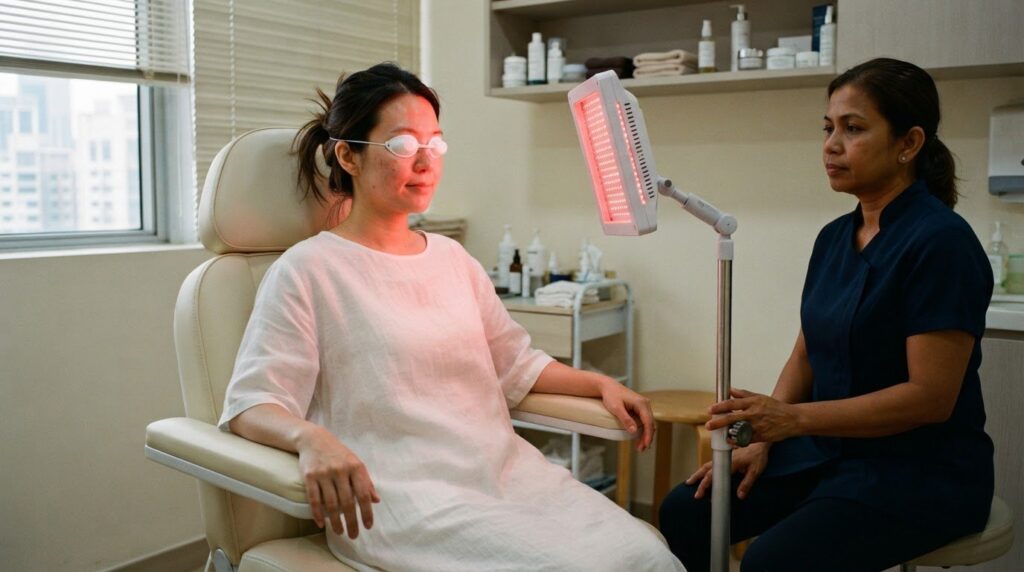
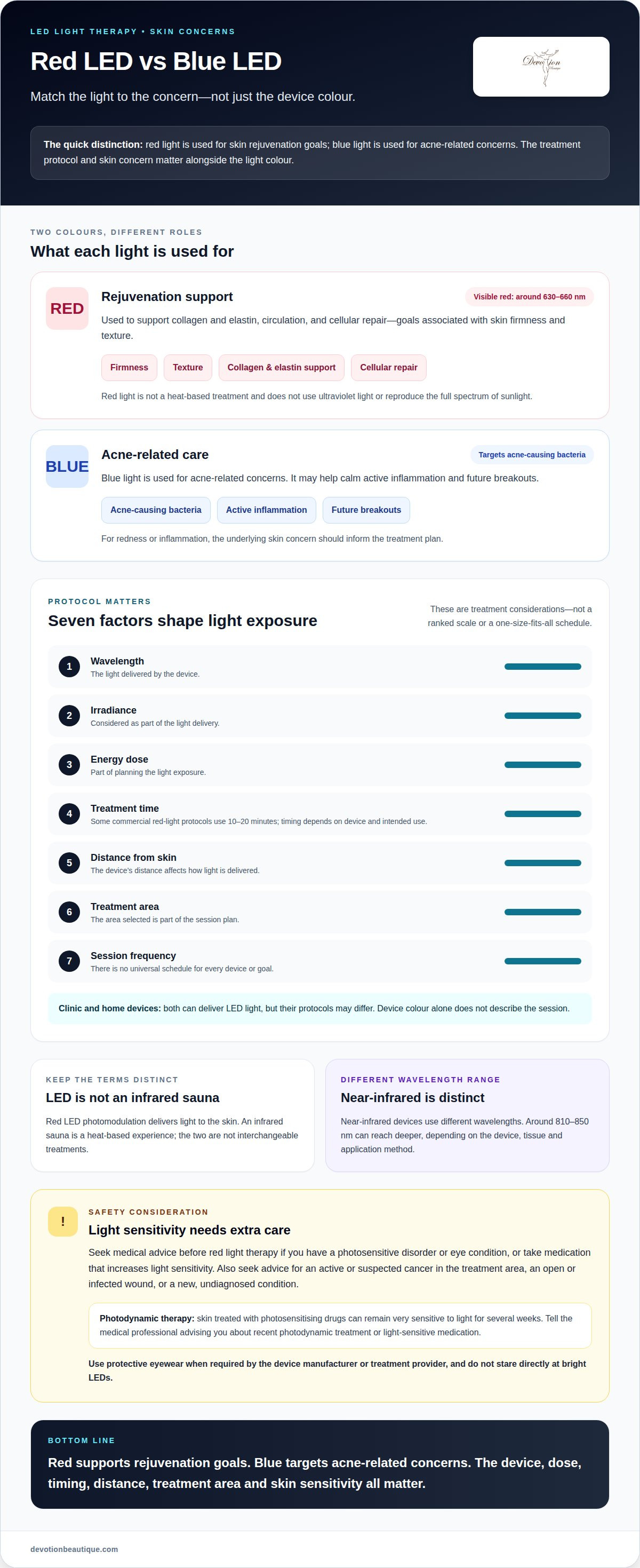
Red and blue LED light have different skin-care roles, so the right choice depends on your concern. In-clinic LED light therapy in Singapore may use red light to support collagen and elastin, skin firmness and texture, while blue light targets acne-causing bacteria and may help calm active inflammation and future breakouts.
It’s understandable to wonder whether an in-clinic treatment is simply a brighter version of a home device. The wavelength and delivery matter: irradiance, energy dose, treatment time, distance from the skin, treatment area and session frequency all shape light exposure.
This guide explains what red LED light therapy may help with, how blue light is used for acne, and how in-clinic sessions differ from consumer devices. You’ll also learn why LED treatment isn’t the same as an infrared sauna, what to consider for your skin concerns, and how LED light therapy may fit into a considered skincare plan.
Key Takeaways
- Understand why clinic and home LED devices can differ, and which treatment factors shape light exposure.
- See how red light may support skin firmness and texture, and why photosensitising medication matters.
- Learn how blue light targets acne-causing bacteria and may help calm active inflammation.
- Explore where red light therapy is available in Singapore, from aesthetic settings to consumer home devices.
- Use your skin concerns and treatment goals to consider how LED may fit alongside a broader skincare plan.
Is LED Red Photomodulation the same as an infrared sauna or home red light devices?
No. Red LED photomodulation delivers light to the skin, while an infrared sauna is a heat-based experience; they aren’t interchangeable treatments. Red light also doesn’t use ultraviolet light or reproduce the full spectrum of sunlight. Near-infrared devices use different wavelengths: around 810 to 850 nanometres can reach deeper, depending on the device, tissue and application method.
Home and clinic devices can both deliver LED light, but their protocols may differ. At-home devices can complement in-clinic treatments, while treatment planning takes wavelength, irradiance, energy dose, time, distance, treatment area and frequency into account. For example, the area treated and the device’s distance from the skin affect how light is delivered, so the device’s colour alone doesn’t describe the session.
Combining LED with other treatments is a matter of sequencing, not simply adding another step. A practitioner considers the skin concern, other treatments in the plan, light dose and timing. Red light may support collagen, skin firmness and texture, while blue light targets acne-causing bacteria. Matching the light and sequence to the goal makes for a more considered plan.
LED suitability depends on skin concerns and light sensitivity, not just a skin-type label. Anyone with a photosensitive disorder or eye condition, or taking medication that increases light sensitivity, should seek medical advice before red light therapy. Use protective eyewear when required by the device manufacturer or treatment provider, and don’t stare directly at bright LEDs.
Possible effects and results after treatment depend on the device and how it is used. LED is described as painless and as not causing burning or skin damage, but that doesn’t mean every protocol suits everyone. Red light is used for rejuvenation goals such as supporting collagen and elastin, circulation, cellular repair, firmness and texture. Blue light is used for acne-related concerns.
There isn’t one session schedule for every device or goal. Some commercial red-light protocols use sessions of 10 to 20 minutes, but treatment time depends on the device and intended use. Frequency also forms part of the protocol, alongside dose, wavelength, distance and treatment area, rather than following a universal schedule.
LED packages and promotions can differ between providers in Singapore, so there is no single standard package. Inclusions depend on the session plan and whether LED is offered alone or alongside other treatments. An “LED facial” also doesn’t describe a fixed menu: preparation and follow-up skincare steps may vary.
For acne, redness and skin rejuvenation, LED may support targeted care, but its role varies by light colour and skin concern. Blue light targets acne-causing bacteria and may help calm active inflammation and future breakouts. Red light is used to support collagen and skin texture; outcomes depend on the device and protocol selected.
What is red LED light therapy good for?
Red LED therapy is used for skincare goals such as supporting firmness, texture and cellular repair. Its effects depend on the light and treatment protocol, not colour alone.
Photobiomodulation and Cellular Effects
Photobiomodulation describes how light energy interacts with cells. In aesthetic care, red LED light is used to support collagen and elastin production, circulation and cellular repair. These processes relate to skin firmness and texture, rather than an instant surface change. Collagen production naturally decreases from people’s mid-twenties onwards, making long-term skin support a common consideration.
Consider the intended skin goal and how the session is planned. Wavelength, energy dose, exposure time and treatment area all contribute to how light is delivered. Photobiomodulation is not a heat-based treatment, and red light doesn’t use ultraviolet light or reproduce the full spectrum of sunlight. Beyond facial rejuvenation, cellular stimulation via red light is also widely applied to scalp vitality, with specialised providers of hair loss treatment Ireland incorporating light therapy alongside comprehensive therapeutic and surgical restoration options.
How Red-Light Photomodulation Works
Visible red wavelengths around 630 to 660 nanometres are commonly studied for surface-level applications such as skincare. A treatment device delivers this light to the selected area. The protocol accounts for factors such as irradiance, distance from the skin, energy dose and session frequency, rather than relying on a device’s colour description alone.
That distinction matters when considering red light alongside other aesthetic treatments. The treatment area, skin concern and intended outcome help shape the approach. A practitioner can consider whether the plan focuses on reducing visible redness, supporting texture or encouraging rejuvenation, then align the light exposure accordingly.
Red LED Therapy and Skin Concerns
Red LED therapy is used to support skin firmness and texture, collagen and elastin production, circulation and cellular repair. Blue light, by contrast, is used against acne-causing bacteria. For redness or inflammation, a treatment plan should account for the cause and condition of the skin rather than treating every concern as a general sign of ageing.
LED may form part of an aesthetic plan, but it doesn’t replace medical assessment for a new or undiagnosed skin condition. For a broader approach to skin goals, the Advanced Aesthetic Series Skin Boosting RETREAT is an option to explore alongside personalised skincare planning.
Photosensitising medications require particular care. Some medicines increase sensitivity to light, so seek medical advice before red light therapy if you take medication that affects photosensitivity. Take the same precaution if you have an eye condition, photosensitive disorder, active or suspected cancer in the treatment area, an open or infected wound, or a new, undiagnosed condition.
Photodynamic therapy is another relevant example. Skin treated with photosensitising drugs during photodynamic therapy can remain very sensitive to light for several weeks. Tell the medical professional advising you about any recent photodynamic treatment or light-sensitive medication before considering LED exposure. This helps distinguish a sensitive skin response from a routine aesthetic concern.
Blue light and acne-causing bacteria
Blue LED light targets acne-causing bacteria and is used to calm active inflammation and help prevent future breakouts. In Singapore, understand it by its intended skin concern, acne-related inflammation, rather than as a treatment for collagen support or general skin rejuvenation.
Blue light is one targeted part of an acne-focused plan. The treatment area and visible concern guide the session: active, inflamed breakouts, for example, call for a different goal from improving skin texture. A device’s blue setting alone doesn’t describe the full treatment approach.
Combining blue and red light can bring different aims into one treatment plan. Blue light addresses acne-causing bacteria and active inflammation, while red light is used for skin-support goals such as firmness and texture. The practitioner considers the skin concern, treatment area and intended sequence rather than assuming both colours suit every session.
For a clear discussion before treatment, focus on these points:
- Concern: Describe whether the goal is active acne, inflammation or a broader skin-care plan.
- Light choice: Ask how blue light, or a blue-and-red approach, relates to that goal.
- Device guidance: Follow the manufacturer’s and treatment provider’s directions for eye protection.
- Care plan: Discuss how LED fits alongside the skincare steps already used for acne.
Don’t infer side effects from the colour name alone. Devices and treatment directions differ, so follow the specific precautions provided for the device and session. Don’t stare directly at bright LEDs. Wear protective eyewear when required by the manufacturer or treatment provider.
Blue light doesn’t mean every acne concern has the same response or treatment plan. The skin condition, area treated and device instructions all matter. A session should have a defined aim, such as addressing active inflammation, rather than promising that one exposure will clear every breakout.
After a session, follow the agreed skincare plan. Avoid adding or changing several treatments at once without guidance, as this makes it harder to understand how your skin responds. Blue light can support acne care, while cleansing and other skincare choices remain part of the wider routine.
Before choosing a blue-only or combined-light session, clarify its purpose: addressing acne-related bacteria and inflammation, or supporting acne care alongside a separate skin goal. That distinction helps set realistic expectations and keeps the plan centred on the concern being treated.
Red light therapy availability in Singapore
In Singapore, red light therapy is available through some healthcare, aesthetic and wellness providers, as well as consumer devices intended for home use. For anyone considering in-clinic LED light therapy in Singapore, the key difference is how each setting selects and delivers light for a particular skin goal.
Finding Red Light Therapy in Singapore
Start by identifying whether you’re considering a clinic session or a home-use device. Singapore offers both options, but they aren’t automatically equivalent. Wavelength, irradiance, energy dose, device distance and treatment area all affect light delivery. Near-infrared wavelengths around 810 to 850 nanometres can penetrate deeper, depending on the device, tissue and application method.
Ask what the treatment aims to address, such as supporting collagen production or skin texture, and how its protocol fits that goal. Some commercial device protocols use sessions of 10 to 20 minutes, but treatment time depends on the device and intended use. A painless experience alone doesn’t establish whether a protocol suits your skin concern.
Choosing a Qualified LED Therapy Clinic
When comparing in-clinic LED light therapy in Singapore, look for a clear explanation of the treatment goal and how it will be delivered. The discussion should cover wavelength, treatment area, exposure time, device distance and session frequency. These details show how the approach relates to your goal, beyond a general label such as “red light.”
Share relevant health information before treatment. Seek medical advice first if you have an eye condition or photosensitive disorder, or take medicine that increases light sensitivity. Also discuss active or suspected cancer in the treatment area, an open or infected wound, or a new, undiagnosed condition. Follow instructions about protective eyewear, and don’t stare directly at bright LEDs.
LED Light Therapy Session Costs
There is no universal per-session cost across Singapore’s healthcare, aesthetic and wellness providers. The price depends on the case and is provided after a quote request. Relevant factors include the device, treatment area, intended use and whether LED is part of a broader treatment plan.
Compare what a session includes, not just its duration. A 20-minute appointment may use a different device or treat a different area from another session, so time alone doesn’t establish equivalent value. Ask for an explanation of the planned exposure and any additional treatments included before making a decision.
To explore red light therapy in Singapore, first define your skin goal and treatment area. Then discuss the intended protocol and relevant health considerations with a qualified professional. Asking focused questions can help you understand whether a clinic session or home-use device fits your needs.
What is in-clinic LED light therapy and what skin concerns can it treat?
In-clinic LED light therapy uses selected wavelengths for skincare goals, with the protocol shaped around the concern and treatment area. Red and blue light have different uses: red light supports skin firmness and texture, while blue light targets acne-causing bacteria and active inflammation.
The treatment does not use ultraviolet light or recreate the full spectrum of sunlight. Instead, a clinic selects a device and light setting for the intended application. For example, visible red wavelengths around 630 to 660 nanometres are commonly studied for surface-level skincare, while blue light is used for acne-related concerns.
Device specifications matter. Treatment delivery depends on wavelength, irradiance, energy dose, time, distance from the skin, treatment-area size and depth, and session frequency. These details explain why LED sessions can differ even when both are described as red-light treatments. A useful discussion covers the selected light and its purpose, not just the device’s colour.
Possible skin-care goals include:
- Firmness and texture: Red light is used to support collagen and elastin production and skin texture.
- Acne-related inflammation: Blue light targets acne-causing bacteria and may help calm active inflammation.
- Skin repair support: Red light is used to support circulation and cellular repair.
These uses don’t make LED a universal solution for every skin condition. Seek medical advice before red light therapy if you have a new or undiagnosed concern, an open or infected wound, active or suspected cancer in the treatment area, an eye condition or a photosensitive disorder. Medication that increases light sensitivity is another important consideration.
A clinic session should have a defined purpose. For example, a plan focused on acne-related inflammation may use blue light, while one focused on firmness may use red. The practitioner also considers the treatment area, device distance and dose. Use protective eyewear when required by the manufacturer or treatment provider, and don’t look directly at bright LEDs.
LED light therapy is distinct from treatments that use other forms of energy. Its role depends on selected wavelengths and delivery parameters, rather than reproducing sunlight or using ultraviolet light. Session time alone cannot determine suitability; the device, treatment goal and light dose also matter.
For a considered next step, explore a personalised facial approach that reflects your skin goals. A thoughtful plan begins with the concern, such as acne-related inflammation or texture, then considers which skincare methods are appropriate to discuss.
Devotion Beautique
Devotion Beautique helps connect skin concerns with a considered skincare plan. If you’re weighing LED light therapy against other aesthetic approaches, its customised facial programmes offer a way to discuss goals such as calming, repair, hydration or long-term skin improvement.
The ReProgram Facial and Remedial Facial support different skincare needs through a personalised treatment approach. Discussing your skin goals can help clarify which facial programme may be relevant, without assuming LED is right for every concern.
For a calm, considered discussion about your skincare needs, contact Devotion Beautique.
Choose a skincare path that fits your goals
Your next step is to connect your skin goal with an approach that feels right for you. If you’re considering in-clinic LED light therapy in Singapore, use what you’ve learned to guide a focused conversation about your concern, treatment aims and any relevant light sensitivity. A considered plan starts with your needs, not a device or a promise of a particular result.
For broader aesthetic skincare, Devotion Beautique offers the Advanced Aesthetic Series Skin Boosting RETREAT, ReProgram Facial and Underarm Bleaching Advanced Treatment. These are distinct options for different needs, not LED light therapy itself. A conversation can help you explore which direction reflects your priorities and how skincare may fit into your wider routine.
Take the next step at your own pace. Contact Devotion Beautique to enquire about an approach suited to your skincare goals, and move forward with clarity and care.
Frequently Asked Questions
Does the treatment feel like anything?
LED treatment is generally described as painless, without a burning sensation. You may notice the light during the session, so keep your eyes closed or use protective eyewear when required by the treatment provider or device instructions. Don’t stare directly at bright LEDs. If you feel discomfort, tell the person conducting the session so they can respond appropriately.
Can LED Red treat hyperpigmentation and acne marks?
Red LED is used to support collagen and elastin production, skin firmness and texture. That doesn’t make it a targeted treatment for every type of hyperpigmentation or acne mark. Marks can have different causes, so describe whether you’re concerned about discolouration, textural change or an active breakout. This distinction helps clarify what LED may contribute to your skincare plan.
How Does Photobiomodulation Work?
Photobiomodulation describes the use of light energy in a biological setting. For red LED skincare, the practical question is how the device delivers light to the treatment area. Wavelength, irradiance, dose, distance and session frequency all shape the protocol. For example, treating a small facial area differs in coverage from treating a larger area.
Is there any downtime?
LED treatment is described as painless and as not causing burning or skin damage. Red light also does not use ultraviolet light, so it isn’t the same exposure as sunlight. Follow the treatment provider’s instructions after a session, particularly if LED is combined with other skincare treatments. If your skin is sensitive or you take light-sensitising medication, seek medical advice before treatment.
What can I expect?
Expect the treatment plan to reflect your skin concern, the selected light and the area being treated. Acne-related inflammation and a goal of supporting skin texture, for instance, call for different treatment aims. Device settings and exposure distance also matter. Discuss your skincare routine and relevant health concerns beforehand so they can inform the session plan.
Who should avoid LED therapy?
Seek medical advice before red light therapy if you have an eye condition or photosensitive disorder, take medication that increases light sensitivity, or have active or suspected cancer in the treatment area. The same applies to an open or infected wound, or a new, undiagnosed condition. Mention recent photodynamic therapy, since photosensitivity after that treatment can last several weeks.
Where can I get in-clinic LED light therapy in Singapore?
In Singapore, red light therapy is available through some healthcare, aesthetic and wellness providers. Clinic sessions differ from consumer devices intended for home use, particularly in how treatment is selected and delivered. To understand whether a session suits your concern, ask for an explanation of its goal, treatment area and device protocol before proceeding.
What happens during an in-clinic LED light therapy session?
A session centres on the skin concern, treatment area and light protocol. The provider considers wavelength, dose, exposure time and device distance, then gives relevant eye-protection instructions. Use protective eyewear when required by the manufacturer or provider. Avoid looking directly at bright LEDs, and share relevant health or medication information before treatment.
