
HydraFacial vs Traditional Facial: Compare Results and Duration
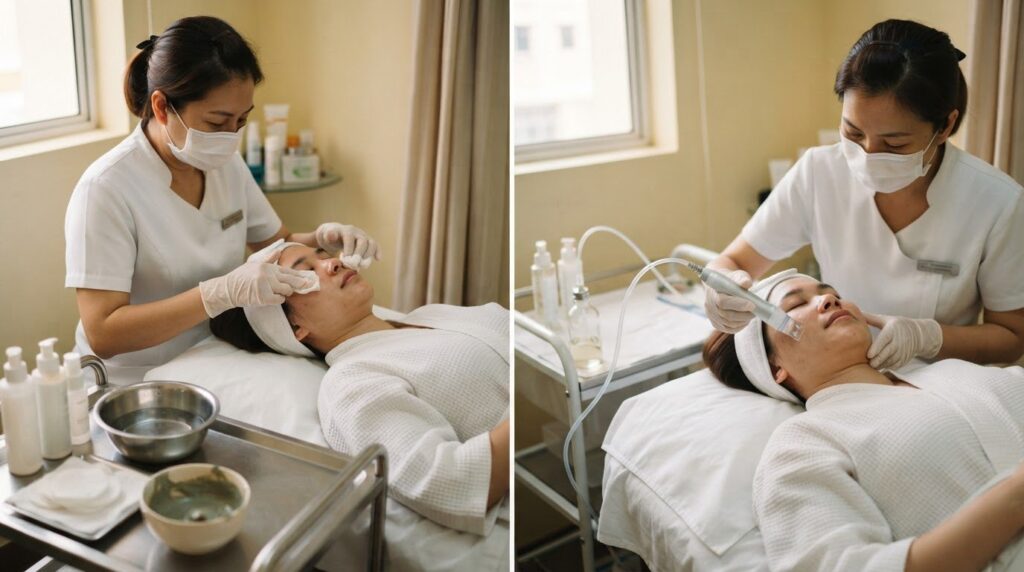
The more advanced-sounding facial isn’t automatically the better match for your skin. In a HydraFacial vs. traditional facial comparison, the key differences are the method and time: in Singapore, a HydraFacial typically takes 30-60 minutes, while a traditional facial typically takes 60-90 minutes. Both generally involve little to no downtime.
A traditional facial is a hands-on treatment that may combine cleansing, exfoliation, extractions, massage and a mask. A HydraFacial uses a device to cleanse and exfoliate the skin, remove pore debris and deliver hydrating solutions. The difference between a HydraFacial vs traditional facial comes down to the method and treatment experience, and each can support different skincare goals.
This guide compares how the treatments work, what to expect during and after a session, how results differ, and which option may suit your concerns, from congestion and dullness to sensitivity or a desire for a more restorative experience. You’ll have a clearer way to choose based on your skin’s needs, your schedule and the kind of care you value.
Key Takeaways
- Compare the treatment methods to understand whether you prefer device-led cleansing or a more hands-on facial experience.
- Consider how much time you want to spend in treatment and whether you need to return to your usual routine soon after.
- Match your choice to your main skin concern, such as congestion, dullness, sensitivity or the desire for relaxation.
- Think about whether you’re looking for an immediate refreshed appearance or a soothing part of your ongoing skincare routine.
What are Traditional Facials?
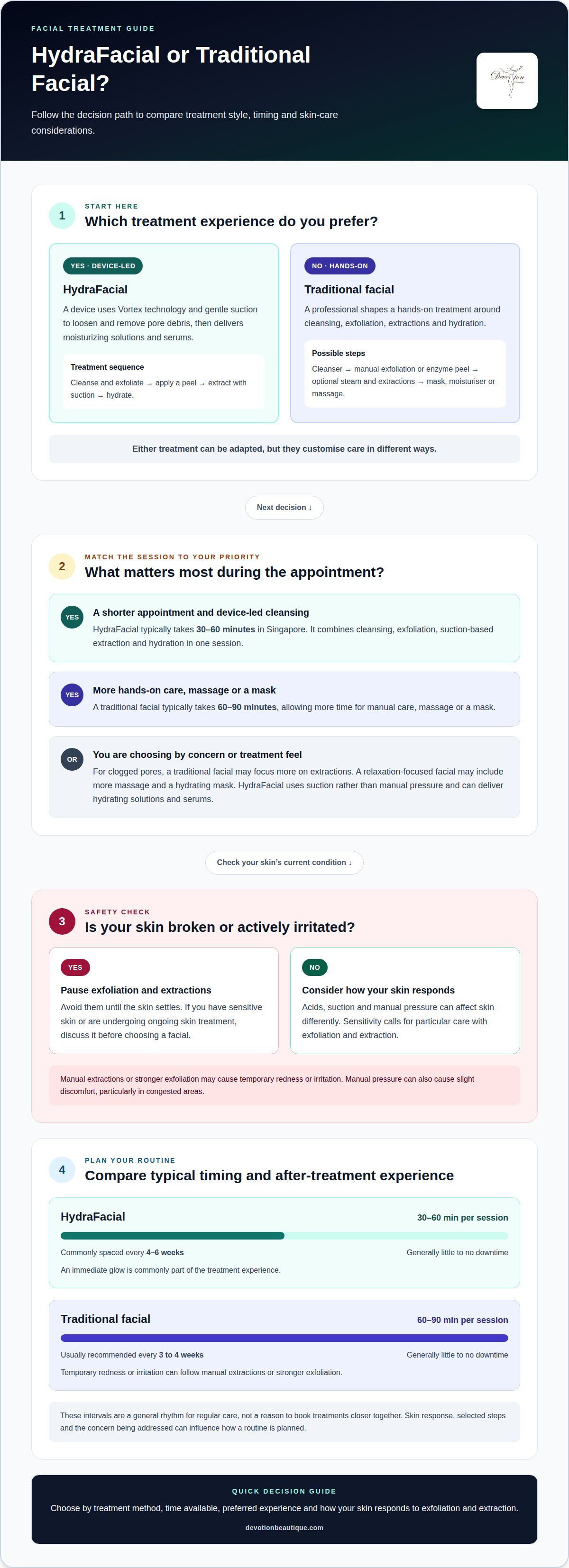
If your skin is broken or actively irritated, avoid exfoliation and extractions until it settles. With sensitive skin or an ongoing skin treatment, discuss this before choosing a facial, since acids, suction and manual pressure can affect skin differently.
A traditional facial is a hands-on treatment shaped around cleansing, exfoliation, extractions and hydration. It often begins with a cleanser to remove surface oil and residue. The professional may then choose manual exfoliation or an enzyme peel to suit the skin’s condition and the treatment goal. Steam may soften congestion before manual extractions remove blackheads or whiteheads. A mask, moisturiser and facial massage may complete the session.
The sequence can vary. A relaxation-focused facial may include more massage and a hydrating mask, while a treatment for clogged pores may focus more on extractions. Manual pressure can cause temporary redness or slight discomfort, particularly in congested areas. Technique, product choice and adjustments to the steps all shape the experience.
HydraFacial follows a device-led sequence rather than relying on manual pressure for every step. Its patented Vortex technology uses a spiral-tipped device and vacuum-like suction to loosen and remove pore debris while delivering moisturizing solutions. The treatment combines cleansing, exfoliation, extraction and hydration. Its peel step can use glycolic and salicylic acids to help clear debris from pores, while serums may deliver hydration ingredients, antioxidants or peptides.
- Cleanse and exfoliate: The device clears surface impurities and exfoliates the skin.
- Apply a peel: Glycolic and salicylic acids help loosen debris and grime in pores.
- Extract: Gentle suction draws out impurities, instead of manual pressure.
- Hydrate: Moisturizing solutions and serums leave the skin feeling replenished.
Both approaches can be adapted, but they customise care differently. A traditional facial can vary its hands-on steps, including the exfoliation method, extraction focus, mask or massage. A HydraFacial adapts the device-led treatment and serums to the skin’s needs. Either way, sensitive skin calls for particular care with exfoliation and extraction.
| Option | Method | Extraction | Customisation |
|---|---|---|---|
| Traditional facial | Manual steps, steam and mask | Hands-on pressure | Exfoliant, massage and mask |
| HydraFacial | Vortex device and solutions | Gentle suction | Peel and hydrating serums |
Choose based on whether you prefer hands-on care and massage or device-led cleansing with suction and serum infusion.
Treatment duration and downtime
In Singapore, a HydraFacial typically takes 30-60 minutes, while a traditional facial typically takes 60-90 minutes. The difference comes partly from the treatment sequence: a device-led process moves through cleansing, exfoliation, suction-based extraction and hydration, while a traditional session may allow more time for manual care, massage or a mask.
Both treatments generally involve no to minimal downtime. Manual extractions or stronger exfoliation during a traditional facial can leave temporary redness or irritation. HydraFacial uses gentle suction instead of manual pressure for extractions, and an immediate glow is commonly part of the treatment experience. Skin type, congestion and the steps selected can affect how your skin looks just afterwards.
A HydraFacial device combines several steps in one session: it cleanses and exfoliates the surface, uses suction to remove pore debris, then delivers hydrating solutions and serums. A traditional facial may include cleansing, steam, manual extractions, massage and a mask. The hands-on steps can make the session longer, particularly when relaxation and massage are priorities.
Schedule matters, too. A traditional facial is usually recommended every 3 to 4 weeks, while HydraFacial sessions are commonly spaced every 4-6 weeks. These intervals offer a general rhythm for regular care, rather than a reason to book treatments closer together. The skin’s response, selected steps and concern being addressed all influence how a routine is planned.
- Shorter appointment: A 30-60-minute HydraFacial may suit a tighter schedule.
- More hands-on time: A 60-90-minute traditional facial can make room for massage and a mask.
- After-treatment appearance: Both involve minimal downtime, though extractions may leave temporary redness.
- Ongoing routine: Typical intervals are 4-6 weeks for HydraFacial and 3 to 4 weeks for traditional facials.
Alternating treatments can also fit a skincare routine. For example, someone may choose a traditional facial for a massage-focused visit, then a HydraFacial at a later appointment for device-led cleansing and hydration. Keep the usual intervals in mind, and consider how exfoliation and extractions affect your skin type before planning the next session.
If you want a routine shaped around your skin goals and preferred treatment pace, explore personalised facial care.
A Hydrafacial session lasts 30-45 minutes. Both treatment types have no to minimal downtime, with little to no downtime and an instant glow listed for Hydrafacial.
Manual cleansing, exfoliation, extractions, masks and massage
Traditional facials use hands-on techniques, while HydraFacial takes a device-led approach to cleansing and hydration. Manual extractions can cause temporary redness or slight discomfort, and stronger exfoliants in a traditional facial may irritate the skin.
Manual Extractions and Discomfort
In a traditional facial, a professional uses finger pressure to clear clogged pores, blackheads or whiteheads. This can feel uncomfortable, especially in congested areas, and may leave temporary redness. The pressure and extraction focus can be adapted to your skin’s condition, with less attention on clearer areas.
HydraFacial uses suction rather than manual pressure to remove pore debris. Its device draws out impurities while delivering moisturising solutions. This offers a different extraction experience, but does not guarantee that every pore will be cleared or that skin will have no reaction. The key distinction is hands-on pressure versus device-assisted suction.
Both approaches combine cleansing with extraction, but a traditional facial may use steam before manual work. Steam can soften congestion before the extraction step. HydraFacial instead uses its device and solutions as part of a continuous treatment process. Neither method should be confused with picking or squeezing pores at home.
Exfoliation and Hydration Differences
Traditional facials commonly exfoliate using manual methods or an enzyme peel. HydraFacial may use glycolic and salicylic acids in its exfoliation step to loosen debris. The approaches treat the skin’s surface differently: one relies on hands or an enzyme product, while the other combines a peel with device-assisted cleansing.
HydraFacial’s Vortex technology pairs exfoliation and suction with moisturising solutions. Serums may contain hydration ingredients, antioxidants or peptides. A traditional facial typically follows exfoliation and extractions with a mask or moisturiser, and may include facial massage. Its steps can be tailored, for example, by adding a soothing hydration mask after pore-clearing.
Hydration is delivered differently. HydraFacial infuses solutions during its device-led process, while traditional facials generally use a mask or topical moisturiser. Massage adds a tactile, restorative element to a traditional treatment, but is not a defining HydraFacial extraction step. HydraFacial is associated with an immediately refreshed appearance, while the feel after either treatment depends on the steps used.
Consider the exfoliation method and extraction experience together. If manual pressure concerns you, suction offers a different approach. If you value massage and a mask, a tailored traditional facial offers hands-on steps to suit those preferences.
HydraFacial results and how long they last
In the HydraFacial vs. traditional facial comparison, results differ in timing and treatment cadence. A HydraFacial’s immediate glow typically lasts 5-7 days, while traditional facial results tend to develop gradually. HydraFacial sessions are commonly recommended every 4-6 weeks; traditional facials are usually recommended every 3 to 4 weeks.
One session can refresh the skin’s appearance, while repeated treatments can form part of a regular care routine. The visible effects differ: HydraFacial is associated with a quick glow, while traditional facials support ongoing maintenance.
Immediate Results from a Session
After a HydraFacial session, skin may look glowing, with an immediate fresh appearance that typically lasts 5-7 days. Its vortex technology combines cleansing, exfoliation, extraction and hydration, delivering moisturizing solutions during treatment. This makes the effect more immediately visible than the gradual results associated with traditional facials.
A traditional facial can leave skin feeling cleansed and hydrated after a mask and moisturiser. Traditional facials may offer benefits that develop gradually rather than an instant glow. For example, someone choosing a massage-focused facial may value the soothing experience and routine maintenance more than a quick visible change.
Results Across Repeated Sessions
For ongoing care, HydraFacial sessions are recommended every 4-6 weeks. Regular treatments follow a consistent cycle of device-led cleansing, exfoliation, extraction and hydration. HydraFacial may address concerns such as dullness, congested pores, fine lines, acne and hyperpigmentation, with the treatment tailored to the skin’s needs.
Traditional facials are usually recommended every 3 to 4 weeks. Their gradual results reflect repeated maintenance, with steps such as exfoliation, manual extractions or a hydration mask adjusted to the session’s focus. A professional facial each month is described as useful for addressing concerns in Singapore’s climate, where regular care can be part of a broader routine.
The HydraFacial vs traditional facial choice is not simply about immediate versus lasting results. HydraFacial’s short-term glow may suit those prioritising visible freshness. Traditional facials offer hands-on care for gradual maintenance, with massage and masks shaping the experience. The focus of each session depends on your skin concerns and the steps selected.
Use the intervals as a planning guide: schedule HydraFacial treatments 4-6 weeks apart, or traditional facials every 3 to 4 weeks. If your priority is an event-ready glow, a HydraFacial’s immediate effect may fit the timing. For gradual care, a regular traditional facial can provide a steady cadence, with its techniques adapted to your skin’s changing needs.
Choosing a facial based on skincare goals
In the HydraFacial vs traditional facial comparison, the right fit depends on your skin concerns and preferred treatment experience. HydraFacial may suit concerns such as dullness, congestion, enlarged pores, fine lines, wrinkles, acne and hyperpigmentation. Traditional facials can be tailored for sensitive skin, relaxation and routine maintenance.
HydraFacial Skin Concerns
Consider HydraFacial if your priority is a fresh, radiant appearance and device-led attention to congestion. Its cleansing, exfoliation, suction and hydration steps may suit oily or acne-prone skin, enlarged pores and dullness. Serums may deliver hydration ingredients, antioxidants or peptides, and the treatment may also address concerns such as fine lines and hyperpigmentation.
This option may appeal if you want visible results quickly rather than a massage-focused experience. For example, someone concerned about a congested-looking surface may value the device’s pore-cleansing steps. HydraFacial is described as suitable for all skin types, though sensitivity still matters when considering exfoliation and how your skin responds.
Define your main goal before choosing: a refreshed appearance, support for congestion or attention to fine lines. This can guide a discussion about the treatment focus and serum selection, instead of treating every concern as the same skincare need.
Traditional Facial Skin Concerns
A traditional facial may suit you if you value a slower, hands-on experience. Cleansing, exfoliation, a mask and facial massage can be adapted for relaxation or routine maintenance. If you are new to facials, this familiar sequence may feel approachable, particularly if massage is important to you.
Sensitive skin may call for a carefully tailored facial, with exfoliation and manual steps chosen to suit its condition. A relaxation-focused session can emphasise gentle care and massage, while a maintenance facial may combine cleansing and hydration. Technique matters: pressure and product choices shape the experience and can influence temporary redness after extractions.
Traditional facials support gradual care rather than a device-led glow. Consider one if your main aim is to unwind, maintain your skincare routine or enjoy hands-on treatment steps. The approach differs from HydraFacial’s combination of suction, exfoliation and serum infusion, though both can be customised to skin concerns.
The HydraFacial vs traditional facial choice ultimately depends on your main goal. Consider HydraFacial for visible freshness or concerns such as congestion. Choose a traditional facial for massage, relaxation or a regular maintenance ritual. If sensitivity is a priority, give particular thought to the exfoliation method and pressure used.
Devotion Beautique
Devotion Beautique offers personalised facial programmes to help match your skincare goals with a suitable approach. If you’re weighing device-led treatment against hands-on care, consider the concerns you want to address, your skin’s sensitivity and whether relaxation or targeted correction matters most. Its ReProgram Facial and Remedial Facial support different skin goals, with care shaped around individual needs.
Discussing your priorities can help clarify which style of facial care may suit your routine. It’s a useful next step if you want guidance beyond comparing treatment steps. Contact Devotion Beautique to discuss your skincare goals.
Choose a Facial That Fits Your Next Chapter
The HydraFacial vs traditional facial decision is also a chance to consider what you want from your skincare routine. Is this visit about feeling restored, addressing a particular concern or taking a more consistent approach to skin health? Your priorities can guide a conversation beyond choosing a treatment by name.
Before your next facial, note what you’d most like to address and how you prefer to experience care. Mention sensitivities, products that have irritated your skin, and whether you value a calming, hands-on session or a more targeted approach. These details help shape a treatment around your needs, rather than a one-size-fits-all expectation.
Devotion Beautique can help you explore facial care in the context of your individual goals and broader skincare routine. Take the next step when you’re ready to discuss what feels right for you. Contact Devotion Beautique to discuss facials, and move forward with care that feels considered and personal.
Frequently Asked Questions
What Is Hydrafacial?
HydraFacial is a branded, non-invasive facial treatment that uses patented Vortex technology. Its device-led approach brings cleansing, exfoliation, extraction and hydration together in one session. Instead of relying on manual pressure to clear pores, it uses suction while delivering moisturising solutions. The process may also incorporate serums with hydration ingredients, antioxidants or peptides, depending on the treatment focus.
What Is a Regular Facial?
A regular facial is a broad term for a professional skincare treatment, often adapted to a person’s skin needs and preferences. At Devotion Beautique, the facial programmes are treatment facials; normal facials aren’t provided. For example, the ReProgram Facial is designed for targeted correction and long-term improvement, while the Remedial Facial focuses on maintenance and specific skin concerns.
Can You Combine the Two Types of Facials?
Yes, HydraFacial and traditional facials can be part of the same broader skincare routine, either together or on alternating visits. The choice depends on each appointment’s purpose: one may focus on device-led cleansing, while another may prioritise massage or a mask. Consider the exfoliation and extraction steps across both treatments so your routine remains suited to your skin’s condition.
Which Facial Delivers Better Results?
Neither treatment is universally better. The more suitable choice depends on the result and experience you value. HydraFacial is often selected for a visibly fresh glow, while traditional facials support gradual maintenance and may include a restorative massage. For example, someone preparing for an event may prioritise an immediately refreshed look, while someone seeking regular care may prefer a consistent hands-on routine.
Which Facial Treatment is Right for You?
Choose according to your main concern, skin sensitivity and preferred treatment experience. Congestion, dullness or enlarged pores may lead you to consider a device-led treatment, while a desire for relaxation or hands-on care may point to a traditional facial. If you have sensitive skin, factor in the exfoliation and extraction methods, since both the products and techniques shape the session.
Which Should You Choose?
Choose the treatment that best fits your priority for this visit, rather than selecting by name alone. If a quick glow is your focus, consider HydraFacial; if massage and a calming ritual matter more, a traditional facial may suit you better. For a longer-term routine, consider how the treatment fits alongside your other skincare steps and whether you prefer a device-led or hands-on experience.
What is a HydraFacial and how does it work?
A HydraFacial uses a spiral-tipped device to combine several skin-cleansing steps. The Vortex system exfoliates, uses suction to draw out pore debris and delivers moisturising solutions to the skin. Glycolic and salicylic acids may be used in the peel step to loosen debris. This device-led sequence offers an alternative to manual extraction and can be paired with selected serums.
What happens during a traditional facial?
A traditional facial commonly moves from cleansing to exfoliation, followed by steam, manual extractions, a mask and moisturiser. Facial massage may also be included, especially when relaxation is a key aim. The sequence can vary with the treatment focus: a session centred on hydration may emphasise a moisturising mask, while congestion may call for more attention to extractions.
