
Chest Acne Treatment for Women: Causes and Care Tips
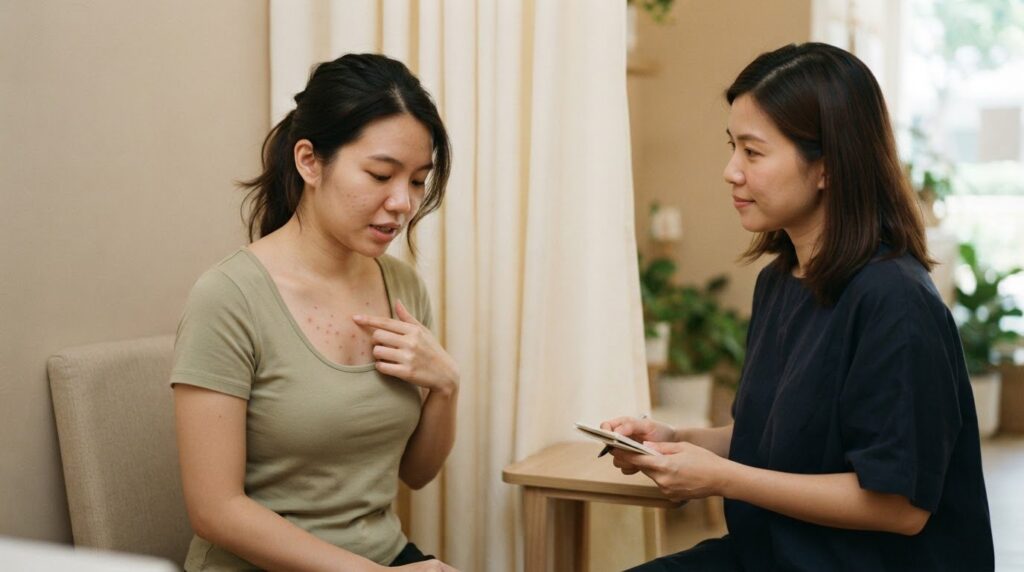
Chest breakouts aren’t always a sign that you’re doing something wrong. Hormonal shifts can increase oil production, while sweat, tight clothing and friction may contribute to clogged pores. A thoughtful chest acne treatment for women starts with understanding which factors may be affecting your skin, then choosing gentle, consistent care.
It can be frustrating when bumps appear on an area that’s harder to see and treat than your face. This guide explains common causes of chest acne, how acne can differ from other pimple-like bumps, and which clothing, exercise, cleansing and skincare habits may help manage it. You’ll also learn when persistent or more severe breakouts may need professional attention, so you can care for your skin with greater clarity and confidence.
Key Takeaways
- Hormonal changes can influence oil production and trigger chest breakouts; noticing when flare-ups occur may help you spot patterns.
- Reduce friction and trapped sweat with breathable, looser clothing, and change out of workout gear promptly after exercise.
- Not every pimple-like bump is acne. Folliculitis can look similar, so pay attention to how the bumps appear and behave.
- Choose gentle cleansing and non-comedogenic skincare, and avoid harsh scrubbing or picking blemishes.
- Persistent, painful or scarring breakouts may need medical assessment rather than more trial-and-error at home.
What causes back and body acne?
Back and chest acne can develop when oil and dead skin cells clog pores, followed by inflammation. Hormonal shifts, pore-clogging products and friction can all contribute, so breakouts may have several triggers.
Hormonal and Menstrual-Cycle Breakouts
Hormonal changes can increase oil production, making acne more likely during puberty, pregnancy and midlife. For women, breakouts may also appear around menstrual periods, when hormonal fluctuations can affect the skin’s oil glands. The chest and back are common sites because they contain many oil glands.
Timing can offer a useful clue. If chest spots repeatedly appear around a menstrual period, hormonal changes may be contributing, rather than a new cleanser or food being the sole cause. Pregnancy can also bring acne. Note the pattern alongside changes to your routine, such as starting an oil-containing body lotion.
Contributing and Aggravating Factors
Comedogenic lotions and creams can clog pores, especially when applied to the chest or back. Sweat, friction and pressure from clothing or backpack straps may also aggravate breakouts. These factors can combine: sweat beneath a close-fitting top may linger against skin already exposed to pore-clogging products.
Acne develops when a pore becomes blocked; bacteria and the body’s inflammatory response can then contribute to inflamed spots. Body skin can be thicker than facial skin and often has larger pores, which may contribute to more severe acne. Chocolate and greasy foods have little to no effect on acne, so removing them alone may not address the underlying triggers.
Acne Risk Factors
Risk depends on a mix of oil production, pore blockage and individual skin response. Hormonal changes during menstrual periods, pregnancy, puberty or midlife can raise oil production. A history of breakouts on the face, chest or back may also help explain why similar areas flare, rather than pointing to a single cause.
Consider the patterns in your routine. Oil-containing creams, sweaty clothing and repeated pressure on the same area can each add to irritation or clogged pores. Stress doesn’t cause acne, but it can make existing acne worse. Identifying possible aggravating factors can guide more focused care without treating stress as the original cause.
Clothing, exercise, and cleansing habits
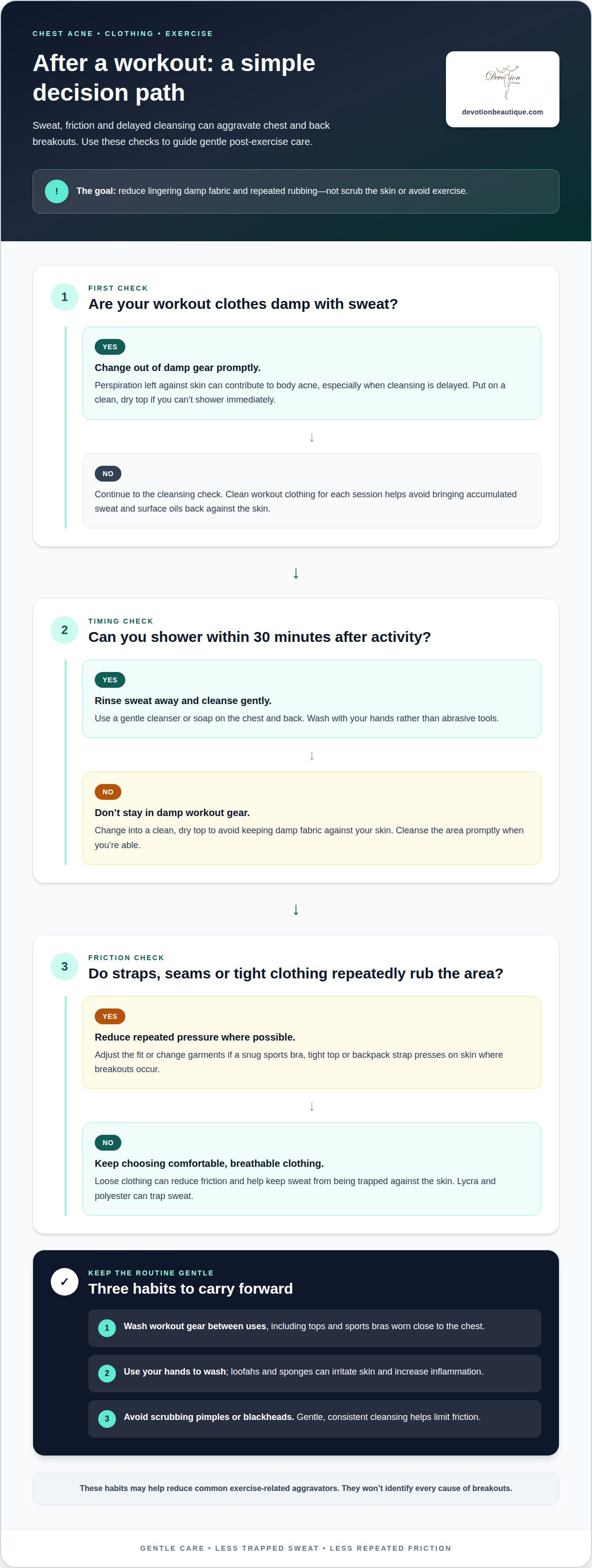
Sweat, friction and delayed cleansing can influence breakouts on the chest and back. Small changes to workout clothing and post-exercise care may help reduce these aggravating factors.
Perspiration and Trapped Sweat
Perspiration left against the skin after exercise can contribute to body acne, particularly when cleansing is delayed. Lycra and polyester can trap sweat, which mixes with surface oils and may clog pores. This matters because repeated contact between damp fabric and the chest can make pimples and blackheads more likely to develop.
After a workout, change out of damp clothing and cleanse the area promptly. Washing workout gear between uses also limits the sweat and oil left in the fabric. Wearing a clean top for each session is practical, especially when a sports bra or fitted shirt holds moisture close to the chest.
Friction and Tight-Fitting Clothing
Friction and pressure from clothing can aggravate body acne where fabric repeatedly rubs the skin. A snug sports bra, tight top or backpack strap can press against the chest, shoulders or back, irritating skin that is already prone to breakouts.
Notice where straps or seams sit during exercise and daily activities. If pimples appear beneath a sports bra band or along a backpack strap, reduce rubbing where possible by adjusting the fit or changing garments. You don’t need to avoid clothing; reducing repeated pressure can help limit one factor that worsens breakouts.
Loose, Breathable Clothing
Loose clothing can reduce friction and keep sweat from being trapped against the skin. For example, choose a relaxed-fitting top for a workout instead of a tight polyester shirt when it suits the activity. This may help prevent body acne by reducing prolonged contact with damp fabric.
Wash workout clothing between uses, including sports bras and tops worn close to the chest. Rewearing sweaty gear brings accumulated perspiration and surface oils back against the skin. A clean, comfortably loose garment is a simple preventive step. It won’t identify every cause of breakouts, but it can reduce avoidable friction and trapped sweat.
Exercise and Cleansing Habits
Exercise itself isn’t the concern; leaving sweat on the skin afterward can contribute to chest acne. Shower within 30 minutes after physical activity, using a gentle cleanser or soap on the chest and back. Abrasive tools such as loofahs and sponges can irritate skin and increase inflammation, so wash gently with your hands.
Change out of workout gear promptly, then rinse away sweat without scrubbing pimples or blackheads. If you can’t shower immediately, change into a clean, dry top to avoid keeping damp fabric against the skin. These habits support consistent cleansing while limiting friction, which can help reduce common exercise-related aggravators of body acne.
Why does my chest have acne?
Chest acne can involve increased oil production, clogged pores and inflammation, with hormonal shifts contributing to flare-ups. Menstrual periods and pregnancy can coincide with breakouts, while stress can worsen existing acne without causing it. The pattern, severity and presence of nodules, cysts or scarring help determine when medical treatment is needed.
In Singapore, chest-acne treatment and dermatology visit costs vary with the consultation setting, acne severity and treatment plan. There isn’t one price that applies to every case, and this section doesn’t provide a cost estimate.
Prescription options for women can include oral contraceptive pills or spironolactone when excessive oil production contributes to more severe acne. Other treatments may include prescription tretinoin, or oral antibiotics for limited durations of 3 to 6 months. Oral isotretinoin treatment typically lasts 4 to 6 months. The appropriate option depends on the acne pattern and its severity.
Hormonal treatment isn’t the only approach. Adapalene is an over-the-counter topical retinoid, while prescription tretinoin is another retinoid option. These medicines work differently from oral hormonal treatments. A clinician can assess whether bumps are acne or another condition and help select a suitable approach, particularly when breakouts persist or leave scars.
Acne treatments can cause mild dryness or sensitivity during the initial adjustment period, which generally spans weeks 1 to 2. Avoid adding several active products at once, since that can make it harder to identify what is irritating the skin. Severe acne, nodules, cysts or scarring warrant medical evaluation rather than repeated product changes at home.
During pregnancy or breastfeeding, ask a healthcare professional to assess any acne medicine before starting it. Suitability depends on the specific ingredient and your circumstances, so don’t assume an over-the-counter or prescription product is appropriate during these periods.
Professional care can be useful when chest breakouts are painful, persistent or scarring, or when a consistent home routine hasn’t helped. A medical assessment considers the type and severity of lesions, along with possible hormonal patterns, before choosing treatment. For example, recurring breakouts around menstrual periods may prompt a clinician to consider hormonal factors, while cysts or nodules call for assessment of more severe acne.
Acne types on the back, upper arms and chest
Body acne can appear as blackheads, pimples, pustules or cysts across the torso and upper arms. Recognising the lesion type and its distribution helps distinguish mild breakouts from acne that may need medical attention.
Acne Lesion Types
Acne lesions range from clogged pores to inflamed bumps and deeper cysts. Blackheads are visible clogged pores; pimples and pustules are raised spots, while cysts are deeper lesions. Their appearance and depth can help indicate the severity of a breakout.
Pimple-like bumps aren’t always acne; they can also be folliculitis. Persistent folliculitis may be caused by yeast and can require antifungal treatment. If similar-looking bumps keep returning, identifying the cause is more useful than treating every spot as a typical pimple.
Acne Distribution Across the Body
Body acne often affects oil-rich areas, including the face, upper chest and back. The upper back is affected in 52% of body acne cases, while the upper chest is affected in 30%. The shoulders and arms are affected in 16% of cases.
Among women with body acne, the back is affected in 13.9% of cases and the chest in 11.1%. These figures describe different body sites, not a prediction of where an individual’s acne will appear. Mapping whether spots cluster on the chest, shoulders or back can help describe the pattern during a medical assessment.
Chest Acne Types and Severity
Chest acne may include blackheads, pimples, pustules and cysts, with severity shaped by the type and depth of lesions. A few surface-level clogged pores differ from clusters of inflamed bumps or deeper cysts. This distinction matters because more severe acne can leave scars.
Oil-containing lotions can contribute to clogged pores, so consider whether breakouts follow use of a particular body product. Topical acne treatments target the skin, but the right approach depends on the lesions and their severity. Avoid scrubbing active spots; harsh friction can worsen irritation rather than clear the cause.
Acne Symptoms
Common signs include blackheads, raised pimples, pustules and cysts on the chest, back or upper arms. Inflamed lesions may look red or feel tender, while a blackhead appears as a dark plug within a pore. Noting which signs appear, and where, gives a clearer picture than describing all bumps as one condition.
Severe acne, nodules, cysts or scarring warrant medical assessment. Persistent folliculitis can resemble acne, yet may have different causes and treatment needs. Note whether lesions are shallow or deep and whether scarring develops; these details can help distinguish an occasional surface breakout from a persistent concern.
What else can I do to manage Acne?
A steady, gentle routine can support chest acne care without adding unnecessary irritation. Focus on cleansing, suitable products and patience rather than scrubbing or layering several active ingredients at once.
After a shower, cleanse acne-prone areas with a gentle cleanser or soap. Abrasive tools, harsh soaps and strong chemicals can irritate skin and worsen acne. Use your hands, rinse thoroughly and pat the area dry. If your chest feels tight after washing, a non-comedogenic moisturiser can provide hydration without relying on heavy, oil-based products that may clog pores.
For over-the-counter treatment options, benzoyl peroxide washes can help manage body acne. The American Academy of Dermatology advises leaving a wash on acne-prone chest skin for 2 to 5 minutes before rinsing. Benzoyl peroxide can bleach clothing and towels, so rinse thoroughly and use fabrics you don’t mind protecting. Salicylic acid, glycolic acid, alpha hydroxy acid and beta hydroxy acid washes can also help remove plugs from hair follicles.
Introduce active ingredients gradually. For body acne, a benzoyl peroxide product containing 2% to 5% can be a starting point, with use increased gradually. If using a new product, avoid applying it over irritated or broken skin. Redness, dryness or discomfort are signs to pause and reconsider the routine rather than adding another chemical exfoliant immediately.
Daily sun protection matters when acne affects the chest, especially if the area is exposed outdoors. Choose a non-comedogenic broad-spectrum sunscreen with SPF 30 or higher. HealthHub recommends non-comedogenic skincare and suncare products to help avoid pore-clogging formulations. Sunscreen can also help limit further pigmentation after acne, while picking or squeezing pustules may worsen breakouts and lead to scarring.
Keep the routine consistent. Acne treatments work mainly by preventing future breakouts, so visible clearing takes time. A home regimen may take 6 to 8 weeks to show improvement. Changing products too quickly can make it difficult to judge their effect and may add irritation. Track which products you use and whether new pimples appear, then adjust one part of the routine at a time.
Chocolate and greasy foods have little to no effect on acne, so restrictive food changes may not address the main triggers. If acne remains active after consistent over-the-counter care, or becomes severe, painful or scarring, seek medical assessment. A clinician can consider the lesion type and treatment history before recommending a next step.
Devotion Beautique: Underarm Bleaching Advanced Treatment
Devotion Beautique’s Underarm Bleaching Advanced Treatment is for women seeking care focused on underarm skin tone, rather than active chest acne. If your concerns include both underarm discolouration and chest breakouts, this treatment may address the underarm concern, but it isn’t a chest-acne treatment.
Keep the two goals distinct. Persistent, painful or scarring chest acne calls for medical assessment, while an aesthetic treatment addresses a different skin concern. A clear understanding of the area you want to focus on helps guide your next step. For support with an underarm skin concern, contact Devotion Beautique to discuss the Underarm Bleaching Advanced Treatment.
Choose a thoughtful next step for your skin
Your next step depends on what you want to address. Persistent or painful chest breakouts call for medical assessment, while aesthetic care may suit a separate skin goal. Chest acne treatment for women should be guided by the type of breakout and your health needs, not by a promise of one approach for everyone.
Devotion Beautique offers the Advanced Aesthetic Series Skin Boosting RETREAT and ReProgram Facial for aesthetic skincare goals, as well as the Underarm Bleaching Advanced Treatment for underarm concerns. These services address different needs and aren’t medical treatment for chest acne. Choose care that fits the area and concern you want to focus on.
If you’d like to discuss an aesthetic concern, contact Devotion Beautique. A considered next step can begin with a clear conversation about your priorities.
Frequently Asked Questions
What At-Home Treatment Actually Works?
A consistent routine using one suitable acne active ingredient is a practical starting point for mild breakouts. A chest acne treatment for women may include a benzoyl peroxide wash or salicylic acid product, alongside gentle cleansing and non-comedogenic moisturiser. Give the routine 6 to 8 weeks before judging its effect, since changing products repeatedly can make results harder to assess. Stop using an ingredient if it causes persistent irritation.
What are the symptoms of Acne?
Acne can appear as blackheads, pimples, pustules or deeper cysts on the chest, back and upper arms. Clogged pores and inflamed spots can occur in the same area. Pimple-like bumps can also be folliculitis rather than acne, so appearance alone may not identify the cause. Nodules, cysts or scarring are reasons to seek medical assessment.
When Is Prescription Treatment the Right Step?
Prescription treatment may be appropriate when breakouts remain active despite consistent over-the-counter care, or when lesions are severe. A doctor may consider oral contraceptive pills or spironolactone for more severe acne linked to excessive oil production. Other prescription options include tretinoin, antibiotics or isotretinoin. Oral antibiotics are typically prescribed for 3 to 6 months, while isotretinoin treatment typically lasts 4 to 6 months.
What causes chest acne in women?
Hormonal shifts can increase oil production, and breakouts may occur around menstrual periods or during pregnancy. Oil-containing lotions can clog pores, while friction and sweat may aggravate existing spots. Stress doesn’t cause acne, but it can make it worse. Chocolate and greasy foods have little to no effect, so changing those foods alone may not resolve recurring chest breakouts.
What are the best over-the-counter treatments for chest acne?
For chest acne treatment for women, benzoyl peroxide and salicylic acid are common over-the-counter options for body acne. Products commonly available in Singapore contain 0.5% to 2% salicylic acid. For mild chest breakouts, a benzoyl peroxide product at 2.5% to 5% or salicylic acid at 1% to 2% may be a starting point. Adapalene 0.1% is another over-the-counter topical retinoid. Introduce one active ingredient gradually to make irritation easier to identify.
How should women use benzoyl peroxide wash for chest acne?
Use the wash as directed on its packaging, and rinse the chest thoroughly after cleansing. The American Academy of Dermatology advises leaving a benzoyl peroxide wash on acne-prone chest skin for 2 to 5 minutes before rinsing. Start with a product containing 2% to 5% benzoyl peroxide and increase use gradually. The ingredient can bleach towels and clothing, so rinse well.
Does salicylic acid help treat chest acne?
Yes. Salicylic acid is a common ingredient for acne on the skin’s surface, and body washes containing it can help remove plugs from hair follicles. Products commonly available in Singapore contain 0.5% to 2% salicylic acid. For mild chest acne, a product with 1% to 2% is a possible starting point. Introduce it gradually, especially if your skin feels dry or sensitive.
When should women see a dermatologist for chest acne?
Seek medical assessment for severe acne, nodules, cysts or scars. It’s also sensible to get advice if breakouts persist despite consistent over-the-counter treatment for 8 to 12 weeks. A clinician can assess whether the spots resemble acne or another condition, such as folliculitis, and consider the pattern and severity when recommending treatment. Don’t keep adding stronger products to painful or scarring lesions.