
Can I Wear Makeup After a Facial? Timing and Skin Care

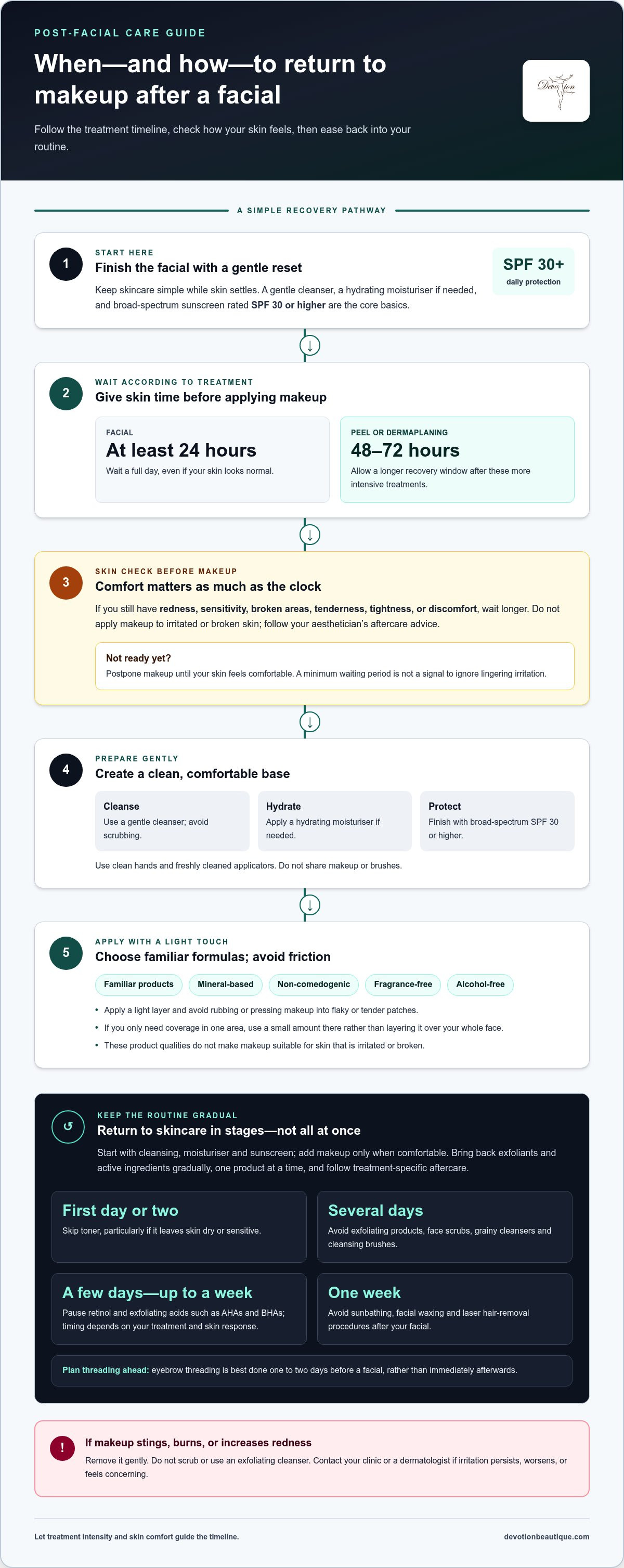
If you’re wondering whether you can wear makeup after a facial, wait at least 24 hours before applying it. After a more intensive treatment, such as a peel or dermaplaning, wait 48 to 72 hours. If your skin is still red, sensitive, broken or uncomfortable, give it more time before reaching for makeup.
It’s tempting to cover redness straight away, especially when you have plans. But freshly treated skin benefits from a gentle routine while it settles. This guide answers the question, can I wear makeup after a facial, and explains what to apply, when to resume makeup, and how to return to your usual skincare without rushing your skin.
You’ll also learn how treatment intensity and your skin’s response can affect timing, plus which habits help keep post-facial care calm and comfortable. A little patience can make the return to your routine more considered and help you enjoy the fresh, cared-for feeling of your treatment.
Key Takeaways
- Keep post-facial care gentle, focusing on hydration and daily sun protection while your skin settles.
- Pause exfoliants, strong active ingredients and other potentially irritating steps until your skin is ready for them again.
- Use your skin’s comfort and the intensity of the facial to guide when you return to makeup.
- When you do reapply makeup, choose familiar, gentle formulas and use clean hands and applicators.
- Ease back into your usual skincare gradually, paying attention to any signs of irritation.
1. What should I apply to my face after a facial?
Keep your skincare simple after a facial treatment. Use a gentle cleanser, a hydrating moisturiser if your skin feels dry or tight, and broad-spectrum sunscreen with SPF 30 or higher every day. These steps help limit irritation while your skin settles after exfoliation. Follow the personalised aftercare advice given for your treatment, especially if it differs from your usual routine.
For the first day or two, skip toner, particularly if it leaves your skin feeling dry or sensitive. Avoid exfoliating products and face scrubs for several days. That includes grainy cleansers and cleansing brushes, which can add friction to freshly treated skin. If your facial included exfoliation, give your skin time before restarting these steps.
Set aside strong active ingredients for a few days after your appointment. This includes retinol and exfoliating acids such as AHAs and BHAs. Depending on your skin’s response and the treatment, you may need to avoid these ingredients for up to a week. Resume products gradually rather than layering several active formulas together. If a familiar product stings, stop using it while your skin feels sensitive.
It’s best to avoid heavy makeup for a few days, even after the minimum waiting period has passed. Don’t pick at dry or flaking areas, pimples, or blemishes when applying or removing makeup. Scrubbing can aggravate freshly treated skin, while touching open or irritated areas may introduce bacteria. Remove makeup gently when it’s appropriate to cleanse, and don’t rub stubborn patches.
Protect your skin from avoidable heat and sun exposure after treatment. Avoid direct sun, hot showers, steam rooms, and hot rooms while your skin is sensitive. Daily SPF 30 or higher remains important, including when you’re outdoors in Singapore’s bright conditions. If you’re planning sunbathing, avoid it for one week after your facial.
Plan hair removal around your appointment, too. Eyebrow threading is best done one to two days before a facial, rather than immediately afterwards. Wait at least a week after your facial before facial waxing or laser hair-removal procedures. These treatments can cause additional irritation while skin is recovering.
To prepare your skin before applying makeup, cleanse gently, apply a hydrating moisturiser if needed, and use broad-spectrum SPF 30 or higher. Wait until your skin feels comfortable, and use clean hands and freshly cleaned applicators. If redness, sensitivity, or discomfort persists, postpone makeup and follow your aesthetician’s aftercare guidance.
2. How long to wait before applying makeup after a facial
Wait at least 24 hours before applying makeup after a facial, even if your skin looks normal. A basic facial can still leave skin more sensitive than usual. If you’re asking whether you can wear makeup after a facial, the safest starting point is to let a full day pass and assess how your skin feels.
The type of facial can change the waiting time. A spa facial often focuses on cleansing, exfoliation and a mask, while a more intensive treatment may include extractions, a peel or microdermabrasion. After a peel or dermaplaning, allow 48 to 72 hours before makeup. Redness, tenderness or a tight feeling are signs to wait longer rather than follow the shortest timeline.
Can you wear makeup immediately after a basic facial? No. Leave makeup off for at least 24 hours, then check for lingering sensitivity before applying it. Your skin’s response matters alongside the treatment: redness, broken areas or discomfort call for more recovery time.
When makeup feels comfortable again, start with familiar products instead of testing several new formulas. Choose mineral-based, non-comedogenic makeup that’s free from fragrance or alcohol. These qualities can be useful when skin feels sensitive, but they don’t make a product suitable for irritated or broken skin. Don’t share makeup or brushes, and use clean hands and freshly cleaned applicators.
Foundation, concealer and powder aren’t automatically off-limits once the waiting period has passed. Apply a light layer, avoid rubbing, and don’t press product into flaky or tender patches. If you only need coverage in one area, apply a small amount there instead of layering makeup across your whole face.
Makeup may sting, burn or worsen redness on freshly treated skin. Remove it gently if a reaction starts; don’t scrub or use an exfoliating cleanser to take it off. Contact your clinic or a dermatologist if irritation persists, worsens or feels concerning.
In Singapore, follow the aftercare instructions for your specific treatment rather than assuming every facial has the same recovery time. An aesthetician’s guidance should account for the procedure and your skin’s response. If you’re planning a facial before an event, share the date and expected makeup needs beforehand. A personalised facial care approach can help you plan treatment and recovery with those needs in mind.
3. Resuming a regular skincare and makeup routine
After the first 24 hours, ease back into your routine in stages rather than restoring every step at once. Begin with cleansing, moisturiser and sunscreen, then add makeup if your skin feels comfortable. A calm, simple routine makes it easier to notice whether a particular product causes irritation.
For morning care, wash with a gentle cleanser, apply a hydrating serum or moisturiser, and finish with broad-spectrum sunscreen rated SPF 30 or higher. Reapply sunscreen during the day, especially after time outdoors in Singapore. If your skin still feels tight or sensitive, keep the routine to these familiar basics.
Choose products your skin has tolerated before instead of introducing several new formulas immediately. For example, use your usual foundation and concealer rather than testing a new primer, foundation and setting spray together. Apply makeup with clean hands or freshly cleaned tools, and don’t share products or brushes.
Bring exfoliants and active ingredients back gradually, following the aftercare advice for your facial treatment. Avoid harsh exfoliants and active ingredients for at least a few days after a facial. AHAs, BHAs and cleansing brushes may need a break for a few days, possibly up to a week. Restart one product at a time, not a full collection in one evening.
At night, remove makeup gently with a cleanser that doesn’t leave your skin feeling stripped. Use light pressure around the cheeks, nose and chin, where foundation can collect. Don’t scrub flaky areas or use a cleansing brush to speed up removal. If a product stings, stop rather than adding more skincare to mask the sensation.
Watch your skin as you restore each step. Mild dryness or sensitivity can make a previously comfortable product feel different, so pause new additions if discomfort appears. Avoid picking at blemishes or flaky patches; touching or pulling at them can aggravate the area and interfere with recovery.
If makeup causes stinging, burning or worsening redness, remove it carefully and return to a gentle cleanser and moisturiser. Contact your clinic if the reaction persists or feels concerning. For ongoing skincare between facial appointments, consistent broad-spectrum sun protection and gradual product changes are more useful than rushing to resume every active formula at once.
Keep sun protection in your skincare routine between appointments: wear broad-spectrum sunscreen and reapply it, rather than treating it as a step for facial days alone. Familiar basics help keep your routine steady while you decide whether your skin is ready for anything more. When considering a product you haven’t used recently, previously tolerated products may be a more predictable choice than trying several new formulas at once. Introduce changes gradually so it’s easier to notice whether each addition feels comfortable.
Let your skin’s response guide your makeup use. If a product stings, burns or causes worsening redness, remove it carefully. If the reaction persists or feels concerning, contact the clinic rather than continuing to use the product or layering on more. A cautious return keeps the focus on familiar options and responding promptly to discomfort.
4. Mineral makeup after a facial
Once your skin is ready for makeup, mineral-based products can be a considered option. Choose formulas that are non-comedogenic and free from fragrance or alcohol, as recommended for makeup after a facial. These features don’t mean a product will suit every complexion. Check the ingredient list and avoid anything that has previously caused irritation or sensitivity.
Timing still comes first. Mineral makeup isn’t a reason to apply cosmetics immediately after a session or while skin feels tender. Wait at least 24 hours after a facial, and allow 48 to 72 hours after more intensive treatments such as a peel or dermaplaning. If redness, broken areas or discomfort remain, postpone makeup until your skin settles.
Use a light hand when applying mineral foundation or powder. Wash your hands, then use a clean applicator to press or sweep product on gently, without buffing hard over the cheeks, nose or chin. Avoid irritated or flaky patches. Friction can aggravate sensitive skin, while repeatedly touching your face can transfer bacteria to blemishes or open areas.
Keep the rest of your skincare simple as you return to makeup. A gentle cleanser can remove product without scrubbing, and a hydrating moisturiser can support skin that feels dry or tight. Continue to avoid retinol, exfoliating acids and face scrubs for a few days after your facial. Depending on your skin’s response, AHAs, BHAs and cleansing brushes may need a break of up to a week.
Mineral makeup doesn’t prevent inflammation or guarantee a reaction-free application. If foundation, concealer or powder stings, burns or worsens redness, remove it carefully and stop using that product. Don’t cover the reaction with another layer or try to exfoliate it away. If irritation persists or feels concerning, contact your clinic or a dermatologist.
For your first application after treatment, keep things simple: choose one familiar mineral product, apply a thin layer with a clean tool, and observe how your skin responds. Avoid mixing several new products during the same session, since that makes it harder to identify a trigger. Clean brushes after use, and don’t share makeup or applicators.
Think of mineral makeup as a product choice, not a substitute for aftercare. Keep broad-spectrum sunscreen in your daytime routine, and follow the personalised instructions for your facial treatment. If you’re unsure whether your skin is ready, let comfort guide you rather than the makeup label. Wait until sensitivity has eased before returning to even a gentle cosmetic formula.
5. When to wear makeup after a facial
Use 24 hours as the minimum wait before applying makeup after a facial. That’s a starting point, not a signal to cover skin that still feels tender. If redness, sensitivity, broken areas or discomfort remain, postpone foundation until your skin feels settled. The treatment and your skin’s response together help determine a sensible return.
For a facial involving deep cleansing and exfoliation, redness or patchiness may last a few days. After a peel or dermaplaning, wait 48 to 72 hours before applying makeup. A basic facial doesn’t mean immediate makeup is suitable either. Allow the full 24 hours, then assess how your skin feels before adding foundation, concealer or powder.
Consider the ingredients as well as the timing. Once makeup feels comfortable, choose familiar, non-comedogenic formulas that are free from fragrance or alcohol. Apply a thin layer with clean hands or a freshly cleaned applicator. Avoid rubbing flaky areas, and don’t test multiple new products at once. This makes it easier to identify a product that causes irritation.
Plan ahead if you have an event. Schedule your facial five to seven days beforehand, particularly if you expect to wear makeup. Treatments involving extractions or deeper exfoliation can leave visible redness, so allow time for your skin to settle. Tell the aesthetician about the event date and your makeup plans, then discuss treatment suitability and possible downtime.
During recovery, continue daily broad-spectrum sunscreen with SPF 30 or higher. Avoid direct sun exposure and sunbathing for one week after a facial. Freshly exfoliated skin may be more affected by UV exposure, and sunscreen remains part of routine care even after sensitivity eases. In Singapore’s bright outdoor conditions, apply it as directed on the product label.
Use a simple decision check: has the minimum wait passed, does your skin feel comfortable, and can you apply makeup without rubbing? If any answer is no, wait. If all three are yes, use clean tools, familiar ingredients and a light touch. Makeup can’t guarantee a particular finish by an event date, since skin responses vary.
For a facial planned around a special occasion, share your timeline and skin concerns before treatment. This helps shape a considered approach to treatment and recovery. Plan a facial treatment around your event and your preferred makeup timing.
Follow the clinician’s advice for your specific treatment, along with your skin’s response, to decide when to resume makeup. If your skin remains red, sensitive, broken or uncomfortable, wait rather than applying makeup. Contact the clinic if you’re concerned about your skin’s response or whether it’s ready for makeup.
When arranging a facial before an event, tell the clinic the event date and when you hope to wear makeup. The clinician can discuss whether the treatment is suitable and what downtime may be possible. Even with planning, a facial can’t guarantee makeup will sit or look a particular way by a fixed date, because skin responses vary. When the clinician says makeup can be reapplied, use clean hands and freshly cleaned applicators.
Devotion Beautique: Advanced Aesthetic Series Skin Boosting RETREAT
Advanced Aesthetic Series Skin Boosting RETREAT is an option to explore if you’re looking beyond post-facial makeup guidance and want a more considered approach to skincare. Devotion Beautique also offers ReProgram Facial, Remedial Facial and Relaxation Facial, supporting different goals, from targeted correction to relaxation and ongoing skin improvement. The right direction depends on your concerns and the kind of care you’re seeking. Share your skincare priorities and any sensitivities so your treatment can be tailored thoughtfully. For guidance on facial treatments and aftercare, contact Devotion Beautique to take the next step.
Make your next skin-care choice with confidence
Your post-facial routine is a chance to notice how your skin responds, rather than rushing back to every product at once. If you’re still wondering, “can I wear makeup after a facial?”, let your skin’s comfort and your treatment’s aftercare advice guide your next step. A thoughtful approach helps keep makeup and skincare aligned with your skin’s needs.
For professional guidance on your ongoing skin goals, Devotion Beautique offers the ReProgram Facial as part of its facial care options. Share your concerns and the products you use to help shape a considered treatment discussion. Each step can support a routine that feels right for your skin.
Explore facial care with Devotion Beautique and choose a next step that feels comfortable for you.
Frequently Asked Questions
How Should You Care for Your Skin Post-Facial?
Keep your routine gentle and follow the personalised aftercare instructions for your treatment. For example, if your skin feels warm after an appointment, avoid rubbing it with a towel or applying several new products. Use clean hands when touching your face, and leave blemishes alone instead of picking. If a product causes persistent irritation or discomfort, stop using it and contact the clinic for guidance.
What should I apply to my face after a facial?
Choose a gentle cleanser, a hydrating moisturiser if needed, and broad-spectrum sunscreen with SPF 30 or higher. For example, if your skin feels tight after cleansing, use moisturiser before sunscreen rather than adding a strong serum. Keep the routine familiar and simple while sensitivity settles. Your aesthetician’s instructions for the specific treatment should guide any changes, especially if you’ve been advised to pause a product.
What things should I avoid after having a facial?
For several days, avoid face scrubs, exfoliating acids, retinol and cleansing brushes unless your aftercare instructions say otherwise. Skip steam rooms and hot showers if your skin feels sensitive, and avoid picking at flaky areas or blemishes. Hold off on facial waxing or laser hair removal for at least a week. These pauses help limit extra friction or irritation while your skin recovers from treatment.
How long should I wait to wear makeup after a facial?
Wait at least 24 hours before applying makeup, and allow 48 to 72 hours after more intensive treatments such as a peel or dermaplaning. If redness, sensitivity or discomfort remains, wait until your skin feels settled. When you do apply makeup, use clean tools and a familiar formula. If you’re asking whether you can wear makeup after a facial, treatment intensity and your skin’s response both matter.