
How often should you book a facial for stressed and tired skin?

A facial for stressed and tired skin doesn’t always need to be frequent: for gentle maintenance, a session every four to six weeks may suit many people. Monthly appointments can support ongoing care, but the right interval depends on the treatment and your skin’s needs. Consistency matters more than booking a facial whenever your complexion looks tired.
Stress, dehydration, poor sleep and congestion can all leave skin looking dull or feeling uncomfortable. It’s understandable to want a quick reset, but a soothing facial and a more intensive treatment aren’t interchangeable, especially when skin feels sensitive or irritated.
Here, you’ll learn how facial massage and relaxation may support a refreshed appearance, what common factors can make skin look tired, and how to think about appointment frequency. You’ll also find practical ways to tell whether your skin needs hydration or calming care rather than deeper cleansing, so your next facial feels considered, not automatic.
Key Takeaways
- Gentle facial massage may help ease puffiness and release facial tension, making the treatment feel restorative as well as skin-focused.
- Stress can influence oil production, inflammation and the skin barrier, which may affect how comfortable and balanced skin looks.
- When skin feels reactive, calming care may be a better starting point than strong exfoliation or intensive extractions.
- Dehydration, sleep, congestion and environmental exposure can all contribute to a tired-looking complexion; notice which factors may be affecting your skin.
- Choose appointment timing according to your skin’s needs and the intensity of the treatment, rather than relying on a one-size-fits-all schedule.
1. Facial massage and relaxation
For a facial massage, begin with thorough cleansing so your hands move smoothly over clean skin. Use gentle, even strokes across the forehead, cheeks and jaw to ease facial tension. Avoid dragging or pressing hard, especially if your skin feels dehydrated, tender or reactive. A calming treatment should feel comfortable throughout, not leave your face sore. At home, use clean hands and a light touch as part of a simple routine.
Massage and circulation are often discussed together because gentle movement can encourage blood flow near the skin’s surface. Facial massage may also support lymphatic drainage, the movement of fluid through lymph pathways, and help reduce puffiness. For a simple sequence, use light strokes from the centre of your face outward, then move down the sides of your neck. Keep pressure gentle around the eyes, where skin is delicate.
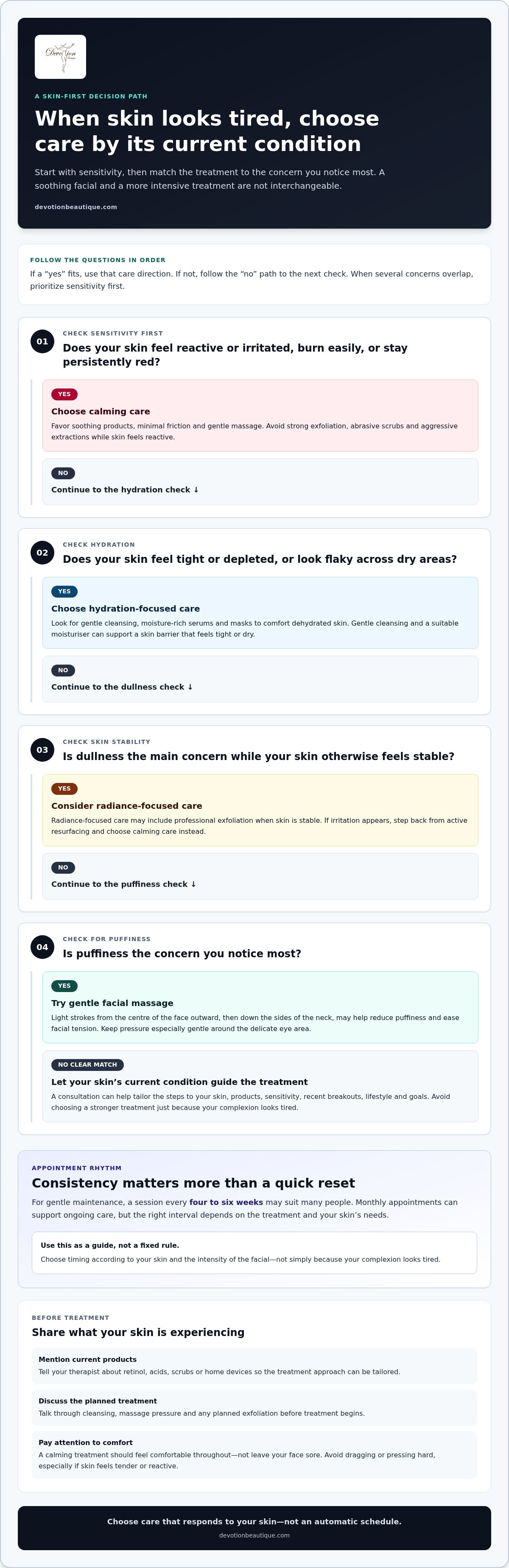
Which facial is best for dehydration, dullness, and puffiness? Choose hydration-focused care for tight or depleted skin, a radiance-focused facial for dullness when skin is otherwise stable, and gentle massage to address puffiness. The best fit depends on whether dryness, uneven tone or puffiness is most noticeable. A calming facial can suit skin that feels easily irritated, while harsh exfoliation may add unnecessary friction.
What facial treatments help stressed and tired-looking skin? Hydrating facials use gentle cleansing, moisture-rich serums and masks to comfort dehydrated skin. Calming treatments can pair soothing products with minimal friction and gentle massage; radiance-focused care may include professional exfoliation when skin is stable. Facial massage may support relaxation by easing muscle tension, while the treatment can be adjusted to your skin’s current condition.
For anti-aging concerns, massage is best understood as a relaxing addition, not a replacement for targeted skincare. Gentle movements may support circulation and nutrient delivery to skin cells, but they don’t erase fine lines or restore collagen. A calming massage can help when stress leaves your jaw or forehead tense. Avoid forceful techniques, which can irritate sensitive skin rather than make it look refreshed.
What are the risks and side effects of facials, peels, and extractions? Strong acids, abrasive scrubs or aggressive extractions can prolong redness and irritation, particularly on reactive skin. If your face burns easily or stays pink for hours, choose calming care instead of active resurfacing. Tell your therapist about retinol, acids, scrubs or home devices before treatment so the approach can be tailored.
How do you choose a reputable facial clinic or aesthetic provider in Singapore? Look for a consultation that considers your current products, sensitivity, recent breakouts, lifestyle and goals. A careful provider observes your skin and adjusts treatment steps or product strength as needed. Clear discussion of cleansing, massage pressure and planned exfoliation helps you understand what to expect before treatment begins.
2. How stress can affect oil production, inflammation, the skin barrier, and collagen
During stress, the body releases cortisol and adrenaline. Prolonged stress can increase oil production, leaving pores more prone to congestion and breakouts. You might notice a shiny forehead alongside dry, uneven cheeks. Stress can also affect inflammation, circulation, hydration and the skin barrier, so your complexion may look less refreshed even when your routine stays consistent.
Inflammation is another possible response. Stress-related inflammation can aggravate concerns such as eczema, rosacea or acne. If your face becomes itchy, persistently red or suddenly prone to breakouts, avoid adding strong exfoliants just to restore brightness. Instead, simplify your routine and observe whether specific products or stressful periods coincide with changes. Persistent irritation calls for appropriate professional advice, not repeated experimentation at home.
A weakened skin barrier can make it harder for skin to retain hydration. You may feel tightness after cleansing, notice flaking around your nose, or find makeup looks uneven across dry areas. Choose gentle cleansing and a suitable moisturiser, then use broad-spectrum sun protection during the day. If several products sting, return to simple essentials instead of layering on more serums or acids.
Stress may also contribute to the breakdown of collagen and elastin, which support skin structure. Over time, this can contribute to fine lines and the appearance of premature ageing. Tension in the jaw or forehead may temporarily make expression lines look more pronounced, but facial tension and changes in skin structure are different concerns. Focus on steady care, not forceful techniques or promises of quick correction.
Daily habits influence how skin looks and feels. Prioritise seven to eight hours of sleep each night, as the skin heals and regenerates overnight. Drink enough water to support hydration, and include antioxidant-rich foods in balanced meals. A few minutes of deep breathing each day can create a pause during stressful routines. Regular movement, such as working out for 30 minutes a few times a week, can also support general wellbeing.
In Singapore, frequent air-conditioning exposure may leave skin feeling less comfortable, especially alongside poor sleep or dehydration. Notice patterns: record when tightness, oiliness or breakouts appear, and note changes to sleep, stress and skincare. A facial may support a considered self-care routine, but it doesn’t replace everyday habits. If you’re exploring facial care for stressed skin, prioritise a gentle approach that reflects your skin’s current sensitivity and hydration needs.
3. What Causes Skin to Look Tired?
A tired-looking complexion can reflect dehydration, surface buildup or slower cell turnover rather than one single cause. After cleansing, check whether your skin feels tight, looks flaky or has uneven texture. At home, keep your routine simple: cleanse gently, moisturise and apply broad-spectrum sun protection during the day. A professional facial adds an in-person assessment and techniques that can be adjusted as your skin is observed.
Home care supports your skin between appointments; professional treatment offers focused care. For example, a therapist can assess whether dullness comes with congestion, dryness or sensitivity before choosing exfoliation. Product strength and treatment steps can also be adjusted to your skin. At home, avoid trying several new active products at once, since that makes it harder to identify what irritates or comforts your skin.
How do hydrating, brightening, and oxygen facials compare? Hydrating facials use gentle cleansing, moisture-rich serums and masks to comfort dry or depleted skin. Brightening treatments focus on uneven tone and luminosity, while oxygen or radiance-focused facials aim to refresh circulation and hydration without significant downtime. Choose according to the concern you notice, not simply the treatment name.
Are facials safe for sensitive, acne-prone, or irritated skin? Sensitive skin, active breakouts or a compromised barrier call for a gentler approach before stronger treatments. If your skin is persistently inflamed, itchy, peeling or suddenly breaking out, pause intensive facials and seek appropriate professional advice. Avoid aggressive extractions and strong acids on irritated areas.
Between appointments, consistency matters more than a crowded shelf. Use a gentle cleanser, a moisturiser suited to your skin and daytime UV protection; exfoliate only when your skin remains comfortable. If your face feels tight after cleansing, reduce harsh steps before adding another active serum. Gentle facial massage or a hydrating mask can complement this routine, provided you use light pressure and the mask doesn’t sting.
After a professional facial, give your skin a quiet evening. Don’t introduce a new active serum or scrub, or apply heavy makeup immediately after treatment. Follow your aftercare guidance and cleanse gently to avoid extra friction on freshly treated skin. If redness or sensitivity appears, avoid layering acids or exfoliating products until your skin feels settled. Note how your complexion responds, then use that observation to guide your next skincare choice.
Once skin settles, try massage, hydrating masks and mindful relaxation between treatments. Stay hydrated, eat antioxidant-rich foods, and use daily cleansers, serums and moisturisers. For dullness, consider sensible exfoliation and UV protection; if your skin is irritated, scale back.
4. Common causes of dull and tired-looking skin
A complexion can look flat when several everyday factors overlap. Dehydration may leave skin tight despite regular moisturiser use, while congestion and surface buildup can dull its natural glow. Slower cell turnover may also make texture appear uneven. Notice what changes: tightness after cleansing suggests dryness, while blocked pores around the nose or chin may point to congestion.
Sleep, stress and hydration influence how skin looks and feels, but they often show up differently. A night of poor sleep may leave the eye area looking less rested; ongoing stress can coincide with oiliness or breakouts. Frequent air-conditioning exposure in Singapore may add to skin discomfort, particularly when hydration is already low. These clues help you consider the routine and environment alongside the complexion itself.
Environmental exposure and seasonal changes can also affect your skin’s appearance. For example, moving between outdoor heat and air-conditioned rooms may leave skin feeling tight or uncomfortable. Buildup from skincare, sunscreen or makeup can dull the surface if cleansing is incomplete. Cleanse gently at the end of the day, paying attention to the hairline, nose and jaw, where residue can remain.
Exfoliation can help remove surface buildup, but more is not always better. Abrasive scrubs or overly harsh extractions can trigger inflammation and leave skin looking red rather than refreshed. If tightness, stinging or flaking follows exfoliation, pause active products and return to gentle cleansing and moisturising. Persistent irritation calls for appropriate professional advice, not repeated scrubbing.
A simple way to identify likely triggers is to observe your skin before changing your routine. Note whether dullness comes with tightness, visible congestion, redness or new breakouts. Then consider recent changes, such as a new cleanser, more frequent exfoliation, reduced sleep or longer hours in air-conditioning. Changing one routine step at a time makes it easier to see what helps.
A professional facial can provide a closer assessment of buildup, sensitivity and texture, then tailor cleansing or exfoliation to your skin’s condition. For example, congested skin may benefit from careful pore-cleansing techniques, while dry or reactive skin may need gentler care first. Avoid treating every dull complexion with the same active treatment. Skin that is inflamed, itchy, peeling or suddenly breaking out should not be pushed through intensive exfoliation.
For everyday maintenance, keep the basics steady: gentle cleansing, a suitable moisturiser and broad-spectrum sun protection during the day. Exfoliate only when your skin remains comfortable, and avoid stacking several active products to chase an immediate glow. If your complexion changes suddenly, look for a recent trigger before adding another product or treatment. This measured approach can help protect a healthy-looking skin barrier while clarifying what your skin needs.
5. Timing and frequency of facial appointments
For gentle maintenance, a facial every four to six weeks may suit many people. Monthly appointments can support ongoing care and help your complexion stay clear, balanced and luminous. Treat this as a starting rhythm, not a fixed rule. Your skin’s comfort, the treatment type and its intensity all influence when another appointment makes sense.
How long do facial results last, and how often should treatments be done? A single facial can provide an immediate glow, while longer-term improvements usually come from consistent care. Gentle hydration or maintenance facials can usually be scheduled more regularly; some advanced treatments need more time between sessions.
For a facial for stressed and tired skin, match the interval to the treatment’s purpose. Gentle maintenance supports regular cleansing and hydration, while active resurfacing may require more recovery time between sessions. If your complexion feels calm after a gentle treatment, keep to a steady schedule. If a session involves stronger techniques, allow more time rather than booking by habit.
Skin condition matters as much as the calendar. If your face feels tight, flaky or depleted, prioritise hydration and barrier support before increasing treatment intensity. If your skin stays pink or burns easily, choose calming care and avoid rushing into active resurfacing. New breakouts, persistent sensitivity or irritation are reasons to reassess your plan before the next appointment.
Use the weeks between visits to observe how your skin responds. Note whether hydration, texture, congestion or fine lines change after treatment, and record any irritation. Keep your home routine consistent during that period rather than introducing several new ingredients at once. This makes it easier to distinguish a treatment’s effect from changes caused by products, sleep or daily stress.
A one-off facial can refresh your complexion for an occasion, but longer-term improvements in hydration, texture and tone generally rely on consistent care. For a facial for stressed and tired skin, monthly appointments are a useful reference for ongoing maintenance; adjust the interval according to treatment intensity and how your skin settles afterward.
Before booking again, review the treatment you received, your skin’s response and the concern you want to address next. That simple check helps prevent unnecessary intensity and supports a more considered routine. If you’re ready to plan a personalised facial schedule, book a facial appointment and discuss your skin goals.
Monthly appointments are a useful cadence for ongoing maintenance: regular facials may help keep skin clear, balanced and luminous. Use that rhythm as a reference when planning continued care, while considering your skin’s response and the treatment you’ve already received.
Devotion Beautique: Advanced Aesthetic Series Skin Boosting RETREAT
Devotion Beautique’s Advanced Aesthetic Series Skin Boosting RETREAT offers a next step when home care alone isn’t addressing your skin goals. Its personalised approach is designed to support healthier, smoother and more radiant-looking skin, with care tailored to needs such as hydration, brightening, calming or repair.
If stress, dullness or dehydration has left your complexion looking tired, discuss your concerns and current routine as you consider a suitable treatment. The ReProgram Facial and Remedial Facial are also part of Devotion Beautique’s facial programmes, supporting different skin goals. Your skin’s sensitivity and condition can help guide the conversation.
For a considered next step in your skincare journey, contact Devotion Beautique.
Make your next step a thoughtful one
Let your skin’s current condition guide your next choice, rather than chasing an overnight change. A facial for stressed and tired skin should address your concern and suit the way your complexion responds to care. Before booking, note what feels different, such as tightness, sensitivity or persistent dullness, and share the skincare products you use. These details create a useful starting point for a personalised treatment conversation.
Think of each appointment as one part of a considered routine. Keep the steps that leave your skin comfortable, and avoid adding several new products or treatments at once. This measured approach makes it easier to recognise what supports your skin over time and adjust your goals as they change.
If you’re ready to discuss a personalised facial approach, contact Devotion Beautique. A clear conversation about your skin concerns can help you take your next step with confidence.
Frequently Asked Questions
How often should you book?
For gentle ongoing maintenance, book a facial every four to six weeks; monthly appointments can also support regular care. Use that interval as a planning guide, then consider the treatment type. Gentle hydration sessions can be scheduled more regularly, while advanced treatments need more time between sessions. For example, if your last appointment involved active resurfacing, let your skin recover before booking again instead of following the calendar automatically.
What Causes Skin to Look Tired?
Tired-looking skin can reflect several overlapping factors, including dehydration, stress, poor sleep, congestion and environmental exposure. Look for patterns rather than assuming one cause: tightness and flaking suggest different needs from visible clogged pores or a sudden breakout. Briefly note changes in sleep, products and skin comfort to help identify what has shifted before changing your routine or booking a treatment.
What makes skin look dull in the first place?
Dullness can come from dehydration, surface buildup, slower cell turnover, congestion or environmental exposure. The visible clues can differ: makeup sitting unevenly may accompany dehydration, while a rough surface can make the complexion seem less luminous. Consider recent routine changes and how your skin feels after cleansing. This helps distinguish a need to simplify care from a need to address buildup or uneven texture.
What causes skin to look dull, tired, or stressed?
Stress can affect oil production, inflammation, circulation and hydration, while poor sleep and frequent air-conditioning exposure can also leave skin looking less vibrant. These influences can overlap: a stressful period might coincide with more oiliness, while dry indoor air contributes to tightness. Compare changes in your complexion with recent lifestyle shifts, such as disrupted sleep, rather than attributing every change to one trigger.
What should I do before and after a facial to reduce irritation?
Before your appointment, share your current skincare products, including retinol, acids, scrubs and home devices, and mention any recent sensitivity or breakouts. This helps tailor your treatment. Afterward, keep care gentle: avoid trying a new active serum, scrubbing or applying heavy makeup immediately. If your skin feels irritated, don’t add more exfoliating products. Gradually resume your usual routine as your skin settles.
