
Post-natal skin pigmentation treatment: what helps melasma
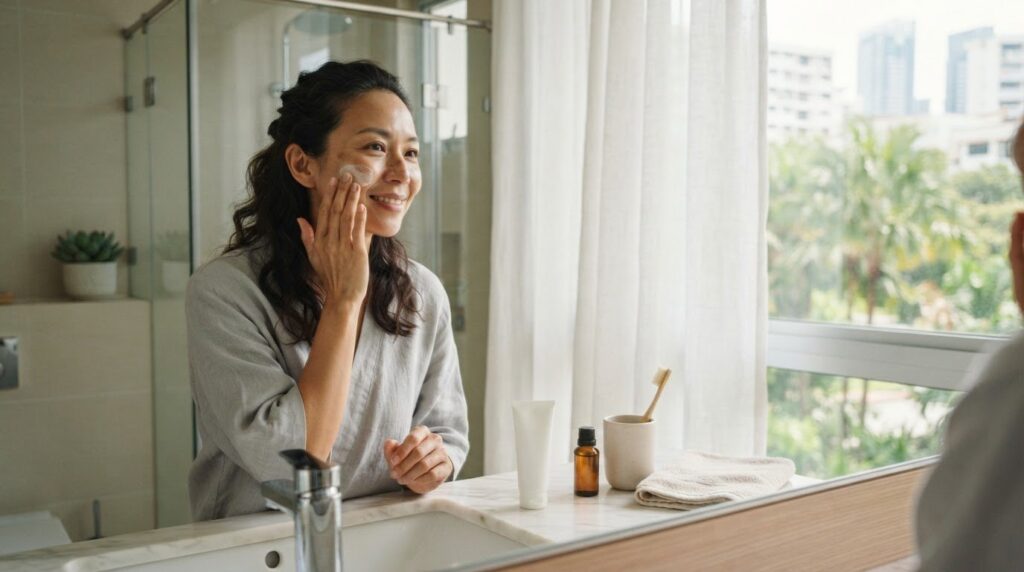
Sun protection is central to managing melasma after pregnancy, because light exposure can encourage pigmentation to return. A post-natal skin pigmentation treatment plan may also include suitable skincare or in-clinic care; mild pregnancy-related pigmentation often fades within 6-12 months after childbirth, while melasma can persist or recur after treatment stops.
Those uneven brown patches can feel like an unwelcome reminder of pregnancy, especially if you expected them to fade on their own. Melasma is linked to hormonal changes that can overstimulate pigment-producing cells, and it varies from person to person.
Here, you’ll learn what melasma is, why it can appear after pregnancy, and what to know about topical products and in-clinic treatments, including their limits. You’ll also find everyday skincare and sun-protection habits that can help reduce the chance of pigmentation returning, so you can make informed choices for your skin over time.
Key Takeaways
- Pregnancy-related hormonal changes can stimulate pigment cells, while sunlight may contribute to melasma’s persistence or return.
- Some pregnancy-related pigmentation fades after childbirth, but melasma can recur, so think beyond short-term fading when considering care.
- Topical products and in-clinic treatments have limits; the right approach depends on the pigmentation and your skin’s needs.
- Build sun protection into your daily routine: broad-spectrum sunscreen with SPF 30 or above, plus consistent reapplication outdoors, can help protect melasma-prone skin.
- Brightening ingredients may support a more even-looking complexion, while ongoing skincare and sun protection help maintain progress.
Hormonal and environmental melasma triggers
Melasma is a pattern of brown or grey-brown patches caused by excess pigment in the skin. During pregnancy, hormonal shifts can overstimulate pigment-producing cells, making patches more visible across the cheeks, forehead, nose, or upper lip. Sun exposure can intensify this pigmentation, so hormonal changes and environmental light may work together. Melasma is more prevalent among women aged 20-45 and people with Fitzpatrick skin types III-V.
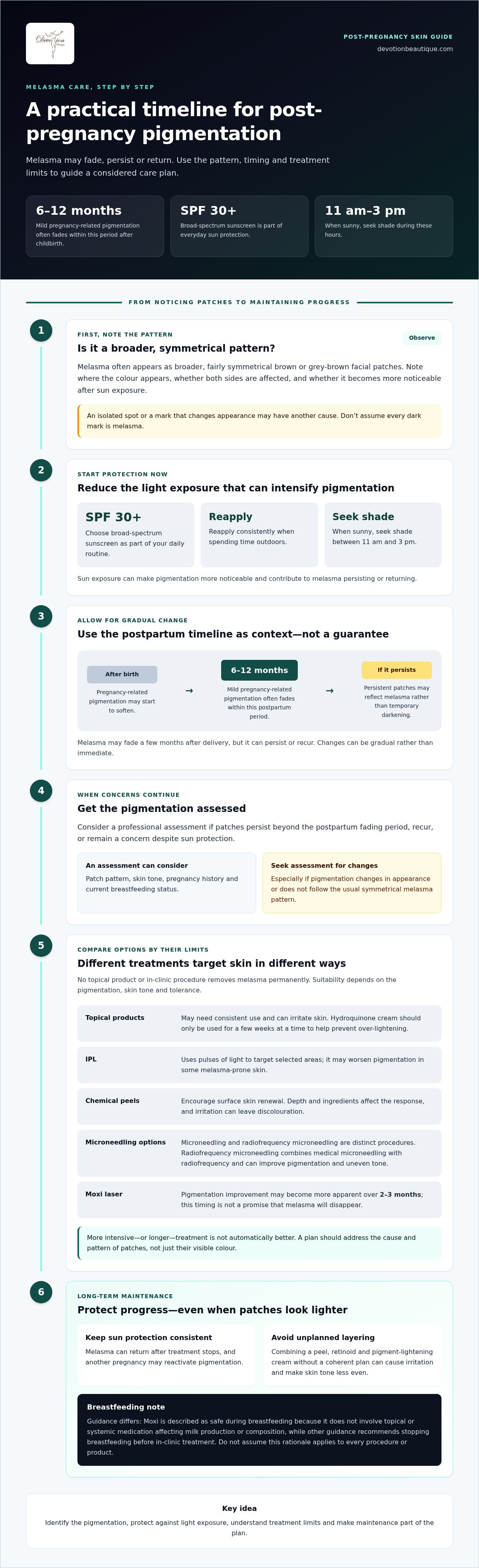
Pregnancy-related pigmentation doesn’t follow one timeline. Melasma that develops during pregnancy may fade a few months after delivery, while mild pigmentation often fades within 6-12 months postpartum. These changes can be gradual rather than immediate. For example, brown patches may soften after birth but remain visible when sunlight continues to stimulate pigment. Persistent patches can also reflect melasma rather than temporary pregnancy-related darkening.
Post-pregnancy dark spots aren’t all the same. Melasma often appears as broader, fairly symmetrical patches on the face, while an isolated spot may have another cause. Note where the colour appears, whether both sides of your face are affected, and whether it becomes more noticeable after sun exposure. These observations can help distinguish a recurring melasma pattern from individual spots and inform a suitable care plan.
Melasma can return after treatment stops, and another pregnancy may reactivate pigmentation. That makes maintenance part of treatment, not an afterthought. Build sun protection into daily habits, including time spent outdoors. When it’s sunny, seek shade between 11 am and 3 pm. Continued protection matters even after patches appear lighter.
Breastfeeding-related treatment claims need careful distinction. Moxi laser is described as safe during breastfeeding because it doesn’t involve topical or systemic medication that affects milk production or composition. However, other guidance recommends stopping breastfeeding before in-clinic treatment for post-pregnancy pigmentation. These positions differ, so don’t assume the stated rationale for Moxi applies to every procedure or product.
How much do pigmentation treatments cost in Singapore clinics? The price depends on the type of pigmentation, the treatment approach, and the planned sessions. Those factors determine the scope of care, so there isn’t one figure that applies to every case.
Consider seeking treatment if patches persist beyond the postpartum fading period, recur, or remain a concern despite sun protection. A professional assessment can consider the patch pattern, skin tone, pregnancy history, and current breastfeeding status before discussing suitable options. If pigmentation changes in appearance or doesn’t follow the usual symmetrical melasma pattern, seek an assessment rather than assuming every dark mark is melasma. Identifying the type of pigmentation helps guide next steps and long-term maintenance.
Limitations of topical treatments, peels and IPL
Topical products, chemical peels, and light-based procedures work in different ways, and none removes melasma permanently. Understanding their limits helps you compare options and choose an approach suited to your skin tone, pigmentation pattern, and tolerance.
Limits of Topical Treatments and IPL
Topical treatments act at the skin’s surface or within pigment pathways, while IPL uses pulses of light to target selected areas. Both have limits: creams may require consistent use and can irritate skin, while IPL may worsen pigmentation in some melasma-prone skin. Hydroquinone cream should only be used for a few weeks at a time to help prevent over-lightening. A stronger or longer treatment isn’t automatically better.
Peels and Procedures for Uneven Skin Tone
Chemical peels use exfoliating solutions to encourage surface skin renewal and may be considered for uneven tone. Their depth and ingredients affect the skin’s response; irritation can itself leave discolouration, particularly in skin prone to pigmentation. Microneedling and laser therapy work differently, so they aren’t interchangeable with a peel. A treatment plan should account for the cause and pattern of the patches, not just their visible colour.
For example, a flat brown patch that resembles melasma calls for a different discussion from post-inflammatory marks left after irritation. Peels may improve surface texture and tone, but melasma can persist or recur, so a peel alone may not address every contributing factor. Before a procedure, ask what skin changes it targets, what downtime or aftercare it involves, and how sun protection fits into the plan. Clear expectations matter more than choosing the most intensive option.
Microneedling and radiofrequency microneedling are distinct procedures. Radiofrequency microneedling combines medical microneedling with radiofrequency and can improve pigmentation and uneven skin tone. It also encourages collagen production in the dermis, supporting changes in texture. Laser approaches vary too: pigmentation improvement after Moxi treatment may become more apparent over 2-3 months. That timeline describes when changes may show, not a promise that melasma will disappear.
Melasma isn’t currently curable, but treatment may improve its appearance. Since it can return after treatment stops, maintenance matters even when patches look lighter. Avoid layering a peel, retinoid, and pigment-lightening cream without a coherent plan; irritation can make skin tone less even. The useful comparison isn’t simply “cream or procedure,” but how each option fits your pigmentation, skin tolerance, and ongoing care.
Does Singapore public or private health insurance cover treatment for skin pigmentation? There’s no universal answer: coverage depends on the policy and whether the treatment is considered medically necessary or cosmetic. Review the terms for outpatient and cosmetic treatments before budgeting.
If your concern is underarm darkening rather than facial melasma, the Underarm Bleaching Advanced Treatment is the relevant offering. It addresses a different area and isn’t a treatment for facial patches.
Sun protection and visible-light protection
Sunlight can deepen melasma and contribute to its return, even after patches have faded. In Singapore, make daily sun protection part of your routine, not just your beach-day care.
Sun Protection and Pigmentation Recurrence
Ongoing sun protection helps reduce the chance of melasma returning after treatment, including after Moxi laser. Light exposure can stimulate pigment, so increased outdoor time may undermine progress. Choose broad-spectrum sunscreen with an SPF of at least 30, and reapply every two hours when outdoors. The British Skin Foundation also advises broad-spectrum sun cream with SPF 30 or above for skin affected by melasma.
Make protection practical. Apply sunscreen before leaving home, then carry it for outdoor plans, such as a lunchtime walk or an open-air commute. A hat and shade add useful barriers, especially between 11 am and 3 pm when it’s sunny. Sunscreen supports a maintenance routine; it doesn’t replace shade or protective clothing. Patients who follow an active skincare routine can also make sunscreen its consistent daytime step.
Visible-Light Protection and Darkening
Visible light is part of the spectrum that reaches the skin, and sunscreen containing iron oxides can add protection against it. This matters because melasma can be affected by more than ultraviolet exposure alone. When choosing sunscreen for pigmentation-prone skin, look for broad-spectrum protection and iron oxides on the ingredient list. This combination addresses UV exposure and adds a visible-light barrier.
How can sun protection help prevent postnatal pigmentation from getting darker? It limits exposure to light that can stimulate pigment, helping reduce further darkening and recurrence. Use sunscreen consistently, including on days spent near windows or outdoors briefly, as exposure adds up during everyday routines.
Application affects coverage. Apply sunscreen evenly to exposed skin before going outside, including the forehead, cheeks, nose, and upper lip, where melasma often appears. Follow the product directions and reapply after time outdoors at the recommended interval. Sunscreen left in your bag helps only if you remember to use it, so pair application with a daily cue, such as getting ready to leave home.
A clinic discussion about pigmentation can include how sun habits and visible-light protection fit alongside other care. Bring the sunscreen you currently use and note whether you spend time outdoors during your commute or lunch break. These practical details help connect treatment goals with daily exposure. In Singapore’s bright conditions, regular protection remains important after patches look lighter, not only while pigmentation is visible.
Brightening skincare ingredients
Brightening skincare can support a more even-looking tone by targeting melanin production or helping existing pigment shed. Ingredient names matter more than broad claims on a label. For post-pregnancy patches, check the active ingredients, how they fit your routine, and whether your skin tolerates them. Even a product that seems gentle may irritate sensitive skin, so introduce changes thoughtfully rather than layering several active ingredients at once.
Common ingredients in brightening products include:
- Vitamin C: used in brightening formulas to inhibit melanin production.
- Azelaic acid: another ingredient used to help limit pigment production.
- Tranexamic acid: included in products intended to address uneven pigmentation.
- Arbutin: used in brightening skincare to inhibit melanin production.
- Hydroquinone: a pigment-inhibiting ingredient with important use limits.
These ingredients don’t all work in the same way, and a longer ingredient list doesn’t automatically make a product more suitable. Choose a formula based on your concern and your skin’s tolerance. For example, if a new serum leaves your skin stinging or visibly irritated, pause it instead of adding another active product. Irritation can complicate efforts to achieve a more even-looking complexion.
Retinoids may be combined with brightening ingredients to increase cell turnover. This can help break down existing pigmentation while slowing new pigment production. The combination makes routine planning important: introducing several active ingredients together can make it difficult to identify what caused irritation. Adding one product at a time makes it easier to observe how your skin responds.
Pregnancy affects ingredient choices. Hydroquinone and retinoid creams should be avoided during pregnancy because they could harm the baby in the womb. If you’re pregnant or planning a pregnancy, review the active ingredients in creams and serums before using them. After pregnancy, an ingredient’s suitability still depends on your circumstances and the product itself.
For a practical routine, read the full ingredient label and note which product contains each active ingredient. Avoid using the same active in several products unless your routine is designed that way. Keep a simple record of new products and any changes in redness, discomfort, or pigmentation. This makes it easier to identify whether a formula suits your skin, rather than assuming every brightening product will have the same effect.
Topical ingredients can support pigment management, but melasma may return when treatment stops. Pairing a considered skincare routine with ongoing sun protection supports maintenance. Brightening products are one part of care, not a substitute for protecting your skin from light exposure or choosing a plan suited to the type of pigmentation.
Skin care products and sunscreen to help prevent recurrence
Melasma can return after treatment stops, so plan for maintenance from the start. Hormonal fluctuations may reactivate pigment changes, while light exposure can continue stimulating melanin. A post-natal skin pigmentation treatment routine should therefore extend beyond the point when patches look lighter. In Singapore, outdoor exposure can be part of everyday commutes and errands, so choose habits and products that fit your day rather than a routine you’ll struggle to maintain.
Use sunscreen as the daily anchor. Choose broad-spectrum protection with an SPF of at least 30, and look for five UVA stars as well as a high SPF. Apply sunscreen before going outside and reapply regularly when outdoors. A morning application may not cover a full day outdoors. Keep sunscreen accessible for errands or an outdoor lunch, and follow the product’s directions for application.
Consider visible-light protection as well. Sunscreen containing iron oxides can add protection against visible light for people with melasma. Read the label for iron oxides alongside its SPF and UVA protection. For example, if your current sunscreen doesn’t contain iron oxides, compare it with one that does. Shade and clothing can complement sunscreen and provide practical barriers when you’re outside.
After Moxi treatment, ongoing sun protection is advised to help prevent melasma from returning. Keep your routine simple: use a gentle cleanser and moisturiser, then apply sunscreen in the morning. Reapply at the recommended interval when outdoors. Brightening skincare can support pigment management, but it doesn’t replace light protection. A post-natal skin pigmentation treatment plan is easier to maintain when each product has a clear purpose and fits your daily schedule.
Consistency matters more than collecting multiple products. Pair sunscreen application with a reliable daily cue, such as getting ready to leave home, and keep it somewhere you’ll remember it. When replacing a product, check the label for SPF, UVA stars, and iron oxides; each describes a different aspect of protection. If a new skincare product causes discomfort, simplify your routine rather than layering on additional formulas. This makes it easier to notice which products suit your skin.
For a routine shaped around your skin goals, explore personalised skincare support. Continue sun protection even when pigmentation appears improved. A thoughtful, repeatable approach helps make maintenance part of everyday care, rather than something you restart only when patches become noticeable again.
Devotion Beautique: Advanced Aesthetic Series Skin Boosting RETREAT
Devotion Beautique’s Advanced Aesthetic Series Skin Boosting RETREAT offers a skin-focused next step when you’re ready to explore personalised aesthetic care. For uneven tone or post-pregnancy changes, a tailored facial programme may also be relevant: the ReProgram Facial supports targeted correction, while the Remedial Facial addresses specific skin concerns.
These services don’t replace daily sunscreen or a medical assessment of changing pigmentation. They can complement a considered skincare routine, with the approach shaped around your skin goals and ongoing care. If your concern is darkening underarm skin rather than facial melasma, the Underarm Bleaching Advanced Treatment addresses a different area.
For a considered next step, contact Devotion Beautique or visit devotionbeautique.com.
Choose a considered next step for your skin
Your next step can be to clarify what you want your skincare routine to support. Before changing products or exploring a procedure, note your main concerns, the products you currently use, and what you hope to improve. This gives a treatment conversation a personal starting point, rather than letting a single product claim shape your decisions. A post-natal skin pigmentation treatment approach is most useful when it fits your skin goals and the care you can sustain.
For tailored aesthetic care, Devotion Beautique offers options including the Advanced Aesthetic Series Skin Boosting RETREAT and ReProgram Facial. Start with your concerns, then explore an approach that aligns with your longer-term skincare priorities.
Contact Devotion Beautique to discuss your next step. Take it at your own pace, with informed choices and consistent care guiding the way.
Frequently Asked Questions
What is melasma?
Melasma is a pigmentation condition that creates brown or grey-brown patches, most often on the face. It can appear across the cheeks, forehead, nose, or upper lip, sometimes in a balanced pattern on both sides. Pregnancy-related hormonal changes can contribute, while light exposure can make patches more noticeable. Recognising the pattern can help distinguish melasma from a single isolated mark, though appearance alone doesn’t confirm the cause.
Are home remedies effective for pigmentation?
Home remedies aren’t a dependable substitute for a considered skincare routine. Lemon juice, abrasive scrubs, or undiluted household ingredients can irritate facial skin, and irritation can complicate uneven tone. For example, don’t apply a kitchen ingredient to a cheek patch simply because it’s described as “natural.” Use products formulated for skin, introduce one new product at a time, and maintain sunscreen rather than relying on a quick-fix remedy.
What Is Pigmentation?
Pigmentation refers to skin colour, which is largely influenced by melanin, the pigment produced by skin cells. A change in colour may appear as a darker patch, a lighter area, or scattered spots. For example, a flat brown mark after irritation differs from a broader melasma pattern. “Pigmentation” describes a visible change, not a diagnosis, so the appearance and history of a mark help guide the next step.
Why Consult a Dermatologist Early?
Early assessment can help identify whether a mark resembles melasma or another pigmentation concern before you choose products or procedures. This is useful if a spot has an unusual pattern, changes in appearance, or differs from other patches. Bring a list of your skincare products and note when the pigmentation first appeared. This context can help clarify possible triggers and reduce guesswork when discussing care options.
What causes skin pigmentation after pregnancy and how long does it last?
Hormonal changes during pregnancy can stimulate pigment-producing cells, while sunlight can make the resulting patches more visible. The timeline varies: pregnancy-related melasma can fade a few months after delivery, and mild pigmentation often fades within 6-12 months postpartum. Some patches persist beyond that period. For example, note whether the colour gradually softens or remains unchanged, and whether outdoor exposure seems to make it more noticeable.
How can postnatal melasma and dark spots be treated safely?
Safe care starts with identifying the type of mark, your skin’s tolerance, and whether you’re breastfeeding. Moxi laser is described as considered safe during breastfeeding because it doesn’t involve topical or systemic medicines that affect milk production or composition. Separate guidance recommends stopping breastfeeding before in-clinic pigmentation treatments. These points don’t establish safety for every procedure or product, so consider the specific treatment in question.
Can hydroquinone, retinoids, or chemical peels be used after giving birth?
Hydroquinone and retinoid creams should be avoided during pregnancy; hydroquinone should only be used for a few weeks at a time to help prevent over-lightening. After birth, breastfeeding status and the specific product or procedure matter. Chemical peels can irritate skin, and irritation may complicate uneven tone. Don’t combine a peel with several new active products at once; a simpler routine makes irritation easier to spot.
What skincare ingredients help post-pregnancy pigmentation, and how should they be used?
Vitamin C, azelaic acid, tranexamic acid, arbutin, and hydroquinone are used in brightening products to inhibit melanin production. Retinoids can increase cell turnover when combined with brightening ingredients, helping address existing pigment and slow new production. Introduce products one at a time and follow label directions. Keep sunscreen in your daytime routine, and avoid hydroquinone or retinoid creams during pregnancy.