
How to Know if a Facial Is Working for Natural Results
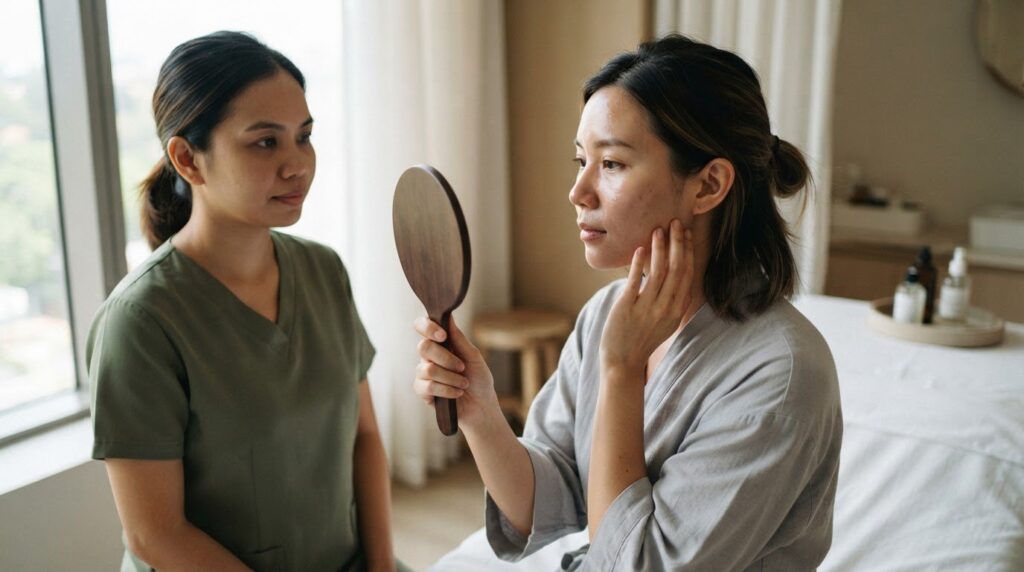
A post-facial flush isn’t proof of lasting improvement. If you’re wondering how to know if a facial is working, look for skin that feels comfortable and appears more hydrated, even-toned or radiant after temporary redness settles. The facial artery supplies parts of the face, including the cheeks, lips and nose, so blood flow is part of the picture. But visible redness alone doesn’t show whether your skin is improving.
It’s natural to want a clear sign that a treatment is making a difference. Meaningful changes, however, are often subtler than an immediate glow. Pay attention to how your skin feels and looks over time, including whether dryness, congestion or sensitivity becomes easier to manage.
This guide explains how facial blood supply relates to visible changes, which signs may indicate a natural-looking result, and how to distinguish a temporary response from progress that supports your skin’s longer-term needs.
Key Takeaways
- Judge a facial by how your skin looks and feels once temporary redness has settled, not by an immediate flush alone.
- Learn how facial blood supply relates to visible changes, and why redness by itself isn’t a reliable measure of progress.
- Track changes in hydration, tone, comfort and your original skin concerns to understand whether results are developing.
- Separate short-lived post-facial changes from signs of irritation, and know when a reaction deserves medical attention.
- Understand why results can vary in how quickly they appear and how long they remain, based on the treatment and your skin’s needs.
Natural-looking results
A facial’s natural-looking results should suit your skin, not obscure its texture or expression. Look for a focus on comfort and appearance, such as temporary softness or a fresher-looking complexion, rather than a dramatic change to your features. A dermatologist assesses and treats medical skin concerns; a facial is not a substitute for that care.
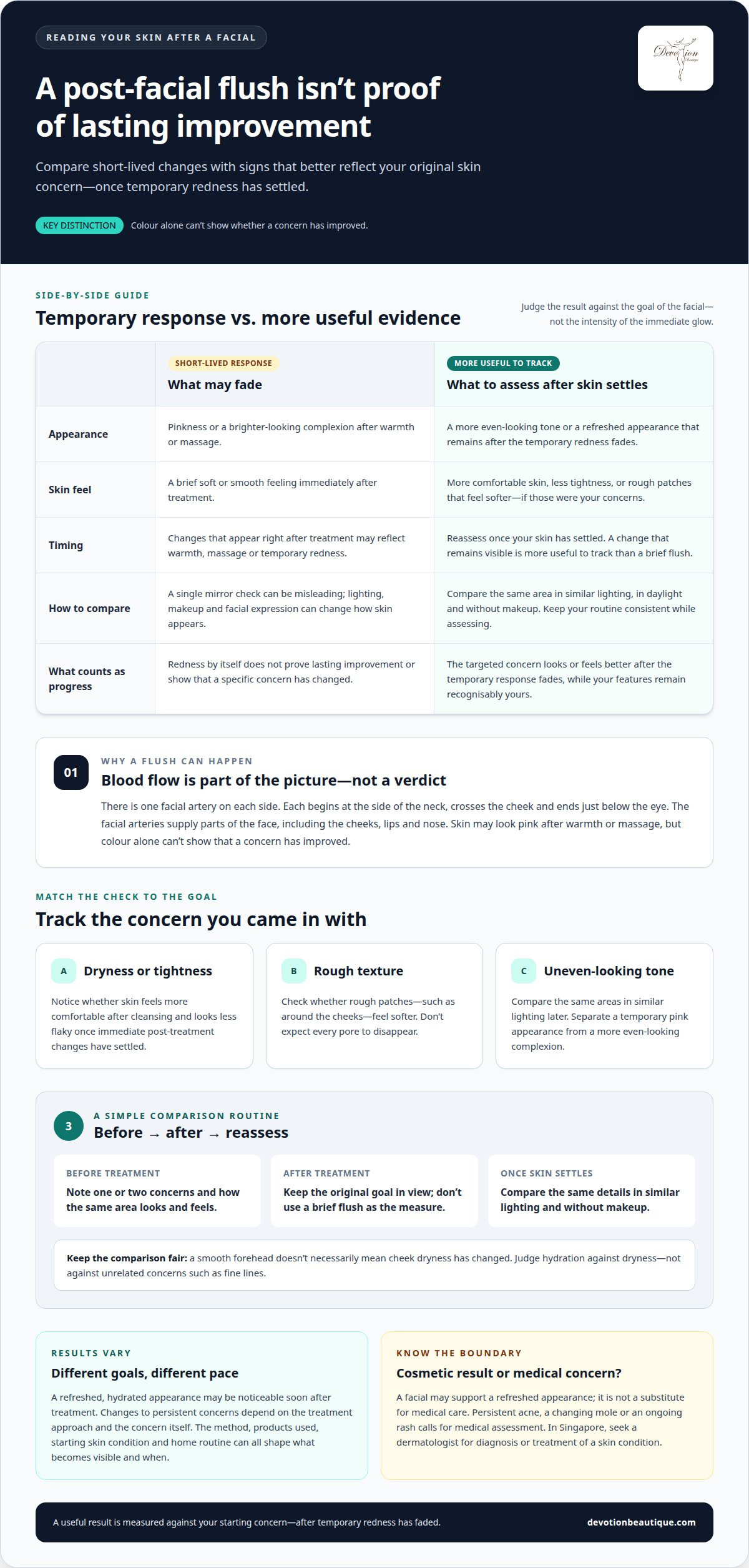
Blood supply is part of the picture, but a visible flush isn’t proof of lasting improvement. The facial artery supplies parts of the face, including the cheeks, lips and nose. There is one facial artery on each side; each begins at the side of the neck, crosses the cheek and ends just below the eye. Skin may look pink after warmth or massage, but colour alone can’t show that a concern has improved.
Start with your skin’s condition and the treatment goal. If dryness is your concern, notice whether your skin feels more comfortable and looks less flaky once immediate post-treatment changes have settled. If you’re focused on uneven-looking tone, compare the same areas in similar lighting. A polished result often looks like your own skin, only more comfortable or refreshed.
Use a simple comparison instead of relying on memory. Before your appointment, note one or two concerns, such as tightness after cleansing or rough patches around your cheeks. Afterward, assess those same details in daylight and without makeup. Be specific: a smooth forehead doesn’t necessarily mean cheek dryness has changed.
- Look at texture: notice whether rough patches feel softer, rather than expecting every pore to disappear.
- Assess comfort: check whether your skin feels settled, not persistently tight or sore.
- Compare tone: distinguish a temporary pink appearance from a more even-looking complexion later.
- Keep the goal in view: judge hydration against dryness, not against unrelated concerns such as fine lines.
These observations help answer the question: a facial is more likely to meet its cosmetic goal when the targeted concern looks or feels better after temporary redness fades, while your features remain recognisably yours. A single mirror check under bright bathroom lighting can mislead. Consistent lighting and the same comparison points give you a clearer view.
Keep expectations aligned with the concern. A facial may support a refreshed appearance, while persistent acne, a changing mole or an ongoing rash calls for medical assessment. In Singapore, seek a dermatologist for diagnosis or treatment of a skin condition. The distinction is practical: judge a facial by cosmetic changes, and a dermatologist’s care by the medical concern being assessed.
How long does it take to see results after a facial?
There isn’t one fixed timeline for every facial. A refreshed, hydrated appearance may be noticeable soon after treatment, while changes to persistent concerns depend on the treatment approach and the concern itself. Softer-feeling skin and fewer visible dry flakes, for example, are different goals from gradually improving the appearance of uneven tone.
First, identify the type of change you’re looking for. Surface-level effects, such as a smoother feel after cleansing and exfoliation, may appear sooner than changes that depend on ongoing care. A facial focused on comfort or hydration has a different aim from one tailored to a specific concern. Match your expectations to that aim rather than expecting every benefit at once.
Skin may look different immediately after treatment because of warmth, massage or temporary redness. Those short-term changes can make your complexion appear brighter, but they don’t establish whether a longer-term concern has improved. Assess your skin again after it settles, and compare the same area in similar lighting. A change that remains visible is more useful to track than a brief flush.
For a clearer comparison, choose one main goal before your appointment. If tightness is the concern, note how your skin feels after cleansing. If roughness is the focus, pay attention to texture around your cheeks. Avoid judging both goals from a single photograph, since lighting, makeup and facial expression can change how your skin appears.
- Identify the goal: write down one concern, such as dryness or rough texture.
- Record your baseline: note how that area looks and feels before treatment.
- Reassess consistently: use similar lighting and compare the same skin area.
- Separate effects: distinguish temporary redness from a change that remains after your skin settles.
When progress feels unclear, consider the treatment plan as well as the mirror. The method, products used, your skin’s starting condition and your home routine can all shape what becomes visible and when. Dryness, for instance, may be affected by daily cleansing habits, so a facial alone doesn’t explain every change. Tracking your original concern helps you interpret results without mistaking a new sensation for improvement.
In Singapore’s warm, humid climate, sweat and frequent cleansing can influence how skin feels between appointments. Keep your routine consistent while assessing a facial, rather than introducing several new products at once. If you’re considering a treatment plan that reflects a particular skin goal, explore facial treatment options as a natural next step.
How long should facial results last?
Facial results don’t have one fixed lifespan. Their duration depends on the treatment’s purpose, your starting skin condition and what happens afterward. A softer feel following a hydrating treatment is different from a gradual improvement in the appearance of uneven tone. Identify the result you mean before deciding whether it has lasted.
Separate an immediate cosmetic effect from a change you hope to maintain. Skin may feel smoother after surface cleansing and exfoliation, while ongoing dryness can return if your routine continues to leave your skin feeling tight. A facial can support skin comfort, but it doesn’t stop everyday processes that influence texture and hydration.
Your home routine shapes what you continue to notice. If a facial leaves your cheeks feeling comfortable, then you switch to a cleanser that makes them feel tight, that change complicates your comparison. Keep your usual products consistent while observing the result. In Singapore, also consider how frequent cleansing after sweating affects how your skin feels.
Use a simple record to distinguish lasting progress from a short-lived effect:
- Choose one goal: for example, track cheek dryness rather than several unrelated concerns.
- Describe the baseline: note whether the area feels tight, rough or comfortable before treatment.
- Repeat the same observation: assess that area in similar lighting and after your skin has settled.
- Note routine changes: record a new cleanser, exfoliant or other product that could affect the comparison.
This method helps you assess what remains. If your skin feels smoother only immediately after treatment, that may be a temporary surface effect. If the original concern remains easier to manage with your usual routine, that’s a more relevant sign of ongoing benefit. Neither observation means your skin has changed permanently.
Facial results also depend on what the treatment is designed to address. A Relaxation Facial focuses on relaxation, while a Remedial Facial addresses specific skin concerns. Those different aims call for different ways to assess the outcome. For the first, consider whether the experience supports your comfort; for the second, track the concern the treatment addresses.
Think of longevity as a pattern, not a countdown. Compare the same concern after your skin settles, keep daily products steady, and note when your routine or environment changes. If the result fades, that doesn’t automatically mean the facial failed; the benefit may have been temporary, or your skin’s needs may have shifted. A clear record gives you a more grounded basis for discussing your next treatment.
What skin changes after a facial are normal, and how long do they last?
After a facial, your skin may feel temporarily warm, look slightly pink or feel more sensitive to touch. Massage, for example, can leave cheeks flushed, while exfoliation can make dry areas feel more noticeable. Assess these changes in context: the treatment steps, your usual skin sensitivity, and whether the sensation is easing or intensifying all matter.
There isn’t one reliable duration for every facial reaction. A short-lived feeling of warmth differs from redness that stays pronounced or becomes more uncomfortable. The products used, the amount of exfoliation and your skin’s starting condition influence its response. Note what changed and when you first noticed it, rather than assuming every reaction follows the same timeline.
Dryness or tightness can also become more noticeable after cleansing or exfoliation. If your face feels tight after washing, for example, record the cleanser and products you used that day. A new product introduced alongside a facial can make the cause harder to identify. Keep your routine familiar while your skin settles, and avoid adding several unfamiliar products at once.
Use these observations to make changes easier to assess:
- Describe the sensation: distinguish mild warmth from stinging, burning or soreness.
- Map the appearance: note whether redness is limited to treated areas or spreading.
- Track its course: record whether the change is easing, unchanged or worsening.
- Review recent products: write down any new cleanser, exfoliant or skincare ingredient.
For a practical comparison, take a clear photo in consistent lighting after treatment, then compare it with your skin as it settles. Bright bathroom lighting can make redness look stronger than it appears elsewhere. Also note whether your skin feels comfortable during ordinary activities, such as washing your face or applying your usual moisturiser.
Aftercare matters. If your skin feels sensitive, keep cleansing gentle and avoid scrubbing the area. Don’t layer new exfoliating products onto skin that already feels irritated. Singapore’s heat and humidity can also make sweat and repeated cleansing part of your day, so notice whether either affects discomfort. These details help distinguish a passing response from irritation that needs attention.
Seek medical advice if you develop severe or worsening pain, marked swelling, blistering or spreading redness. A sudden change in vision or severe facial pain requires urgent medical assessment. These symptoms differ from mild, easing warmth after a facial. Record the treatment steps and products used, then share those details with the healthcare professional assessing your symptoms.
Facial interventions have increased over the last 15 years, alongside growth in research and available scientific evidence. The mental artery supplies the skin and muscles of the chin region, while the supraorbital and supratrochlear arteries supply the skin, muscles and periosteum of the forehead. These details describe structures in particular facial regions; they do not, by themselves, identify the cause of a change in your skin. When discussing persistent or concerning symptoms, tell a clinician which area was treated and how the change has developed, so it can be considered alongside the procedure and your observations.
What are signs of irritation or an adverse reaction after a facial
Mild warmth after cleansing or massage differs from discomfort that grows stronger. Pay attention to how your skin feels and looks, and whether the change is easing or spreading. A small area of pinkness that settles, for example, differs from increasing redness accompanied by burning or swelling.
Possible warning signs include persistent stinging, itching, tenderness, a new rash or swelling. Note the pattern, including whether symptoms stay where a product was applied or appear elsewhere. A reaction can’t be identified by appearance alone, so don’t assume every new bump or patch has the same cause.
Take particular care to distinguish a facial treatment from an injectable procedure. Filler-related concerns differ from reactions after a skincare facial. Pain or blue or grey skin at a filler injection site can indicate a facial artery problem. Double vision, jaw pain or fatigue can also be symptoms of facial artery conditions. These signs call for urgent medical assessment, not a wait-and-see approach.
If discomfort begins after a facial, pause newly applied skincare products and avoid scrubbing or adding exfoliants. Keep the product packaging or write down the product names and treatment steps. Note when the reaction began, which areas are affected and whether symptoms are changing. These details help a healthcare professional assess what happened.
- Observe the change: record redness, itching, swelling, stinging or tenderness.
- Track its course: note whether symptoms are settling, staying the same or worsening.
- Keep product details: list anything applied during the facial and afterward.
- Seek medical advice: get assessed for persistent or worsening symptoms.
Breathing difficulty, rapidly increasing swelling, severe pain or changes in vision require urgent medical care. After a filler injection, blue or grey skin with pain is especially concerning because it may involve blood supply. A standard facial and an injectable treatment are not interchangeable; tell the clinician which procedure you received and when.
Don’t try to mask a worsening reaction with makeup or another new product. In Singapore’s heat, sweat and repeated cleansing may add discomfort, so keep the affected area undisturbed while arranging appropriate care. If you’re experiencing irritation after a facial, discuss your facial skin concerns and the treatment steps involved.
Devotion Beautique: Advanced Aesthetic Series Skin Boosting RETREAT
Devotion Beautique’s Advanced Aesthetic Series Skin Boosting RETREAT offers a considered approach to skincare. It sits alongside facial options for different needs, including the ReProgram Facial, Remedial Facial and Relaxation Facial.
Choose a treatment direction based on your skin goal. If you’re focused on targeted correction or longer-term improvement, the ReProgram Facial or Remedial Facial may be relevant; for a calming experience, consider the Relaxation Facial. A clear sense of your concerns and desired outcome can help shape a more personalised programme.
For guidance on which facial best fits your skin goals, contact Devotion Beautique.
Make your next skincare decision with intention
Start your next step with a clear sense of how you want your skin to feel in daily life. Perhaps you want cleansing to feel more comfortable, or hope to maintain a smoother, more rested appearance. Naming that priority gives any future treatment a purpose beyond chasing a momentary glow.
Understanding how to know if a facial is working also means treating your observations as useful guidance, not a verdict on your skin. Bring your goals, routine and responses to previous treatments into the conversation. That context can help shape care around your needs and keep expectations grounded in natural-looking change.
Devotion Beautique offers facial options including the Advanced Aesthetic Series Skin Boosting RETREAT and ReProgram Facial. Explore your facial care options and take a considered next step toward skin that feels more like you.
Frequently Asked Questions
What are the signs a facial treatment is working?
If you’re asking how to know if a facial is working, start by checking whether the treatment’s intended goal matches your experience. A calming treatment, for example, should leave you feeling relaxed, while a maintenance-focused facial should fit comfortably into your skincare routine. Consider whether the session addressed your stated concern rather than expecting unrelated changes. If the outcome feels unclear, use that observation to guide a more focused conversation about your next treatment.
How can you track whether facials improve skin over time?
To understand how to know if a facial is working over time, keep a brief record after each appointment. Note the treatment focus, products used during the session and any changes to your home routine. For example, record when you introduce a new cleanser so you can consider it alongside changes in how your skin feels. This gives you a clearer reference for future appointments and makes skincare discussions more specific.
Do different facial types work better for acne, pigmentation, or ageing?
A Remedial Facial addresses specific skin concerns, while a Relaxation Facial focuses on relaxation. Persistent acne calls for medical assessment rather than relying on a facial.