
Can Facials Make Skin Worse? Breakouts, Redness and Aftercare
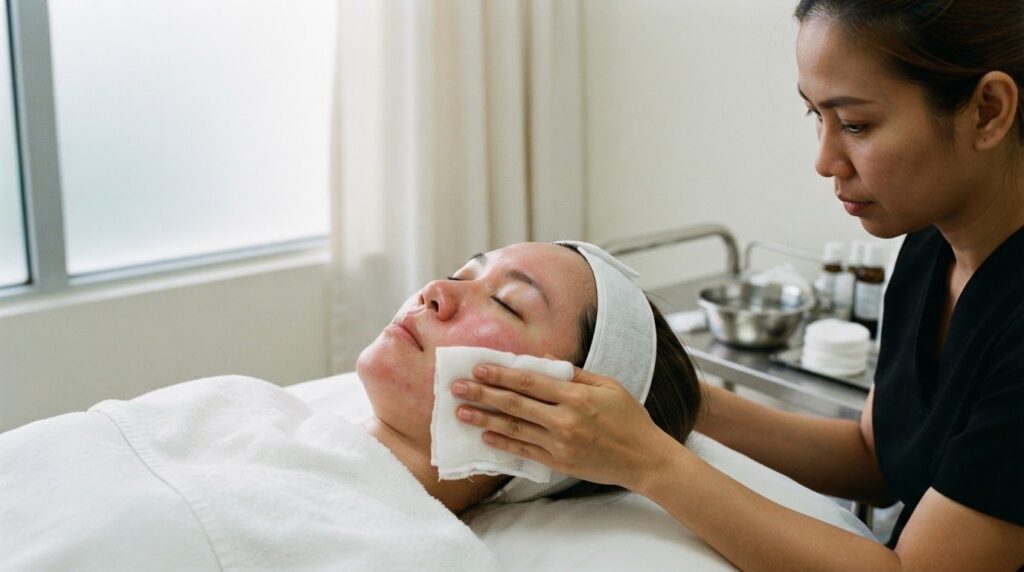
Yes, facials can make skin worse temporarily. Breakouts may appear after cleansing or exfoliation, while redness, tightness or stinging can signal irritation rather than a beneficial “purge.” These reactions aren’t the desired outcome, and worsening symptoms deserve attention.
It’s understandable to feel concerned when your complexion looks unsettled after a treatment, especially if you’re prone to sensitivity or breakouts. Your at-home products matter too: active ingredients such as retinol and exfoliating acids can affect how your skin responds to a facial.
Here, you’ll learn why post-facial breakouts, redness and sensitivity can happen, how to care for your skin as it settles, and what to share with your esthetician before and during treatment. You’ll also learn why timing active skincare thoughtfully can support a gentler, more comfortable experience.
Key Takeaways
- Short-lived breakouts can follow cleansing or exfoliation, but worsening or persistent symptoms deserve attention.
- Share your sensitivities, allergies, medications and at-home skincare routine before treatment so your esthetician can tailor the approach.
- Keep post-facial care gentle: avoid picking at blemishes and pause strong active ingredients while your skin settles.
- Redness, tightness or stinging may point to irritation rather than purging; notice how symptoms change and respond calmly.
- Plan the timing of retinol, vitamin C and exfoliating acids around your facial to help reduce the risk of added sensitivity.
Is It Normal to Break Out After a Facial?
Some breakouts after a facial may be temporary, but they aren’t the desired outcome. Cleansing and exfoliation may bring existing congestion to the surface, while an overly stimulating treatment can leave acne-prone skin inflamed or rough. Your response depends on skin sensitivity, the products used and the treatment’s intensity.
Facials are more likely to irritate sensitive or acne-prone skin if they involve vigorous exfoliation, harsh extractions or products that feel too strong. If your skin is easily reactive, tell your esthetician before treatment so the approach can be tailored. A gentler first facial may suit you better than aggressive extractions.
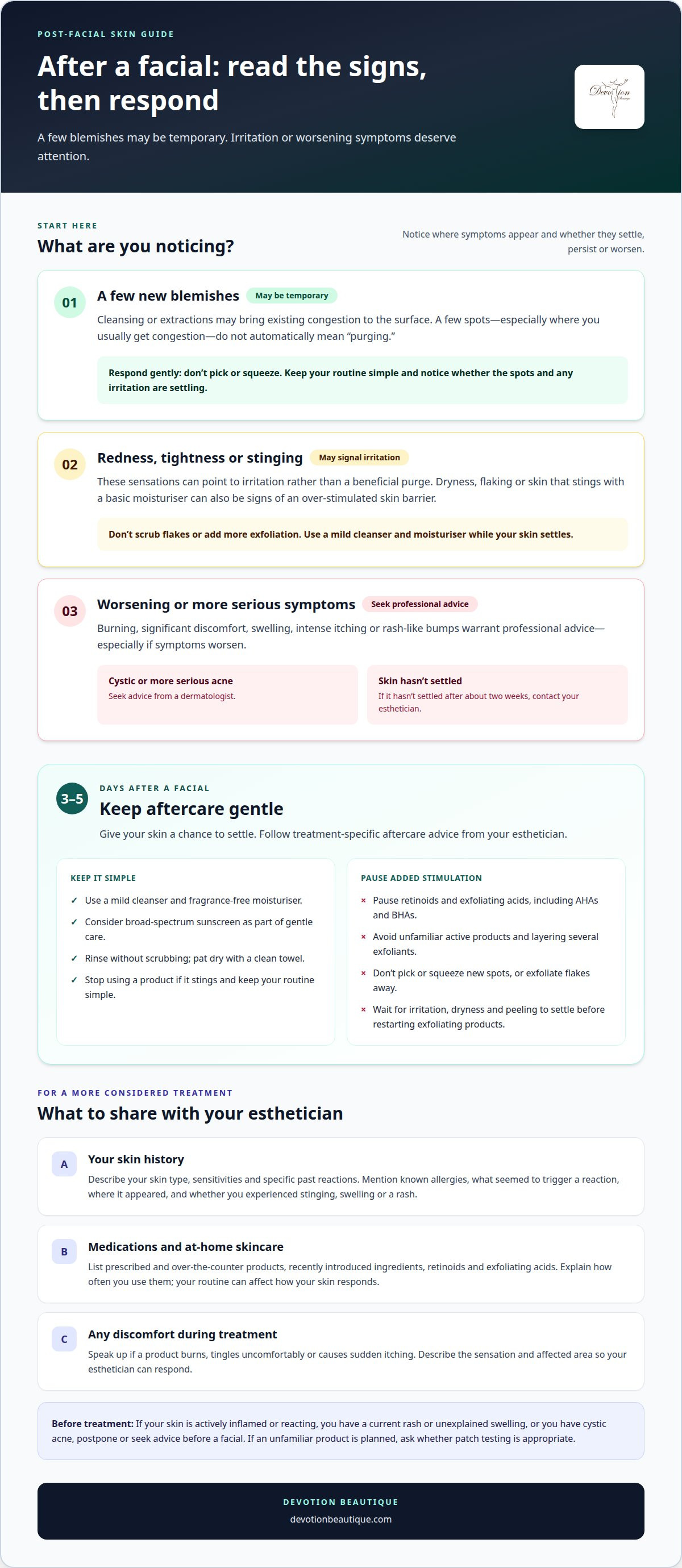
A few new blemishes may appear after cleansing or extractions, especially where congestion was already present. That doesn’t mean every breakout is “purging,” or that discomfort should be ignored. An overly stimulating treatment may aggravate acne-prone skin, and an improperly performed facial can contribute to inflammation, dryness or rough texture. Notice whether spots appear where you usually get congestion and whether irritation is settling.
Exfoliation removes surface build-up, but too much can leave skin dry, tight or flaky. Chemical peels also exfoliate, so peeling or sensitivity may follow; the treatment’s intensity and your skin’s response matter. If your face feels raw, stings when you apply a basic moisturiser, or develops widespread redness, don’t scrub away flakes. More exfoliation can further disturb the skin barrier.
Keep the next few days simple. Use a mild cleanser and moisturiser, and avoid picking or squeezing new spots. Pause retinoids and exfoliating acids, including AHAs and BHAs, for 3-5 days after a facial. Don’t restart exfoliating products just because your skin looks smoother; wait until irritation, dryness and peeling have settled, then follow your esthetician’s treatment-specific aftercare advice.
During those 3-5 days, avoid adding unfamiliar active products or layering several exfoliants to speed up recovery. For example, using a retinoid and an exfoliating acid together after a peel may add unnecessary stimulation. If you’re unsure how a prescribed or regular product fits into your routine, mention it to your esthetician before treatment rather than changing its use without guidance.
Seek professional advice if symptoms worsen or you develop burning, significant discomfort, swelling, intense itching or rash-like bumps. Cystic or more serious acne after a facial warrants advice from a dermatologist. If your skin hasn’t settled after about two weeks, contact your esthetician to discuss what happened and how to adjust future treatments.
Communicating sensitivities, allergies and medications
If you have active irritation, a known ingredient allergy or cystic acne, seek advice before a facial. If you’re unsure whether treatment suits your skin or medication routine, discuss it with a doctor or esthetician first.
Barrier Irritation and Allergic Reactions
Barrier irritation occurs when the skin’s protective surface is disrupted, while an allergic reaction is a response to a particular ingredient. Both can cause redness, itching or discomfort, so describing what you feel helps distinguish a sensitivity from an expected treatment sensation. The Health Sciences Authority (HSA) notes that cosmetic ingredients may cause skin sensitivity or allergy in some individuals.
Before your appointment, describe your skin type and specific history, rather than simply saying your skin is “sensitive.” For example, mention whether fragrance, a cleanser or a previous facial caused stinging, swelling or a rash. Explain where the reaction appeared and what seemed to trigger it. These details help your esthetician consider which products and treatment steps may cause irritation.
Share known allergies and the names of skincare products that have caused problems. If an unfamiliar product is planned, ask whether patch testing is appropriate before it’s applied across your face. A consultation a few days before treatment gives people with sensitive or reactive skin time to discuss concerns and plan a considered approach.
When to Avoid a Facial or Seek Advice
Postpone treatment if your skin is actively inflamed or reacting, and seek medical advice for cystic or more serious acne. Additional stimulation may intensify discomfort, while a dermatologist can assess significant acne and advise on suitability. If you have a current rash or unexplained swelling, mention it before any products touch your skin.
Give your esthetician a clear list of medications and skincare, including prescribed treatments, over-the-counter products and recently introduced ingredients. Name retinoids or exfoliating acids, and explain how often you use them. Include products you apply at home, since your routine can affect how your skin responds during treatment.
During the facial, speak up if a product burns, tingles uncomfortably or causes sudden itching. Describe the sensation and affected area so your esthetician can respond instead of continuing without your feedback. If redness, swelling or discomfort develops afterward and worsens, contact a healthcare professional for advice.
Gentle post-facial skincare
For the first few days after a facial, keep your routine simple and support hydration without adding unnecessary stimulation. A mild cleanser, fragrance-free moisturiser and broad-spectrum sunscreen provide a practical foundation while your skin readjusts.
In Singapore, a reputable facial provider should ask about your skin concerns, explain suitable treatment choices and give clear aftercare guidance. Clean equipment and gentle handling matter; the plan should also reflect whether your skin is dry, sensitive or acne-prone, rather than applying the same approach to everyone.
Use a mild, soap-free cleanser morning and evening, and rinse without scrubbing. Pat your face dry with a clean towel instead of rubbing. Follow with a fragrance-free, non-comedogenic moisturiser; a lightweight formula can hydrate without feeling heavy on breakout-prone skin. If a product stings, stop using it and keep your routine simple.
For the next 3-5 days after a breakout or irritation, avoid adding strong active ingredients and exfoliating products. This includes retinol and exfoliating acids such as AHAs and BHAs. Don’t introduce a new serum simply because your skin feels rough, and don’t use a scrub to lift peeling skin. Extra friction can further irritate a disrupted skin barrier.
Apply broad-spectrum sunscreen with SPF 30 or higher before going outdoors, and moisturise daily. Freshly treated skin may be more sensitive to UV exposure, so follow the treatment-specific aftercare plan and avoid direct sun exposure. In Singapore’s bright daytime conditions, sunscreen belongs in your morning routine even when the rest of your skincare stays minimal—especially if your lifestyle involves extended hours outdoors, such as training on the course with sggolfcoach.com.
If your face feels puffy or irritated, a cool compress and fragrance-free calming moisturiser may help soothe the skin’s surface. Keep the compress gentle, and avoid rubbing or pressing blemishes. Picking or squeezing can increase inflammation and may contribute to scarring, so leave spots alone while your skin settles.
After a professional acne facial, avoid touching your face for 24 to 48 hours. Clean your hands before applying skincare, and use only the products recommended in your aftercare plan. Avoid workouts or hot showers if heat worsens flushing; cooler water can be more comfortable while redness fades.
Wait until irritation has cleared before returning to exfoliation or unfamiliar products. Follow your esthetician’s aftercare instructions on when to restart treatments, since timing depends on the facial and your skin’s response. If symptoms worsen or haven’t improved after about a week, seek professional advice rather than layering on more active skincare.
Temporary redness, sensitivity and purging after facials
Yes, extractions, exfoliation and chemical peels can aggravate acne if they overstimulate or irritate the skin. A short-lived response differs from worsening symptoms, so pay attention to how your skin feels and changes after treatment.
Temporary Redness and Sensitivity
Temporary redness is a short-term change in skin colour after treatment, while sensitivity can feel like tightness, stinging or itching. Skin may feel sensitive for a day or two after a facial, but the intensity and direction of symptoms matter. Mild discomfort that settles differs from burning, swelling or discomfort that becomes more pronounced.
After exfoliation or extractions, don’t treat every red area with another active product. More stimulation can increase discomfort instead of restoring moisture. Pause irritating skincare and follow your aftercare plan. If redness spreads, swelling develops or symptoms worsen, contact a professional. Rash-like bumps can also indicate irritation rather than acne.
Purging From Exfoliation and Active Ingredients
Purging describes a temporary phase when existing clogged pores become visible as skin responds to exfoliation or active ingredients. Small whiteheads may appear where congestion already occurs, rather than as a new pattern across unaffected areas. A purge after a facial may take a few weeks to clear, so monitor whether the overall trend is improving.
Exfoliation can bring existing congestion to the surface, but that doesn’t explain every breakout. Extractions or a chemical peel may also irritate skin, particularly if the treatment is too intense for its sensitivity. Don’t add extra acids or scrub whiteheads to speed up clearing; this can increase friction and make irritation harder to assess.
Distinguishing Purging From Irritation
Purging tends to look like temporary blemishes, while irritation may cause redness, tightness, itching, stinging or rash-like bumps. These symptoms can help distinguish irritation from clogged pores. If breakouts last longer than two weeks, they may be more than a temporary purge, and the treatment or products may not suit your skin.
Pay attention to timing and progression. Skin that feels sensitive for a day or two and then settles differs from symptoms that intensify, spread or remain uncomfortable. Burning, significant discomfort, intense itching, swelling or widespread redness are reasons to contact a professional. If symptoms aren’t improving after about a week, seek advice rather than adding stronger products.
For cystic or more serious acne after a facial, consult a dermatologist. Note the treatment steps, products used and where blemishes or irritation appeared; these details help explain your skin’s response. If your skin hasn’t settled after about two weeks, contact your esthetician to discuss the breakout and possible adjustments to future treatments.
Combining facial treatments with active skincare ingredients
Active skincare can change how your skin responds to a facial. Retinol, vitamin C and exfoliating acids may contribute to sensitivity when combined with treatment, so timing and clear communication matter. Before your appointment, share the products you use at home, how often you apply them and whether they cause redness, stinging or changes in texture.
For a more considered treatment plan, pause active products, including vitamin C, retinol and exfoliating acids, at least five days before a facial. This gives your esthetician a clearer picture of your skin, without recent active use complicating the treatment. If a product is prescribed, don’t stop or change it on your own; discuss it with the prescribing healthcare professional and your esthetician.
Bring your product names or a clear list of their active ingredients. “Acne serum” can mean very different things: one formula may contain salicylic acid, while another may use retinol. Include leave-on exfoliants, masks and spot treatments, as well as products you use occasionally. This helps prevent overlapping ingredients during the facial and makes it easier to plan suitable aftercare.
After treatment, avoid restarting strong actives immediately. A practical pause is 3-5 days after a facial for retinol and AHAs or BHAs. During that interval, use a gentle cleanser, moisturiser and sunscreen rather than layering exfoliants to improve skin texture. Follow your treatment-specific aftercare plan, since a peel or another intensive exfoliating step may call for different guidance.
Mention vitamin C too, especially if it’s part of your morning routine. Share its strength, if known, how often you apply it and whether it has caused redness or discomfort. Avoid adding a new vitamin C product while your skin is still sensitive. Introducing one variable at a time makes it easier to recognise what your skin tolerates.
If scented products have caused irritation before, mention fragrance as well. Tell your esthetician about previous reactions and the product involved, rather than simply saying your skin is sensitive. For reactive skin, you can discuss whether to patch test an unfamiliar product before a full facial.
Keep the routine uncomplicated until your skin has settled. If redness, burning or irritation appears after combining products and treatment, stop adding active ingredients and seek professional advice if symptoms worsen or persist. For guidance on choosing a facial that fits your skin goals and current skincare routine, explore a tailored facial approach.
Devotion Beautique: Advanced Aesthetic Series Skin Boosting RETREAT
The Advanced Aesthetic Series Skin Boosting RETREAT offers a personalised approach to skin concerns and ongoing care. If breakouts or sensitivity have made you cautious about facials, share your recent reactions, current routine and skin goals so your treatment choices can reflect your needs.
For concerns suited to a facial-focused approach, the ReProgram Facial and Remedial Facial support targeted correction and longer-term skin improvement. The right direction depends on your priorities, whether you’re seeking a calming experience or support for specific concerns. A tailored discussion can help you choose a treatment that aligns with your goals and consider how to care for your skin afterwards.
Contact Devotion Beautique to discuss your skin concerns and possible next steps.
Make your next facial decision with confidence
Think of your skin’s response as useful information for shaping future care, not a reason to abandon professional treatments altogether. Understanding whether facials can make skin worse means considering your skin history, current routine and comfort during treatment. Bring those details to your next conversation and let your priorities guide a more considered approach.
Devotion Beautique offers personalised facial care for different skin concerns and goals. If you’re ready to discuss an approach that feels aligned with your needs, contact Devotion Beautique. A thoughtful next step can begin with an open conversation about what your skin is experiencing and the care you’d like to explore.
Give your skin patience, attention and care that respects its individuality. You can move forward with greater clarity and confidence.
Frequently Asked Questions
Do you need an aftercare plan following a facial?
Yes, an aftercare plan helps you understand which products and steps suit the treatment you received. A facial involving extractions may call for different guidance from one involving a peel or intensive exfoliation. Keep the instructions handy alongside the names of products used during your appointment. This record can help you describe your skin’s response and avoid accidentally combining unsuitable products at home.
TO EXTRACT OR NOT TO EXTRACT?
Extractions can suit some congestion, but they shouldn’t be forced or unnecessarily harsh. If you’re new to facials or have sensitive, reactive or acne-prone skin, discuss gentler options before treatment. Clean equipment and careful technique matter. Tell your esthetician if the pressure feels uncomfortable, and avoid squeezing remaining blemishes yourself, since added pressure can inflame surrounding skin.
What is skin purging?
Skin purging is the temporary appearance of blemishes as existing congestion comes to the surface after exfoliation or active ingredients. It’s more plausible when spots appear in areas where you commonly experience clogged pores, rather than in a new pattern. A purge can take a few weeks to clear. Worsening irritation or persistent breakouts shouldn’t automatically be labelled purging.
When should you be concerned?
Take worsening or intense symptoms seriously. Burning, significant discomfort, swelling, intense itching, rash-like bumps or widespread redness are reasons to contact a professional. If symptoms aren’t improving after about a week, seek advice. Contact your esthetician if your skin hasn’t settled after about two weeks. Cystic or more serious acne after a facial warrants a dermatologist’s advice.
Can facials cause breakouts, irritation, or worsen acne?
Yes, facials can make skin worse when cleansing, exfoliation or extractions overstimulate it. Acne-prone skin can react to an overly stimulating treatment, and a facial that’s too harsh may contribute to inflammation, dryness or rough texture. Breakouts may also appear temporarily as existing congestion surfaces. New blemishes don’t prove a treatment is working, so consider where they appear and whether discomfort is increasing.
What side effects can happen after a facial, and how long do they last?
Possible effects include temporary redness, tightness, itching, stinging, dryness, peeling or new blemishes. Skin may feel sensitive for a day or two after a facial, while a temporary purge may take a few weeks to clear. The pattern matters: symptoms that intensify, spread or persist need attention rather than being assumed to be routine recovery. Seek advice for swelling, burning or significant discomfort.
How can you tell purging from a breakout or an allergic reaction after a facial?
Purging usually resembles blemishes in areas already prone to clogged pores. A breakout that continues beyond two weeks may be more than a temporary purge. Irritation or an allergic-type reaction can involve itching, stinging, rash-like bumps or swelling. The Health Sciences Authority (HSA) notes that cosmetic ingredients may cause sensitivity or allergy in some people. Record the product and symptoms to help explain the reaction.
How should you care for skin after a facial to reduce irritation and breakouts?
For the next few days, keep care simple: use a mild cleanser, moisturise, apply broad-spectrum SPF 30 or higher outdoors, and avoid picking. Pause retinoids and exfoliating acids for 3-5 days after a facial. If flushing worsens with heat, choose cooler showers and postpone strenuous workouts until your skin feels calmer. Avoid introducing unfamiliar products while your skin is recovering.